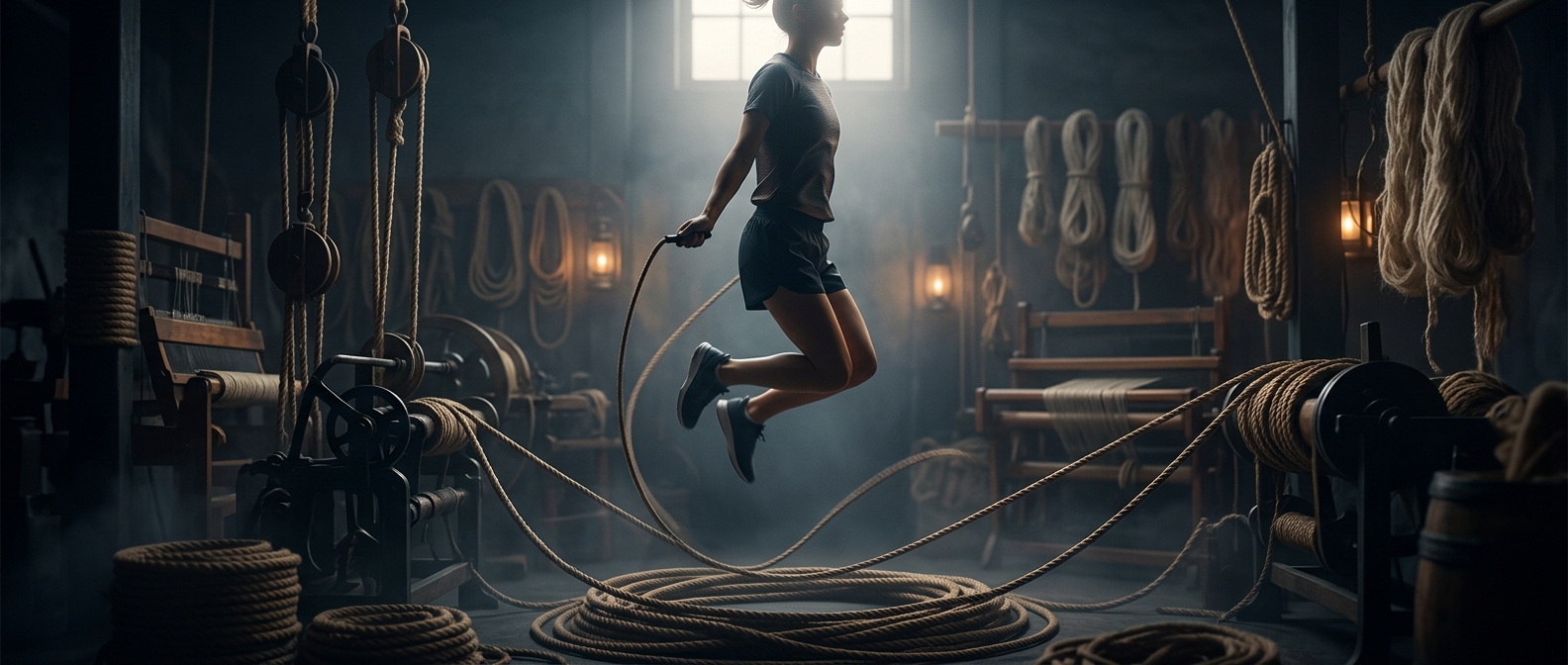
A Workroom Obstacle Became a Rhythm
In the traditional account of jump rope’s beginnings, rope makers had to move around thick hemp strands as they worked. The strands were part of the work in progress: stepping on or tangling them could interfere with the weaving. Leaping over them was a practical way to keep moving without disturbing the material.
From Avoiding a Tangle to Keeping Time
A leap is easy to repeat, and a rope under tension can swing in a steady arc. Once workers began timing their jumps to that motion, the maneuver could take on a rhythm of its own. What started as a way to avoid tripping over the work became an activity built around anticipating the rope and clearing it at just the right moment.
That shift—from navigating a hazard to coordinating movement—is the memorable link between rope making and jump rope: the rope was first something to work around, then something to move with.