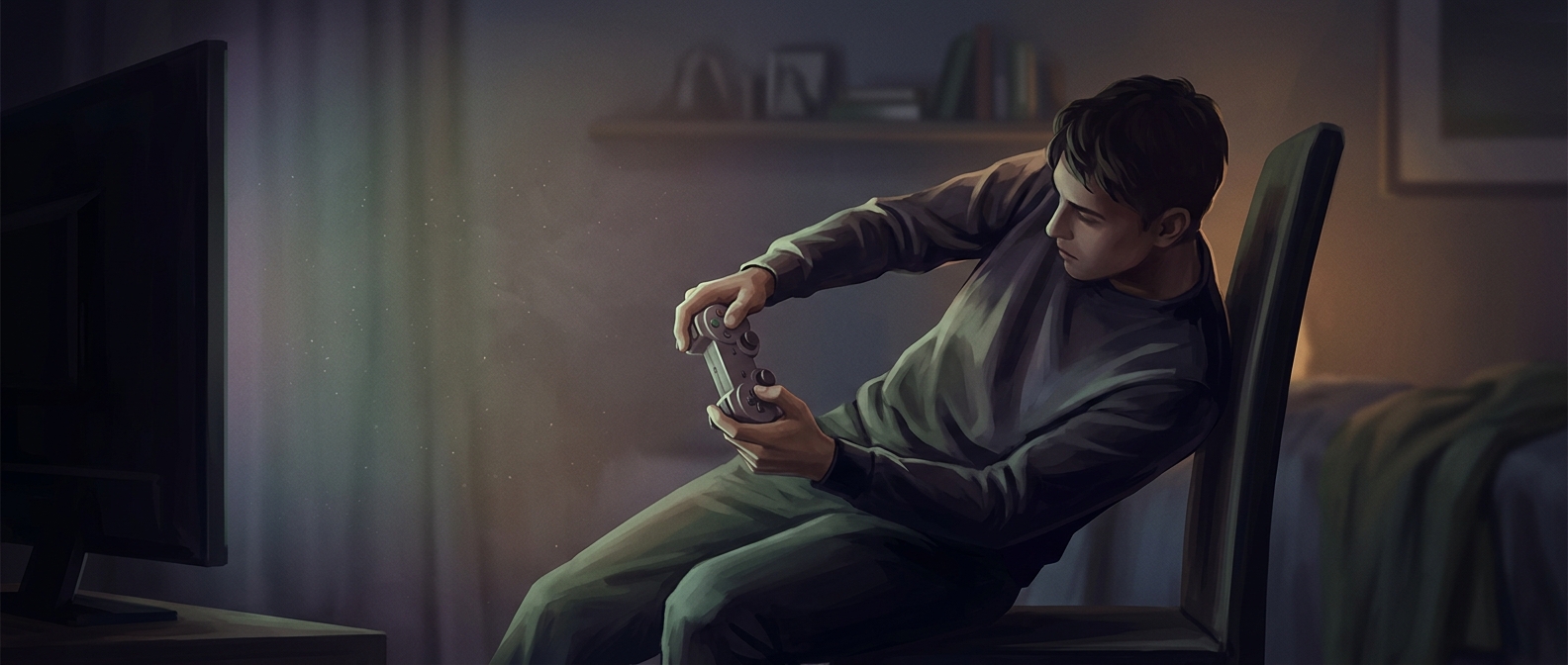
Why a virtual jump can move your real body
When a game character leaps across a gap, your brain is not merely watching an image. It is tracking a goal—clear the obstacle—and predicting what movement might achieve it. That prediction can recruit parts of the action system used for your own movements, even though your body is sitting still.
The result is a small, often unconscious lean or twist. Your brain has linked the on-screen action to familiar bodily movement, so it may prepare a physical response before you deliberately decide to move. Because the leap is timed and consequential, the response can feel especially immediate.
A sense of influence without actual control
Leaning can feel as though it adds momentum because it coincides with the moment you are trying to help the character succeed. But the game responds to its controls—such as a button press or joystick input—not to a shift in your torso, unless a motion sensor has specifically been designed to read that movement.
The feeling is still meaningful: your attention and effort are engaged in the action, even when your body cannot change its outcome. The lean is a visible trace of your brain treating the virtual jump as something to participate in, rather than simply something to watch.