How Gandhi’s Peaceful Rating Turned Into a Maximum
In the original Civilization, leaders had personality ratings that helped shape how readily the computer would choose war. Gandhi’s aggression rating started at the bottom of the scale. When India adopted democracy, the game lowered that rating further as part of the government’s effect on its leader.
The problem was how the value was stored. It used an unsigned integer: a whole number that cannot represent values below zero. If the game tried to subtract from the minimum value, the result did not stay negative. It wrapped around to the largest value the storage space could hold. A setting meant to make Gandhi less aggressive could therefore leave the game treating him as maximally aggressive.
Why the Glitch Became a Nuclear Joke
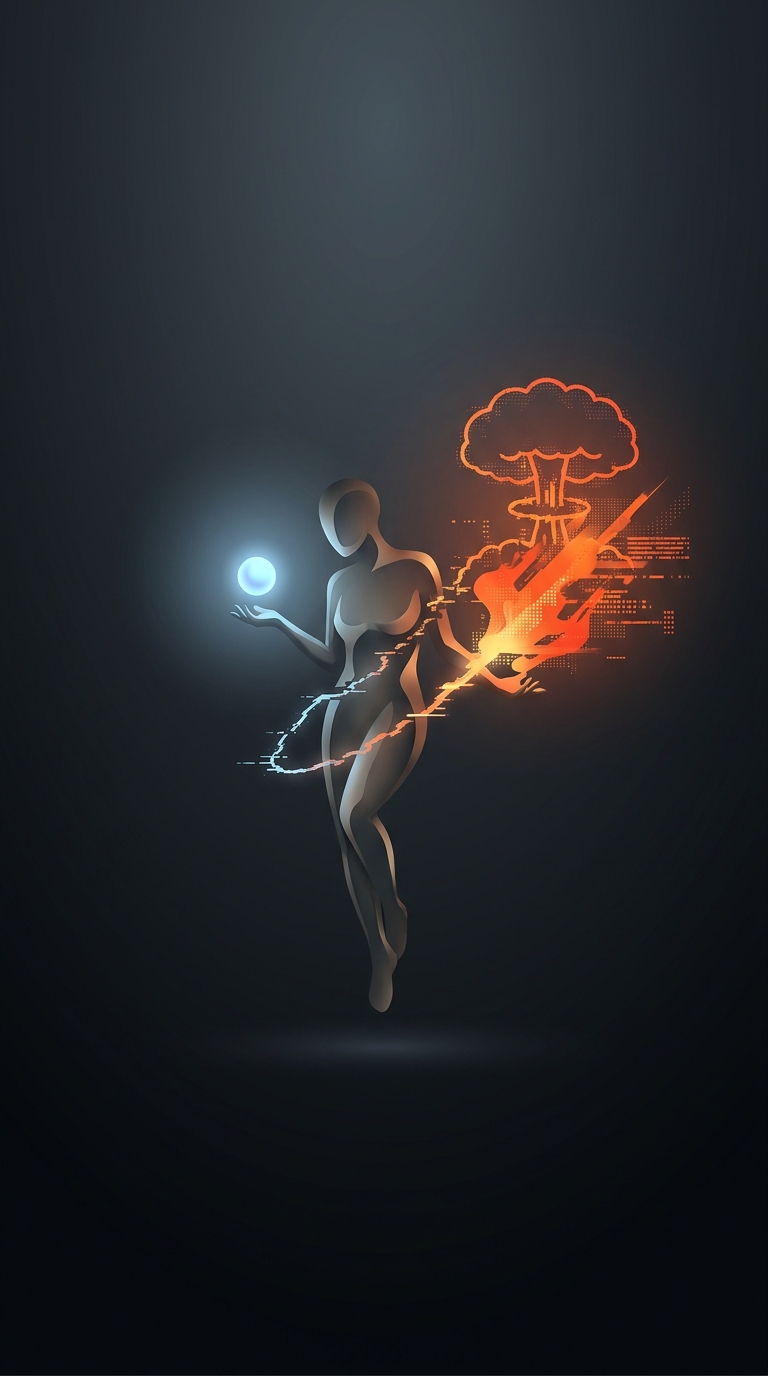
That rating influenced the computer’s willingness to fight, not a special rule telling Gandhi to build or launch nuclear weapons. The joke emerged because players could encounter a supposedly peaceful leader who became startlingly belligerent after India turned democratic—and nuclear arms made that reversal especially memorable in the late stages of a game.
The bug is a compact example of how a tiny programming detail can reshape a character. The designers’ intended adjustment was simple: democracy should make a leader less inclined to fight. But when a number crossed the floor of its allowed range, the game turned “less aggressive” into the opposite extreme. A familiar image of Gandhi as a pacifist made the resulting behavior even more striking.