Turning a Convention Visit Into a Review
An emotional epic is hard to assess in fragments. Its impact may depend on how a character’s choices build toward a later reveal, or how the ending changes the meaning of an earlier scene. A reviewer has to hold those connections in mind while deciding what to explain to readers—and what to leave unspoiled.
That makes the work more than a quick reaction. Notes and impressions gathered during the event need to become a clear argument: what the story is trying to do, how well its parts fit together, and why its strongest moments land. The finished review has to make sense even to someone who has not experienced the story.
The Cost of Writing in the Middle of the Event
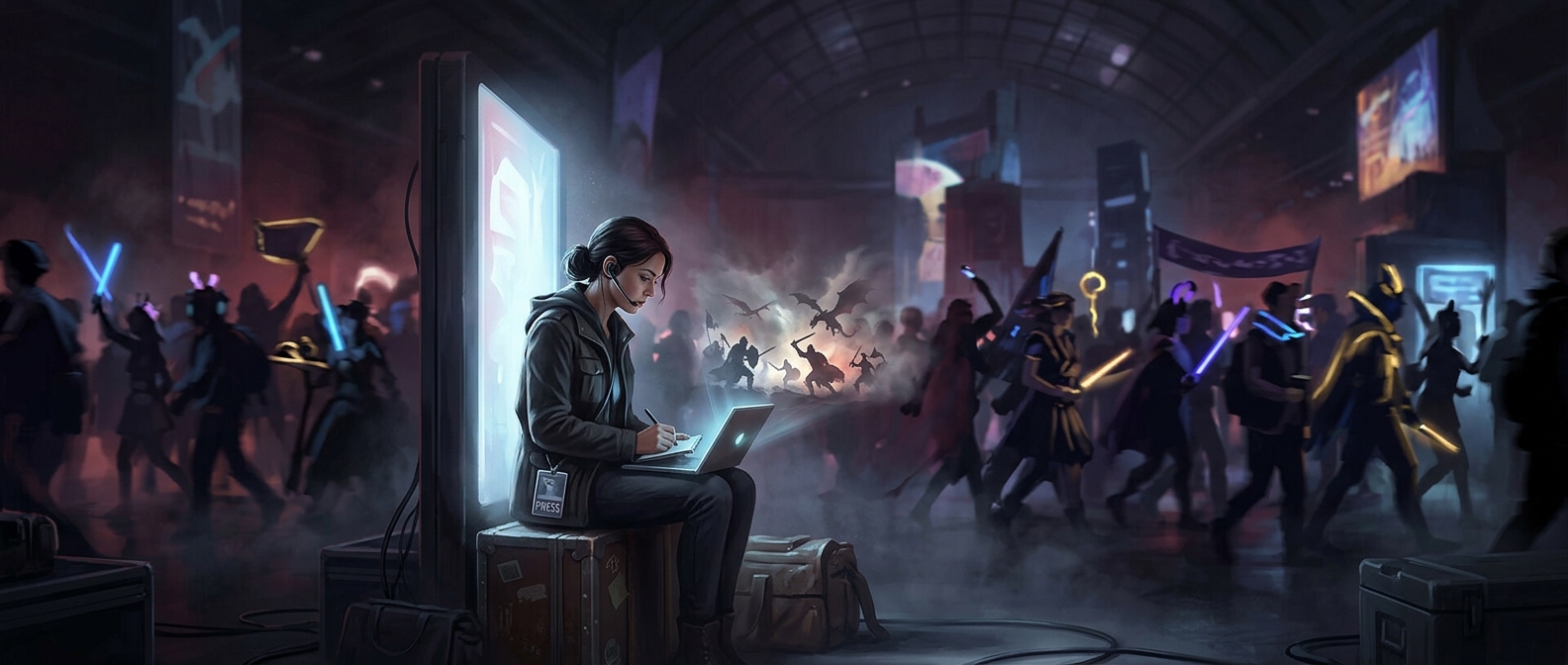
A convention divides attention. Crowds, noise, conversations, and a packed schedule compete with the quiet concentration that careful writing requires. At a cramped desk, even basic tasks—organizing thoughts, checking wording, and shaping paragraphs—can take longer when focus keeps breaking.
The practical tradeoff is that the review must be produced where the work is happening, not in ideal conditions. That can make the written account feel like a second performance: first the reviewer follows the story, then reconstructs its emotional arc amid the convention’s own relentless activity.