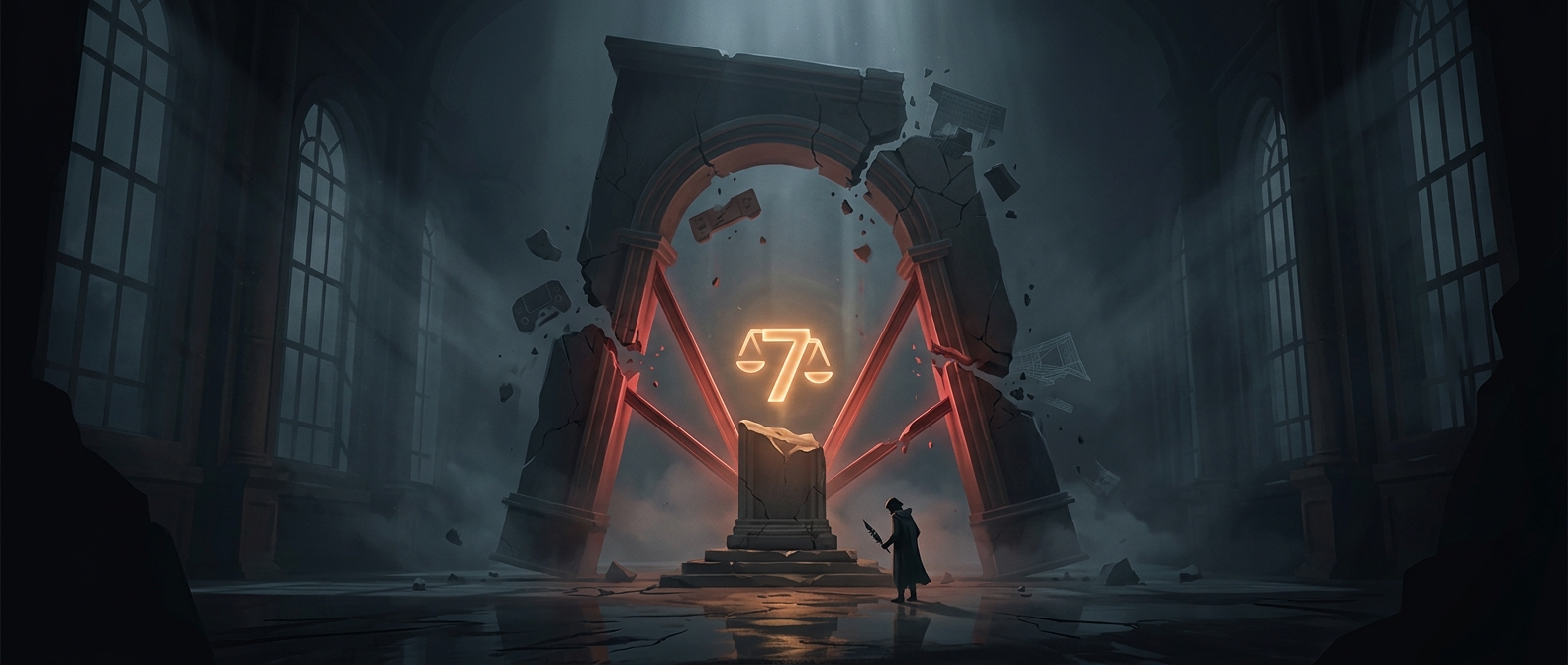
When a Review Average Becomes a Payroll Switch
A review score is usually treated as a shorthand for how critics responded to a game. But when a publisher attaches a bonus or other business decision to a score cutoff, that shorthand can become a decision rule: clear the line and one outcome follows; miss it and another does.
That creates a cliff effect. The difference between 84 and 85 is numerically small, but under a threshold-based arrangement it can matter far more than the difference between 83 and 84. A team may have delivered a game that reviewers broadly consider good, yet still fall on the wrong side of a contract’s dividing line.
Why the Number Can Outweigh the Nuance
An aggregate score compresses many reviews into a single figure. It can make a complicated reception easy to compare, but it cannot show every critic’s reasoning, the game’s particular strengths, or whether a one-point gap reflects a meaningful difference in quality. The score is a summary; the cutoff gives that summary consequences it was never designed to carry on its own.
For a studio, those consequences can reach beyond a missed bonus. If a publisher views the score as evidence that a project failed to meet expectations, the team’s jobs or the studio’s continued existence may be at risk—even when the game is a solid hit with players or critics. The people who made the game may have little control over how an aggregate is calculated, while their livelihoods depend on where it lands.
The sharpest lesson is not that review scores are useless. It is that a one-point threshold can turn a gradual judgment into an all-or-nothing business outcome, making a tiny numerical gap feel enormous to the people who bear the cost.