How the triceps straightens your arm
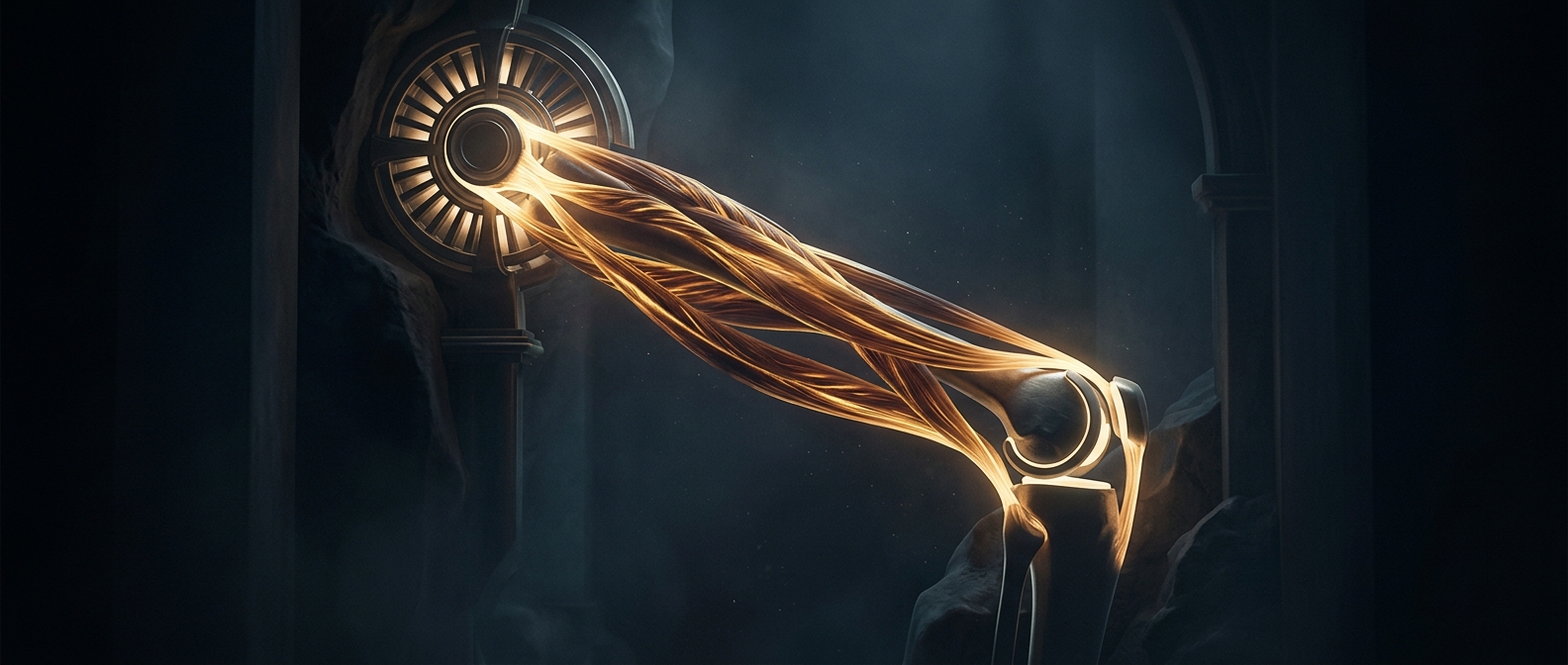
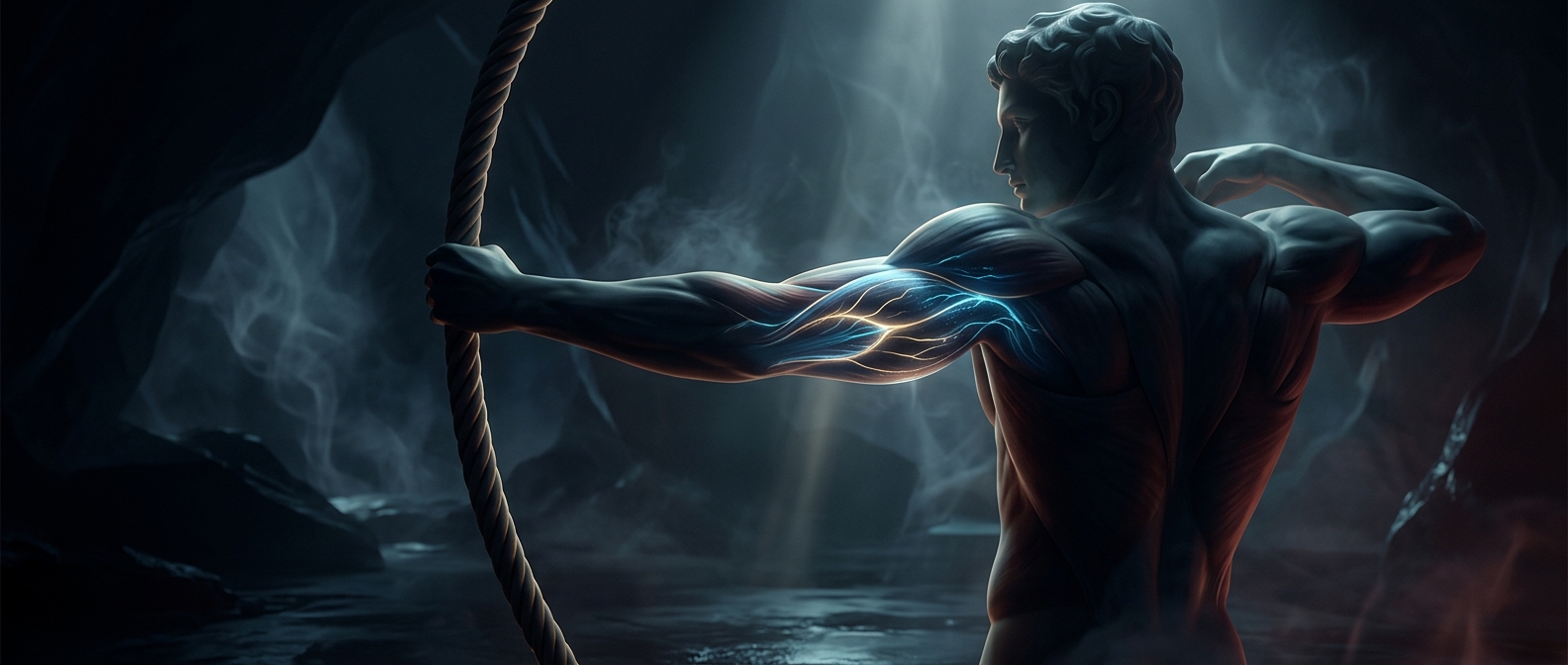
The triceps works by shortening and pulling on the ulna, one of the two bones in the forearm. Its tendon attaches at the elbow, so when the muscle contracts, it draws the forearm backward and opens the joint. That motion is called elbow extension—the same action used to push a door shut, rise from a chair using your hands, or press an object overhead.
The muscle’s three parts, or heads, do not all begin in the same place. Two start on the upper arm bone; the long head begins on the shoulder blade and crosses the shoulder joint as well as the elbow. That gives the long head a role in some shoulder movements, while all three heads contribute to straightening the elbow.
A push-and-pull partnership
At the front of the upper arm, the biceps bends the elbow. The triceps performs the opposing action, straightening it. In many movements, the nervous system coordinates the pair: one muscle produces the desired motion while the other relaxes enough to let the joint move smoothly. To control a movement—such as lowering a weight—the working muscles can also resist motion as they lengthen.
This partnership is why arm movement is not simply a matter of one muscle switching on and another switching off. The elbow’s position and the task determine how much each contributes. The long head’s path across the shoulder also means its length changes with shoulder position, affecting the conditions under which it works.
Why it matters beyond arm size
Because the triceps generates the force that straightens the elbow, it helps with everyday pushing and with stabilizing the arm when the hand presses against something. A visible bend at the back of the upper arm is only the surface sign of a muscle built to transfer force across a joint. Each time the elbow straightens against resistance, the triceps is doing the pulling that turns the arm into a lever.