Why Early Toothbrushes Cost So Much
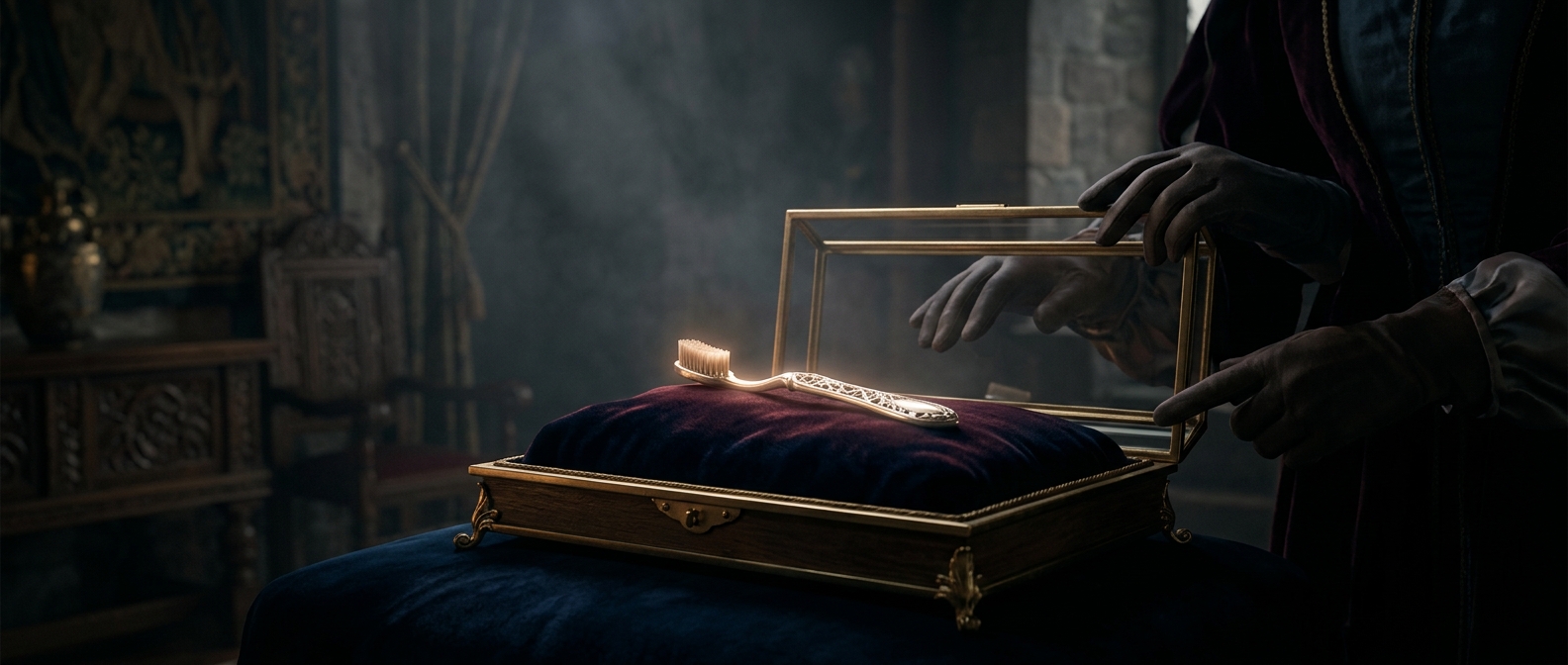
Before industrial production made brushes commonplace, a toothbrush required several labor-intensive parts. Its handle might be carved from bone, while its bristles came from animal hair—often stiff hairs gathered and fitted by hand. Making a usable brush meant shaping the handle and attaching many small bristles securely, work that made the finished object far more expensive than its plain appearance suggests.
The Cheaper Alternatives
People who could not afford a brush still had ways to clean their teeth. A chewing stick could be frayed at one end and rubbed against the teeth; cloth could be wrapped around a finger and used to wipe them. These methods relied on readily available materials rather than a crafted tool, so they were easier to use without buying a specialized object.
The difference was not simply between people who cared about their teeth and people who did not. Access to a purpose-made toothbrush depended on having money to spend on an item that had to be assembled by hand. For many households, everyday cleaning meant adapting what was at hand.
When the Brush Became Ordinary
That changed as manufacturing shifted from individual craft to large-scale production. Factories could make handles and set bristles in greater quantities, lowering the cost of each brush. Later, inexpensive molded plastic handles made production still more straightforward. The modern toothbrush aisle can make the object seem timeless and universal, but its everyday status is relatively recent: for much of history, a toothbrush was a purchase that many people did without.