The microscope had to borrow its light
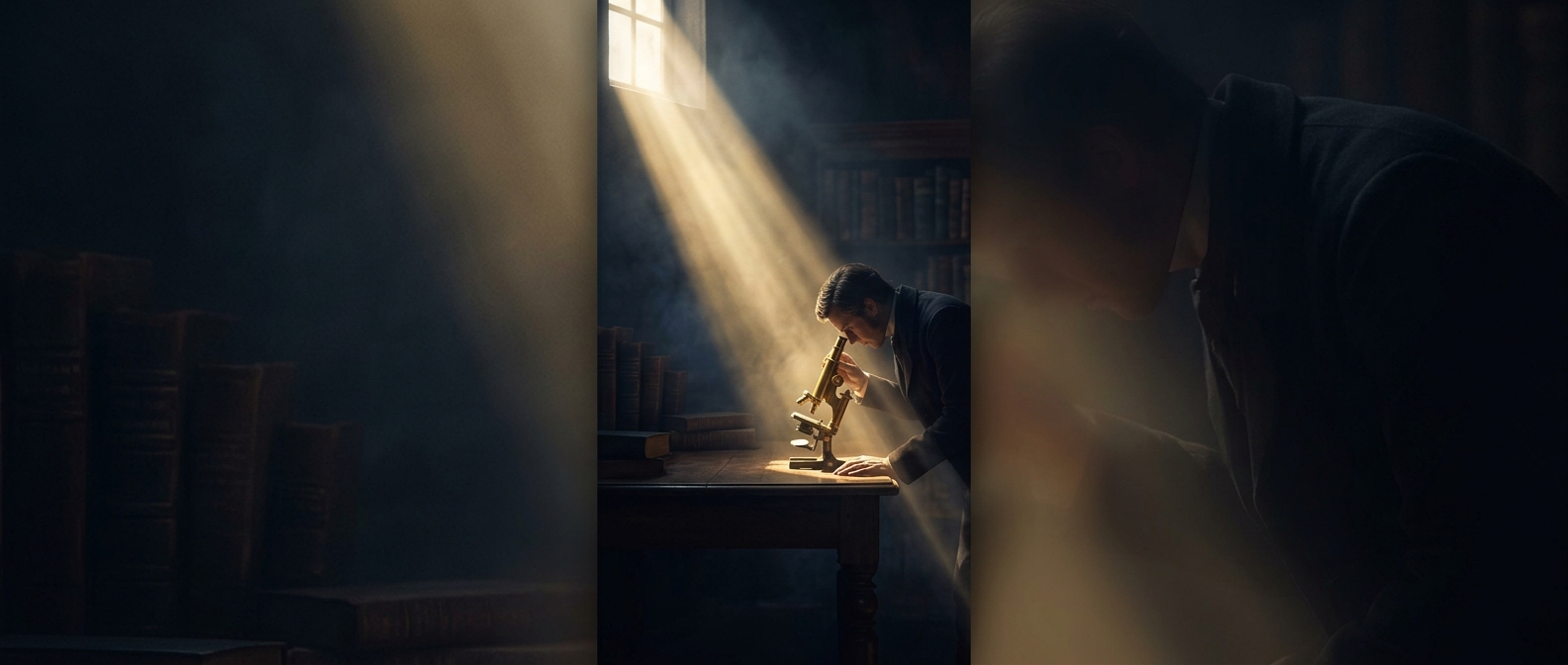
A lens can enlarge an image, but it cannot make a dark specimen visible. The earliest single-lens microscopes had no built-in lamp, so sunlight had to supply the illumination. The instrument—and the specimen in front of its lens—had to be positioned where natural light could reach it.
That made lighting part of the examination, not a separate convenience. A change in the sun or the microscope’s angle could leave a sample dim, while careful positioning could reveal details otherwise lost in shadow. The observer was effectively using the room and the daylight as pieces of the instrument.
A small lens, a hands-on view
In a single-lens microscope, one tiny lens provides the magnification. The viewer looks through it at a specimen held close to the lens, adjusting the setup until the image comes into focus. Because the instrument had no independent light source, the user could not simply carry it into a dark corner and keep working.
The arrangement illustrates an important limit of early microscopy: magnification alone was not enough. To see the structures a lens enlarged, observers also needed a bright, well-positioned source of light. For these microscopes, that source was the sun.