A tire that could “drink” road hazards
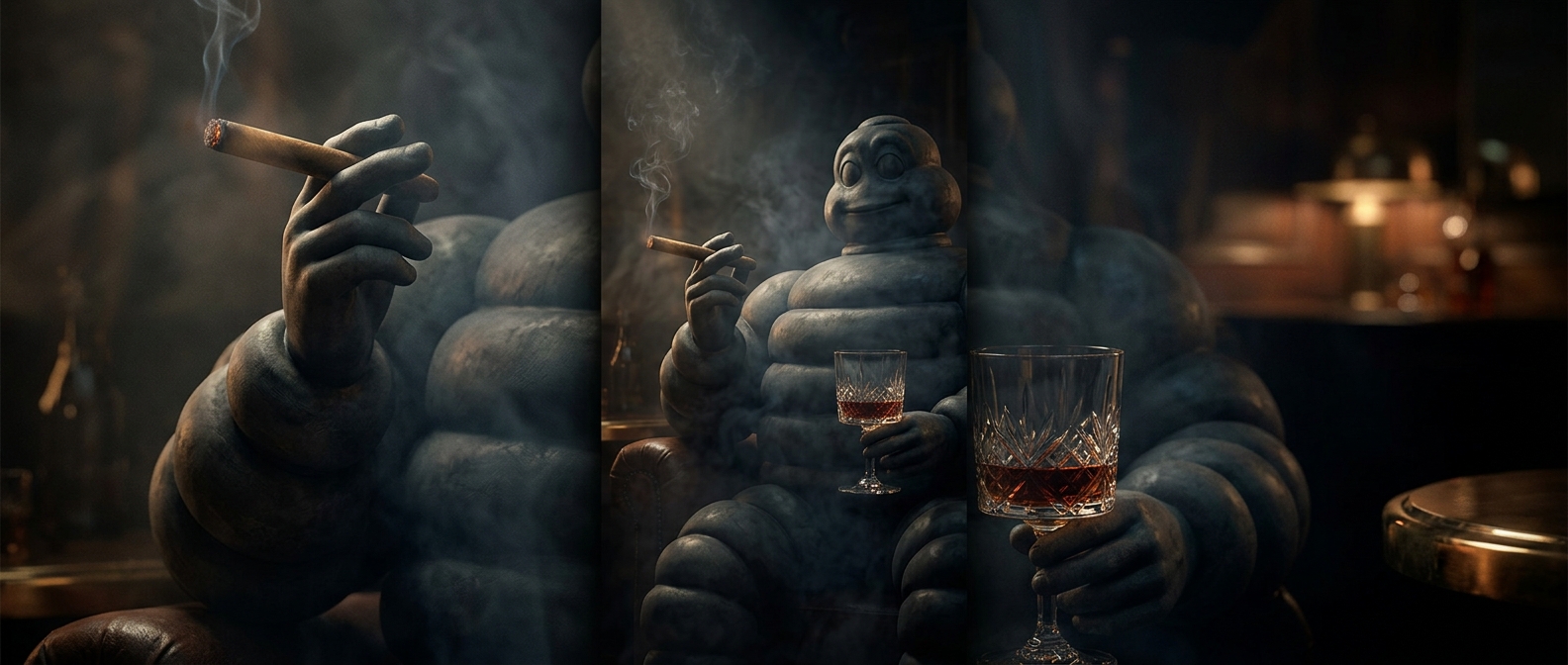
The Michelin Man began as a character built around a visual joke. In early advertising, he raised a goblet filled with broken glass and nails and announced, in Latin, “Nunc est bibendum”—roughly, “Now is the time to drink.” The accompanying idea was that a Michelin tire could “drink up” obstacles: hazards that might puncture an ordinary tire were presented as no match for Michelin’s product.
The aristocratic styling made the joke legible at a glance. With his cigar and toast, the tire figure looked less like a piece of equipment than a confident gentleman boasting about what he could withstand. The dangerous contents of the glass turned a technical claim about durability into a memorable image.
From swagger to family friendliness
That early persona suited advertising meant to make a new, unfamiliar product seem distinctive. But as cars and tires became part of ordinary family life, the same swagger—and the image of swallowing sharp objects—could feel out of place. Michelin gradually softened the character, making him friendlier and more approachable for drivers who were choosing practical, everyday products.
The change was more than a costume adjustment: it shifted the character from a bold emblem of toughness toward a reassuring companion. The old goblet still captures the original pitch in miniature: a tire’s strength was sold not through a diagram, but through a character daring the road to try its worst.