From a fogged window to a character
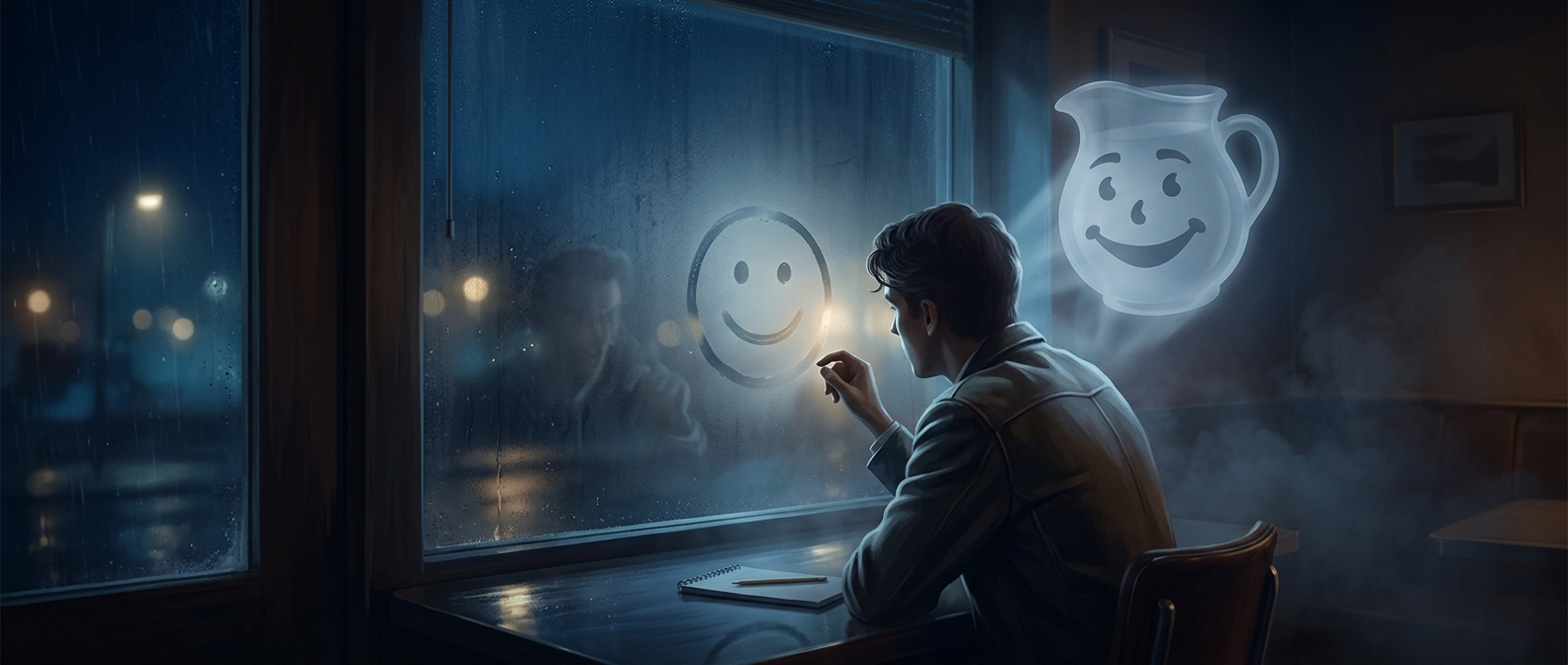
The key creative leap was turning an ordinary container into a face. Condensation on glass can make simple marks look expressive, and a child’s drawings showed how little was needed: add eyes and a smile, and a pitcher stops being just a vessel. The idea gave the drink a mascot that could be recognized at a glance, even before anyone said its name.
That visual simplicity also made the character easy to animate. A pitcher has a broad, unmistakable outline; its face can show excitement without changing that outline or requiring a complicated design. The result could move through a commercial as a character, not merely sit beside the product.
Why the wall became part of the act
The wall-smashing entrance turned the mascot’s arrival into a repeatable visual gag. Instead of appearing quietly in a kitchen, he bursts into the scene with exaggerated energy. The broken wall makes that entrance instantly legible: something big and unexpected has just happened.
There is a useful contrast at work. The character is a pitcher—a familiar object associated with serving a drink—but behaves like an over-the-top action hero. That mismatch gives the advertising a joke and a recognizable signature at once. A face drawn in condensation became more than packaging imagery: it became a character whose entrance could announce the brand before the drink itself appeared.