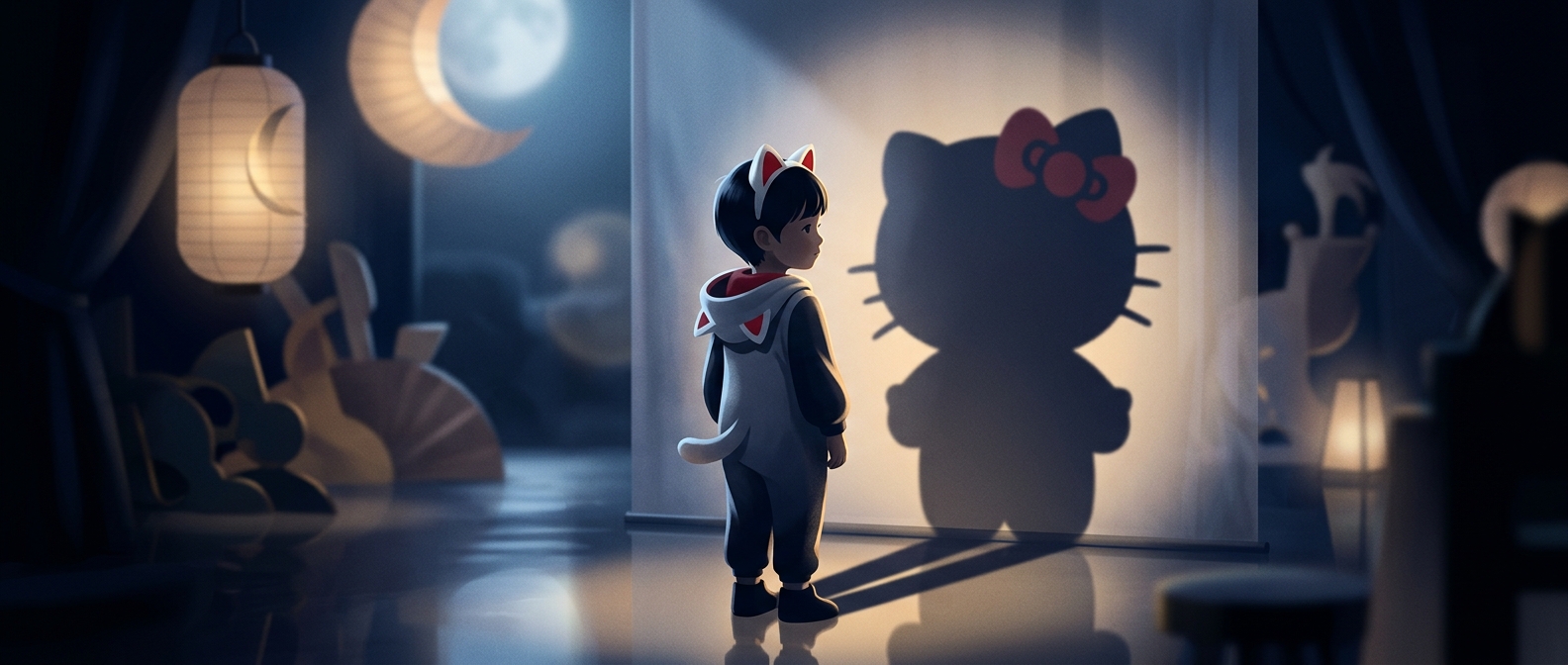
A girl drawn with catlike features
Hello Kitty’s appearance invites a straightforward guess: she has pointed ears, whiskers, and a cat-shaped nose. But Sanrio’s official biography identifies her as a human girl. The catlike face is part of her character design, not a description of her species. In other words, the image borrows familiar feline cues while the character’s identity belongs to a human child.
That distinction changes how to read her world. Her biography places her in the suburbs of London, and presents her as a girl with a home and family—not as a pet living in a cat’s world. The mismatch between appearance and identity is part of what makes the character memorable: viewers recognize the cat imagery immediately, then encounter an official story that asks them to see a girl instead.
Why the label matters
Hello Kitty is a character whose identity is defined by Sanrio’s profile, not settled by visual resemblance alone. That matters in a franchise built around a simple, highly repeatable image: the same face can appear on a school item, a toy, or a household product without needing a detailed story in each setting. Her human identity gives that image a character behind it, while the catlike design remains the instantly recognizable sign.
So the fun fact is more than a technical correction. It reveals a small but deliberate-seeming split between what the drawing suggests and what the official biography says: a human girl whose most recognizable feature is that she looks like a cat.