Reading a Sign in a Bowl
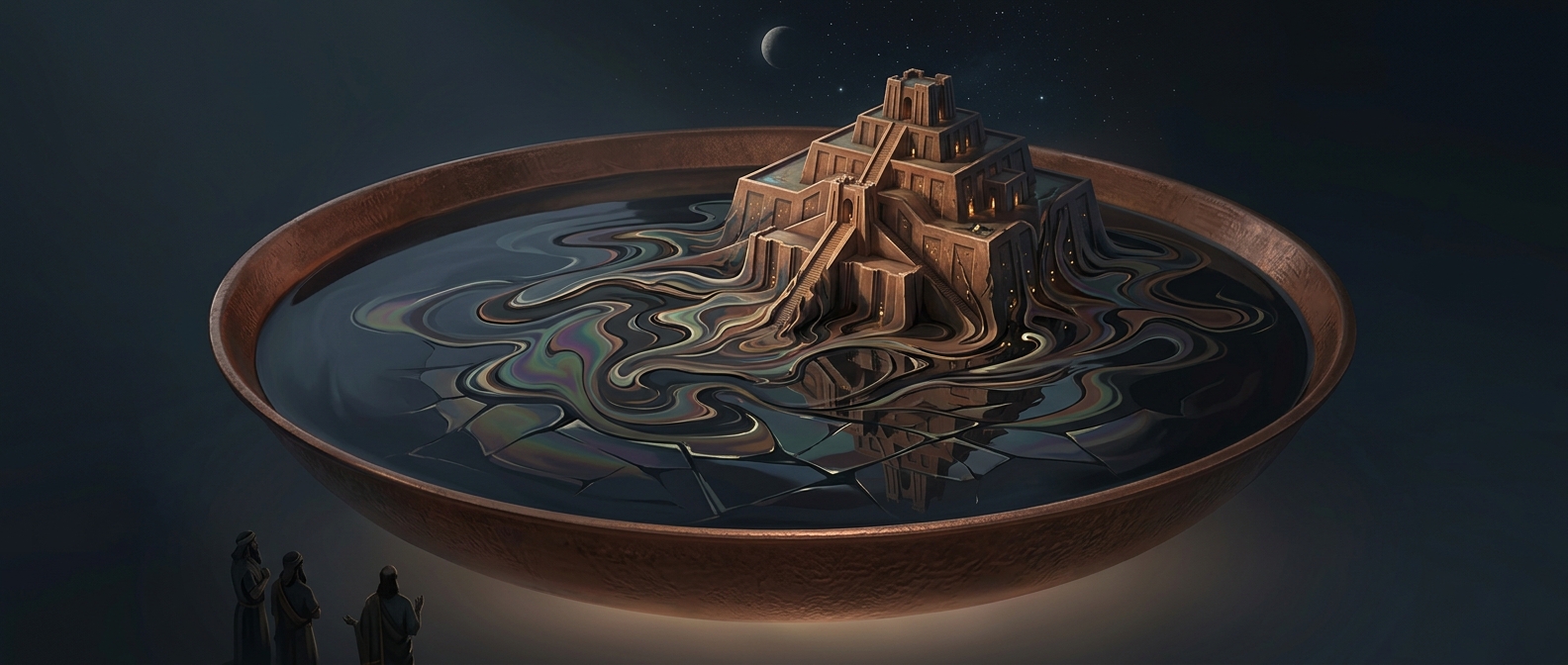
Lecomancy—also called lecanomancy—used the movement and outlines of oil on water as material for divination. The bowl was not simply a prop: it gave the practitioner a bounded scene in which a fleeting pattern could be observed and interpreted as a message about human affairs.
Oil and water do not mix. Oil tends to gather into slicks or droplets on the water’s surface, and those shapes can shift as the liquid is poured or disturbed. The physical event was visible to anyone at the bowl; deciding what it meant belonged to the diviner.
From Pattern to Prediction
A shape did not speak for itself. Its significance came from an interpretive tradition that connected particular signs with possible outcomes, including events affecting rulers. In that sense, lecomancy was less like measuring a future event than consulting a vocabulary of omens: the practitioner recognized a pattern and translated it into a forecast.
That distinction matters. The same unstable liquid could form different shapes depending on how it was poured, while the meaning assigned to a shape depended on the rules and judgment used to read it. The ritual offered a way to turn uncertainty into an answer that could be discussed or acted upon, without making the forecast a mechanically guaranteed result.
The striking detail is how ordinary the material was. A thin film of oil on water became politically weighty not because the bowl revealed an outcome in a modern, testable sense, but because people treated its pattern as a sign worth interpreting.