When the Steppe Seems to Have No Edges
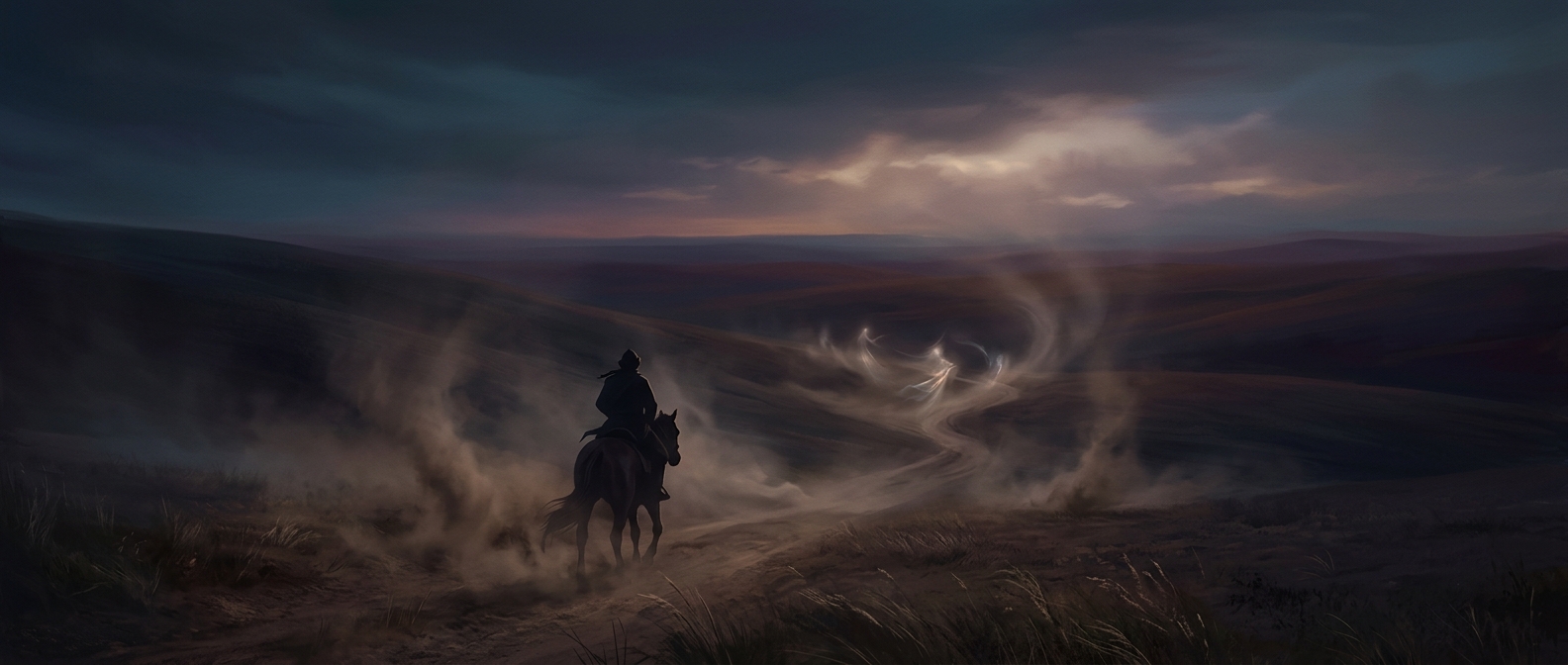
Across the open grasslands of Central Asia, a traveler can lose the landmarks that usually make distance feel measurable. The horizon stays low and unbroken; a ridge, tree line, or settlement may be too far away to guide a person’s sense of direction. In heat, mirages can make distant ground shimmer like water, while wind and blowing dust further obscure familiar features.
A story of spirits drawing someone into endless wind gives this disorientation a human shape. The supernatural figure is not merely an eerie presence: it turns a practical danger—wandering away from a route in a landscape with few visible reference points—into a memorable warning.
How a Warning Becomes a Story
On open terrain, small errors can compound. A traveler who mistakes a wavering image for a landmark, or loses sight of a known route in dust, may continue in the wrong direction. With little in the view to correct that choice, the landscape can seem to stretch without end. The spirit’s lure expresses that experience as an encounter: someone is drawn onward, unable to find a way back.
Such tales belong to a wider tradition of making local hazards legible through story. They need not describe a literal event to carry practical meaning. The “endless winds” make confusion vivid—and caution listeners against trusting appearances or pressing on without bearings.