Why the Road Keeps His Shadow
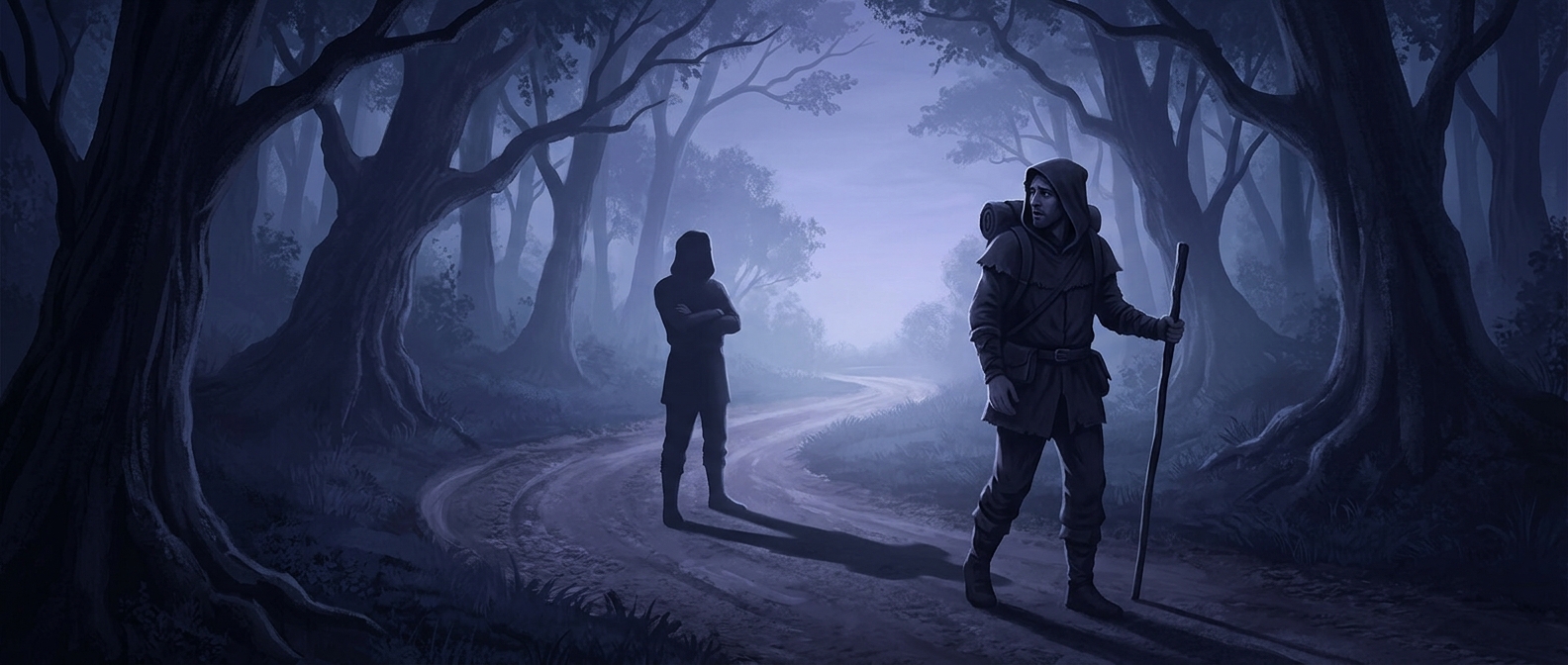
The traveler’s punishment turns disrespect into something visible. His body can keep moving, but his shadow—the familiar sign that he belongs to the world around him—remains behind. With each step, he is separated further from the ordinary order of things and grows weaker. The story makes an invisible offense feel physical.
A Road Is More Than a Route
In the tale, the traveler does not merely insult the spirits; he overturns their shrines and mocks their offerings. Those acts reject the customs meant to acknowledge forces people cannot see or control. A road, meanwhile, is a place of passage: people enter it, leave familiar ground, and depend on safe arrival. Respecting its spirits gives travelers a way to behave cautiously in a setting where they have little control.
The warning is therefore practical as well as supernatural. It asks listeners not to treat unfamiliar places—or the practices attached to them—as if they were empty, ownerless space. The stranded shadow makes the cost memorable: a journey can become dangerous when a traveler refuses every obligation along the way.