The Kelpie Made a Riverbank Danger Feel Personal
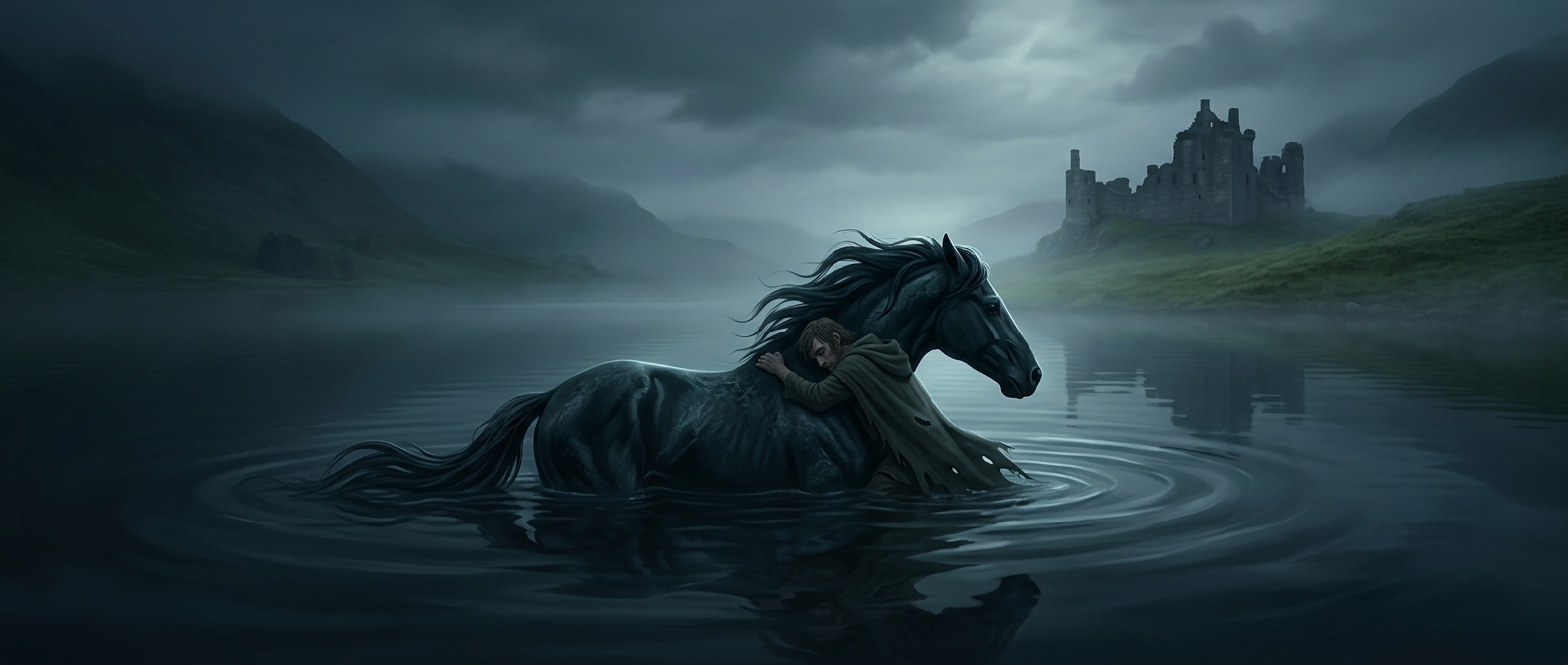
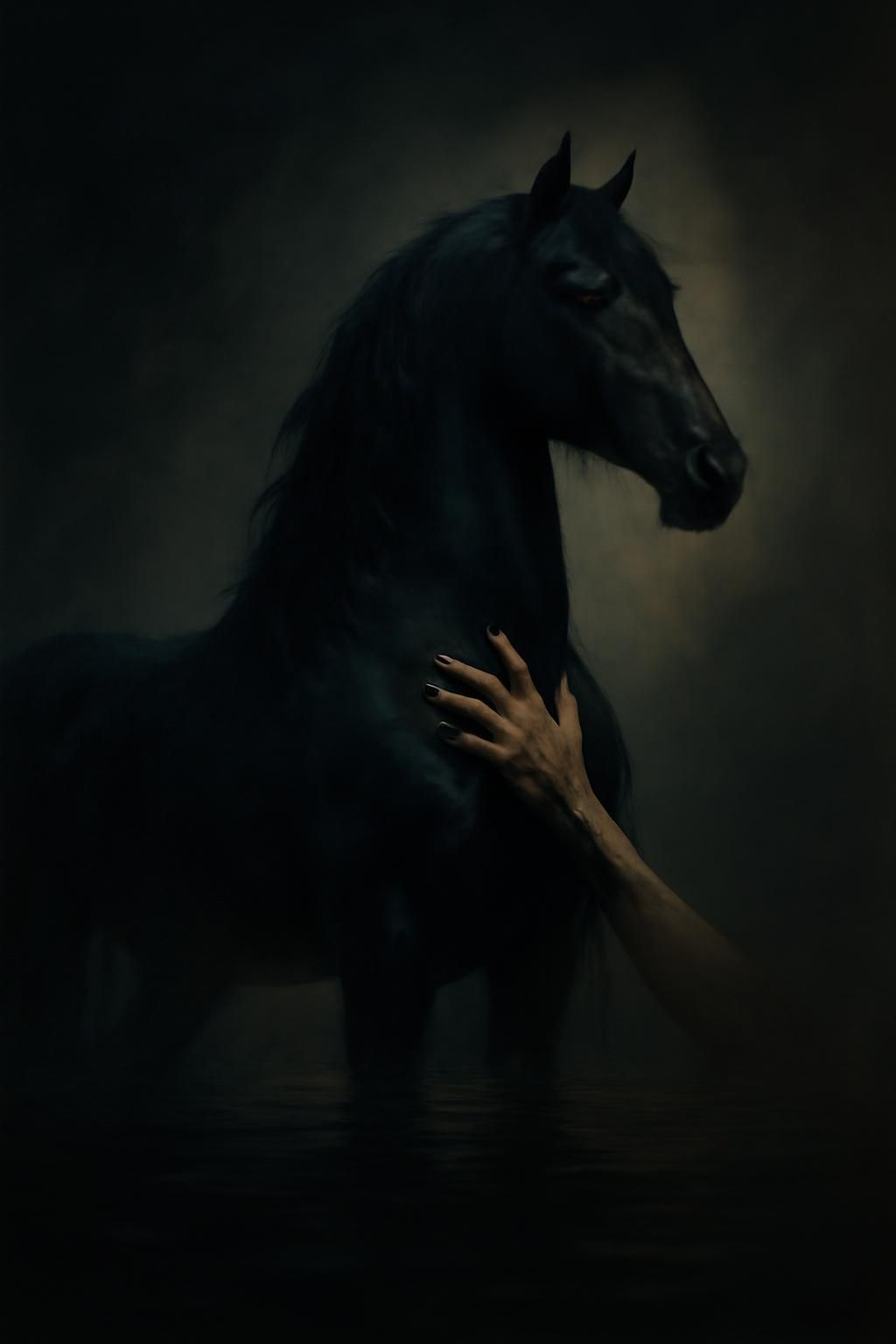
A kelpie is a water spirit in Scottish folklore, often imagined as a horse near a river or loch. Its danger begins with a tempting, familiar sight: a calm-looking animal that seems to need help. The warning turns that moment of curiosity into a trap. Touch the horse, the tale says, and your hand may stick fast; then the creature carries you into water deep enough to drown you.
Why the Horse’s Touch Matters
The story gives an invisible hazard a memorable mechanism. Instead of warning children only that deep water is dangerous, it makes the danger reach out and seize them. The horse’s unnatural grip explains why a person cannot simply let go or climb back to shore. In versions where someone escapes by cutting off a stuck finger, survival comes at a terrible cost—a grim way to make the warning difficult to forget.
The kelpie also twists the usual image of a horse as a useful, manageable animal. At the water’s edge, that familiar appearance cannot be trusted. The tale turns an ordinary impulse—to approach or mount a beautiful horse—into the very mistake that carries a person beyond safety.
A Warning Told as a Transformation
These stories belong to folklore, not reliable accounts of supernatural animals. Their force lies in how they shape attention: a lone horse beside deep water becomes a reason to stop, keep away, and seek an adult rather than investigate. The river remains the real-world danger in the warning; the kelpie makes it vivid enough to remember.