Two riders, one Olympic sprint
Tandem track cycling appeared at the 1908 London Olympics, returned in 1920, and remained on the Olympic program through the 1972 Munich Games. It was a sprint event: two-person teams raced on a steeply banked velodrome, where speed and careful control mattered as much as raw effort.
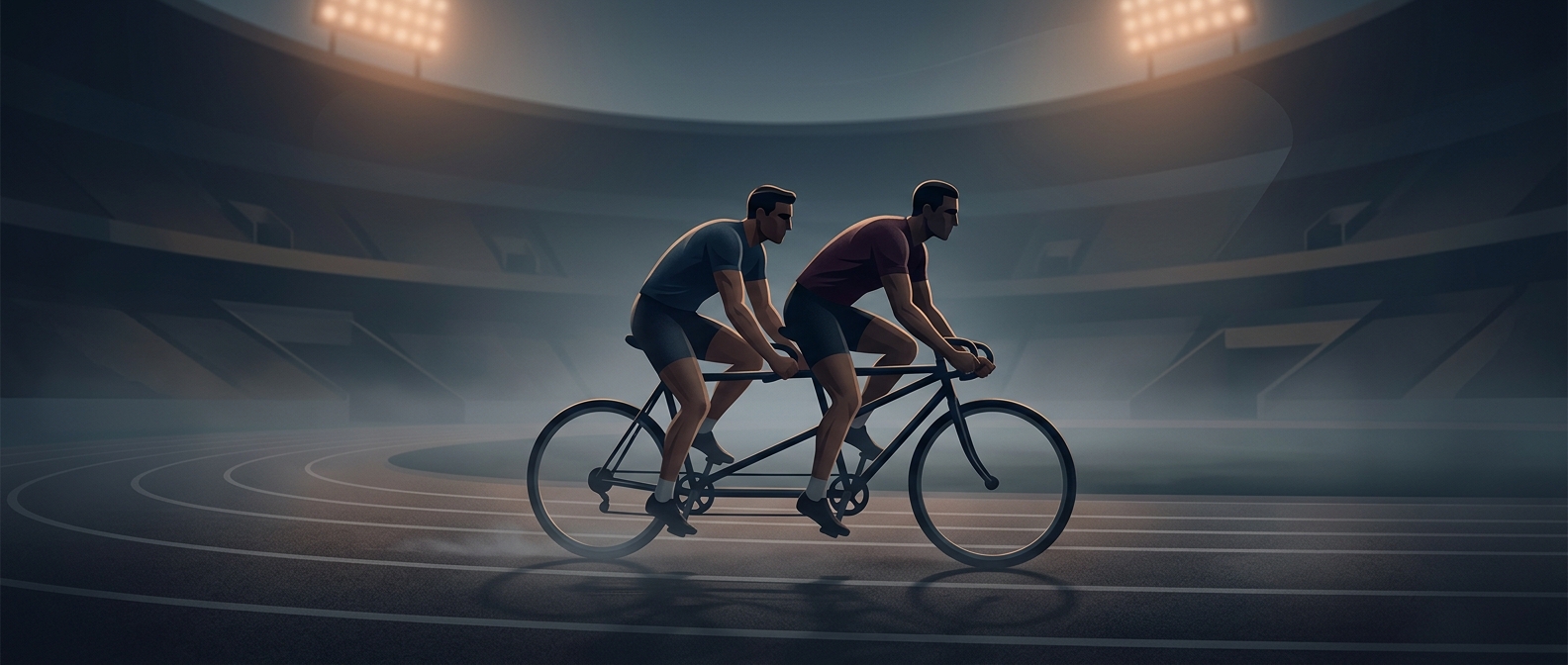
The bike made cooperation unavoidable. The front rider steered, while both cyclists pedaled together. A well-timed burst could propel the long machine forward, but mismatched effort or a poor line through a bend could unsettle it. Unlike two separate racers, teammates had to make every acceleration and turn as one unit.
Why the race drew a crowd
The tandem’s length and speed made the contest visibly different from ordinary track racing. Riders could build momentum together, then launch a sprint in a close, wheel-to-wheel finish. The same close quarters and high speeds also made mistakes dramatic: a fall could bring down both riders and threaten competitors nearby.
That spectacle helped give the event its appeal, but it demanded a kind of teamwork that audiences could see in every movement. The race was not simply two cyclists sharing a frame; it was a test of whether a pair could coordinate power, balance, and timing under pressure.
After 1972, tandem cycling disappeared from the Olympic program. Its Olympic run had spanned decades, leaving behind an event in which the bicycle itself made partnership the central challenge: two athletes had to ride—and race—as one.