A routine, not a strength test
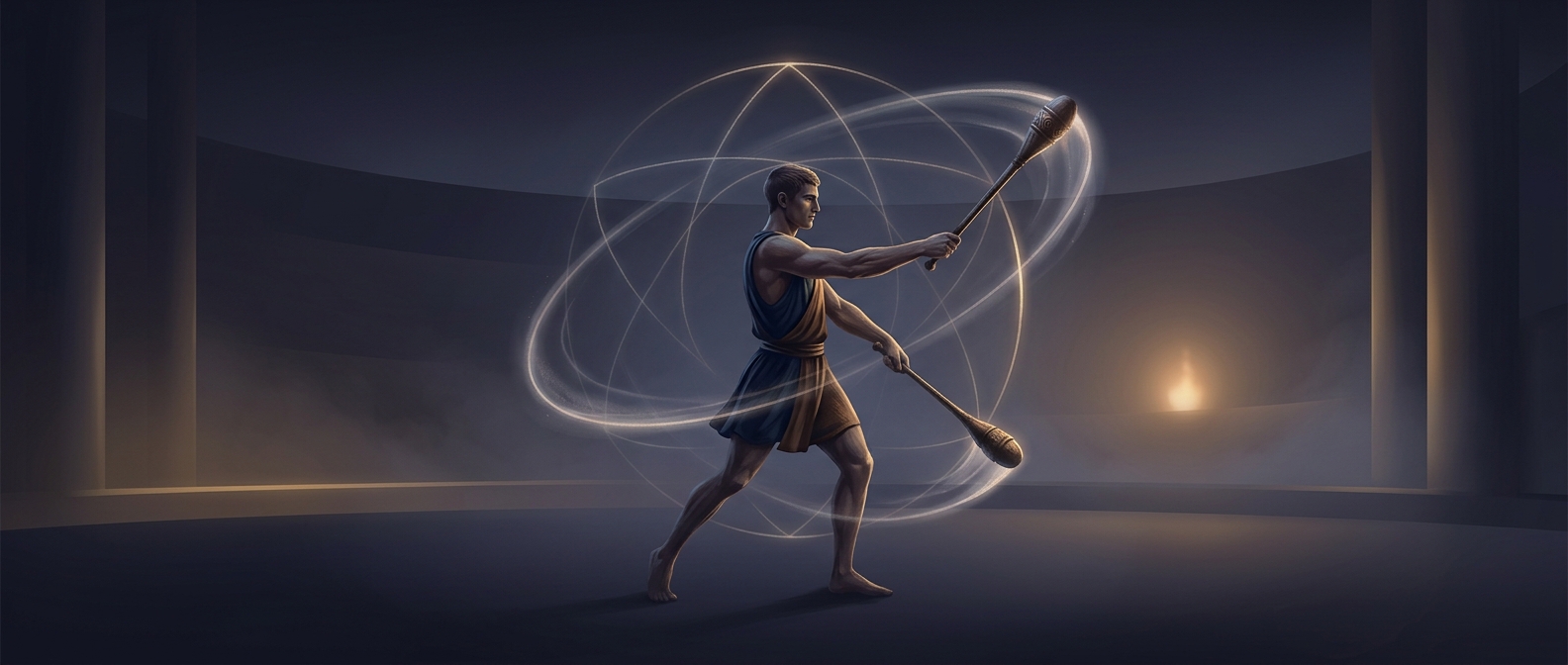
In Olympic club swinging, the clubs were tools for drawing patterns through the air, not weights to lift overhead. A competitor manipulated one in each hand, sending them through circles, crossings, and alternating arcs while keeping the body largely in place. The challenge was to make the movements flow without letting the clubs collide or lose control.
The clubs’ shape made the skill demanding. Their weight sat toward the rounded end, so a small wrist movement could set a longer, heavier lever rotating. The swinger had to guide that momentum through changes of direction using precise timing and shoulder motion. A routine that looked effortless depended on managing the clubs’ pull rather than simply muscling them around.
From gymnasium exercise to Olympic competition
Club swinging belonged to a wider physical-culture tradition: structured exercise meant to develop coordination, posture, and mobility as well as strength. By the time the Olympics included it, the practice could be presented as a judged performance, with competitors demonstrating control and pattern-making instead of racing or lifting the heaviest load.
That distinction explains why the event can look puzzling to modern viewers. Its achievement was not a dramatic finish but sustained precision: the clubs had to keep tracing clean paths while the athlete stayed balanced and in rhythm. What appeared to be a simple twirl was, in effect, a moving exercise in leverage—one missed beat could send a weighted club off its intended course.