The Standing High Jump Made the Takeoff the Event
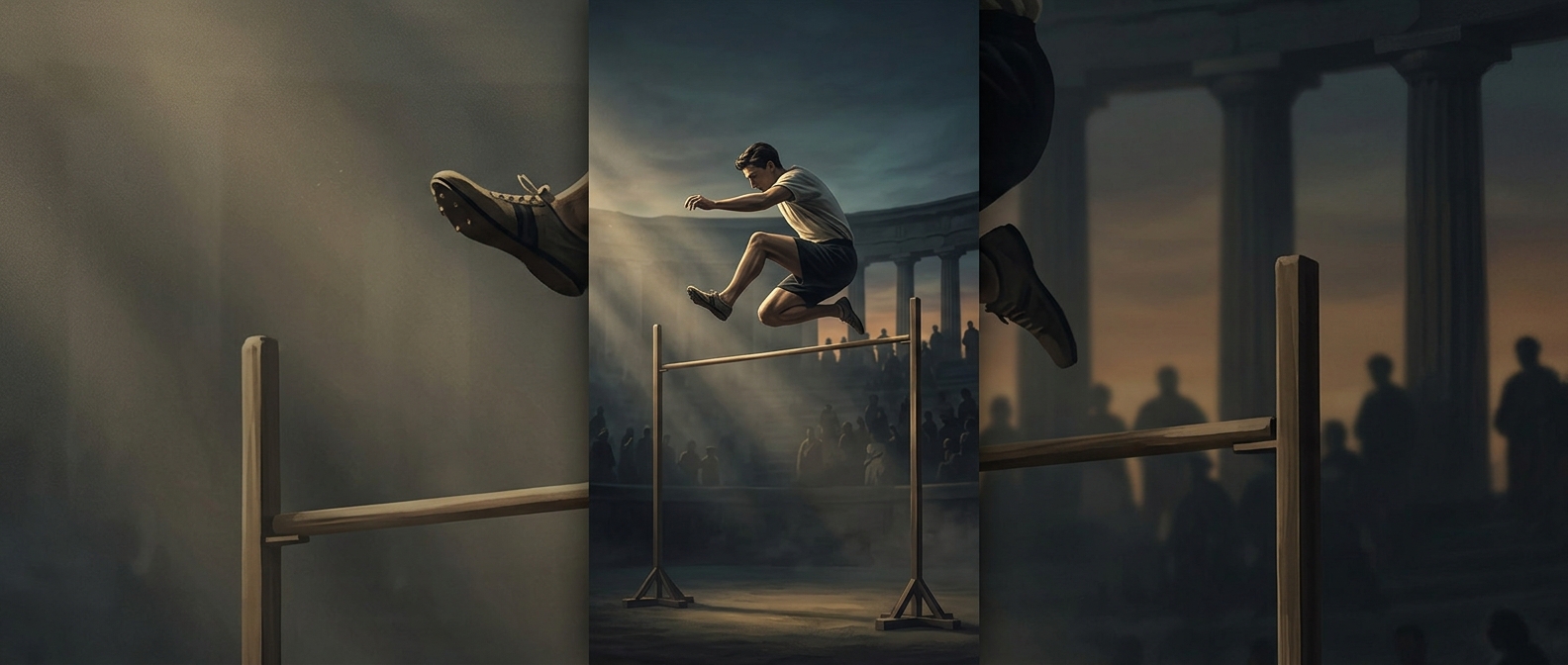
In the standing high jump, competitors had to leave the ground without an approach run. That removed a major source of lift: speed. A running jumper converts forward momentum into upward motion at takeoff; a standing jumper had to create nearly all of that upward motion with a rapid extension of the legs, helped by an arm swing and a forceful straightening of the body.
The preparation was brief but important. A jumper could bend at the knees and hips, then drive upward, using the arms to add momentum. Once airborne, the challenge was to arrange the body so it could pass over the bar. The familiar modern Fosbury Flop—crossing back-first with the body arched over the bar—was not the defining technique of these early contests. Without a run-up, there was little opportunity to build speed or adjust the takeoff, so strength and precise timing mattered enormously.
A Different Measure of Jumping
The event was contested at four early Olympic Games, from 1900 through 1912, before it disappeared from the Olympic program. Its removal reflected a shift toward the running high jump, where athletes could use an approach to generate more height and where technique continued to evolve.
That change did not make the standing jump a simple test of brute force. A powerful leg drive could send an athlete upward, but clearing the bar still depended on coordinating the push, arm swing, and body position in a fraction of a second. The striking limit of the event was also its point: with no runway to borrow speed from, every inch of height had to begin in the jumper’s own muscles.