How an annual profection is counted
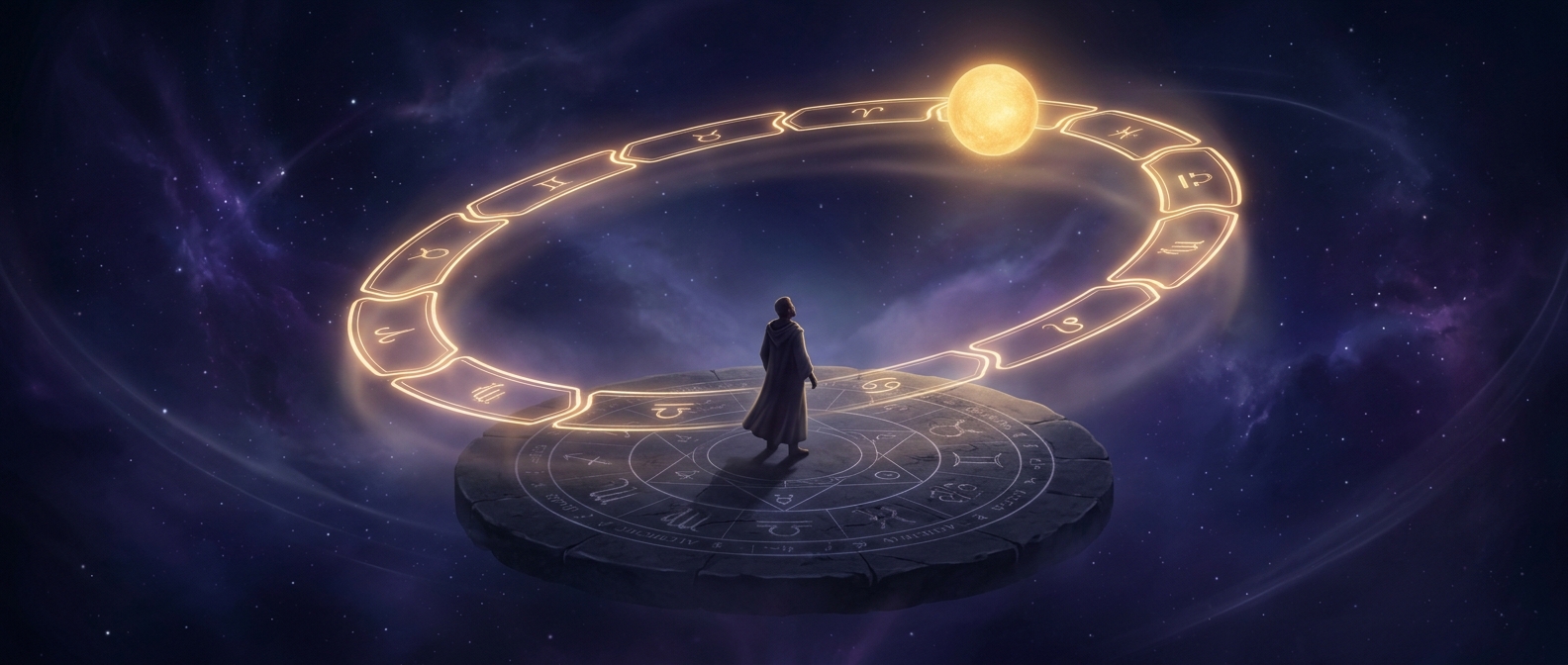
In astrology, an annual profection assigns each year of life to one of the twelve houses in a birth chart. The count begins with the first house at birth: age 1 moves to the second, age 2 to the third, and so on. At age 12, the sequence returns to the first house. The same pattern repeats in later twelve-year cycles.
A house is a chart sector associated with areas of life—for example, astrologers commonly connect the fourth house with home and family and the tenth with work or public standing. The method is a way to give one sector extra interpretive weight for a particular year, not a claim that everything else in life stops mattering.
The planet that becomes “lord of the year”
Astrologers also identify the planet that rules the sign in the activated house. They call it the lord of the year. Its place in the birth chart and its movements during the year are then used to elaborate the house’s themes. For instance, a year assigned to the seventh house may bring relationships into focus; the ruler of that house supplies another layer of interpretation.
This approach depends on the birth chart’s house-and-sign arrangement, so two people at the same age need not have the same planetary ruler for the year. Astrologers often use whole-sign houses for profections, in which each zodiac sign corresponds to a full house.
A calendar for interpretation, not a forecast by itself
Profections are commonly paired with other astrological techniques rather than treated as a complete prediction on their own. Their practical role is to organize attention: first identify the year’s house, then examine its ruler and the rest of the chart for context. The twelve-year return gives astrologers a repeating framework, while the birth chart determines which planet and life area that framework highlights.