How a vague brief became The Thing’s image
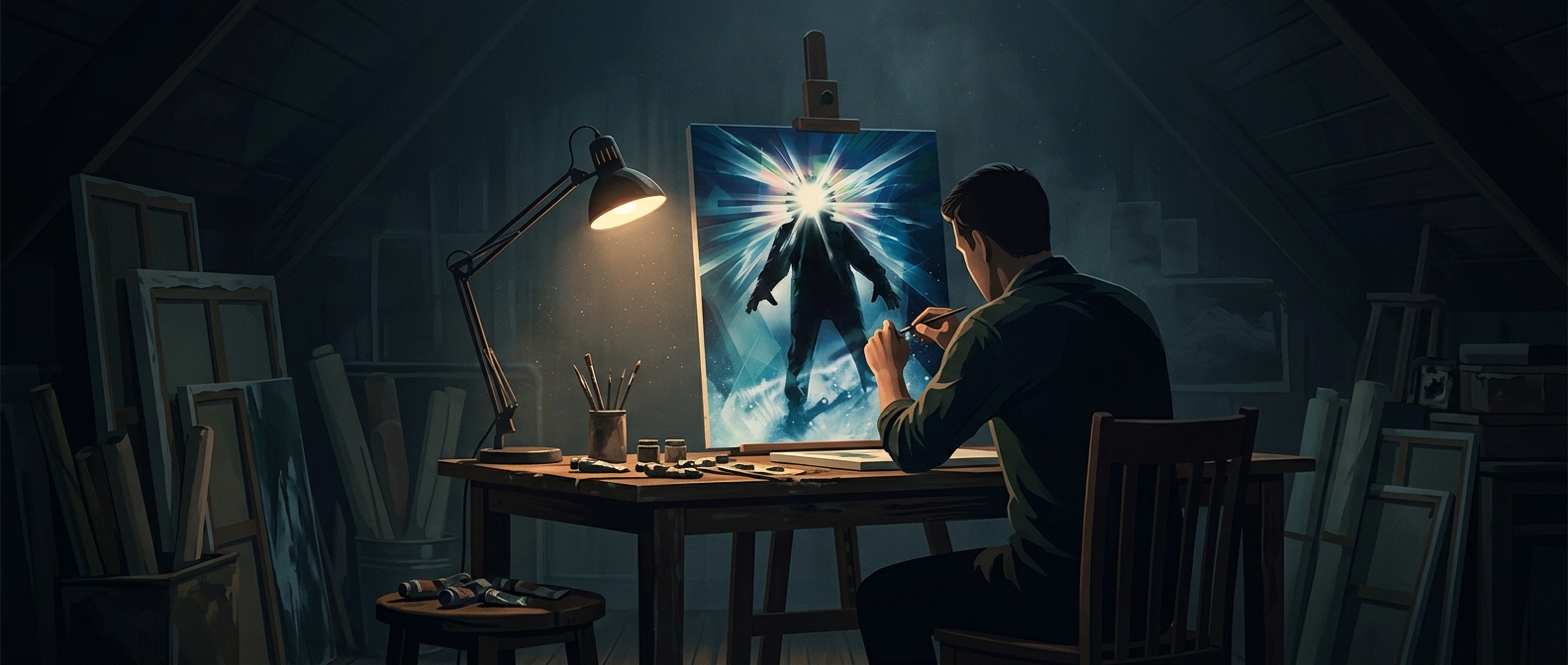
Drew Struzan had to make a poster for a film he had not seen, working from a scant idea: an alien in a snowsuit. With the deadline less than a day away, he could not build the image around a plot point, a recognizable creature, or a scene from the movie. He had to make the uncertainty itself carry the message.
Turning the unknown into a threat
The figure in a heavy parka offered a useful visual contradiction. Its clothing suggested an ordinary person surviving in the cold, but its obscured face made it impossible to know who—or what—was inside. Struzan’s stark treatment of the figure and the light across it pushed that uncertainty into something uncanny: the image seems to show a person, while withholding the one detail that would confirm it.
That choice suited a story whose danger depends on not being able to tell whether someone is still human. Rather than explain the premise, the poster gives viewers a question to carry into the theater: what is hiding under the suit?
A deadline shaped the design
Movie posters often have to sell a film before audiences can see it, so they compress a complicated story into a single glance. In Struzan’s case, the short brief and overnight turnaround left little room for literal storytelling. A solitary, unreadable figure could suggest isolation, cold, and concealed danger all at once.
The result works as more than an illustration of an alien. Its blankness is the hook: the poster makes the audience do the same uneasy guessing that the film asks of its characters.