A One-Way Passage for the Dead
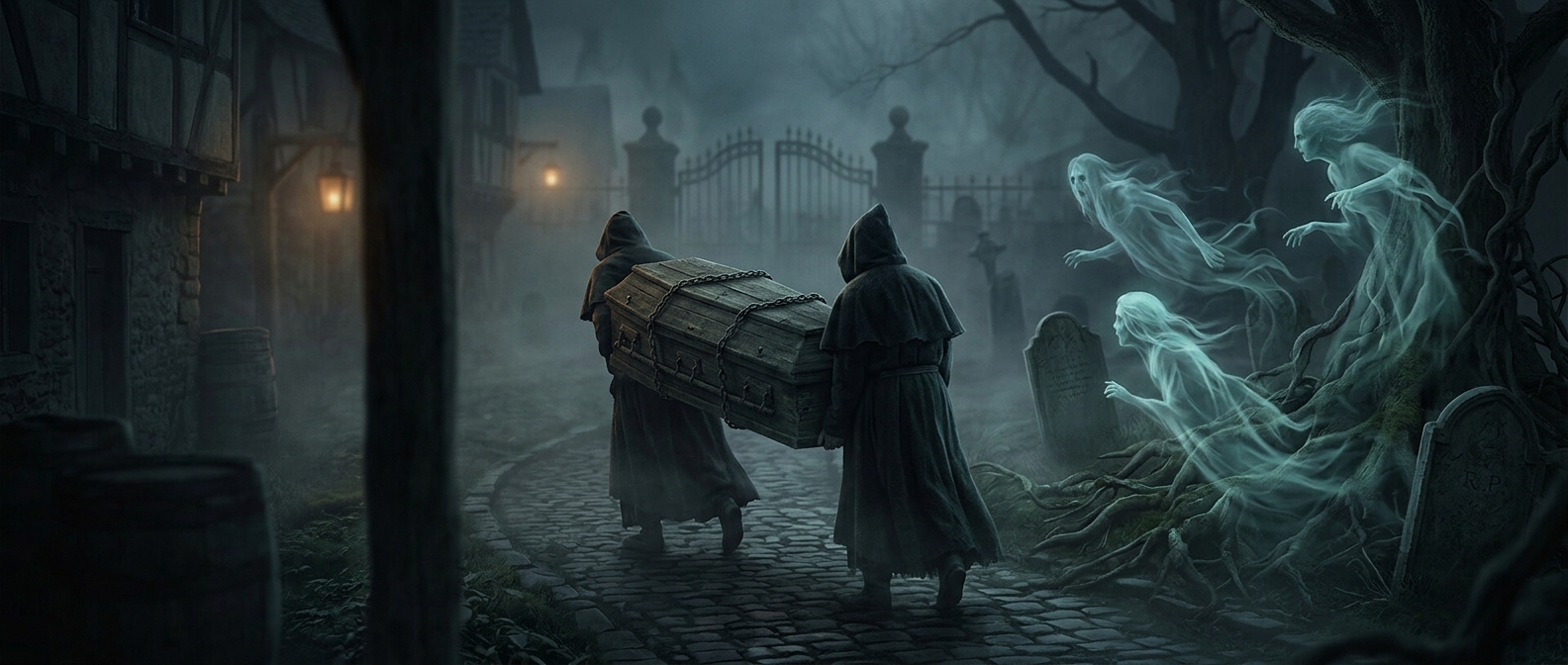
In this custom, the direction of the funeral procession mattered because death was imagined as a passage that should happen only once. A body carried feet first was oriented toward the exit, while its face could not turn toward the home. The arrangement gave a physical form to a boundary: the deceased was being taken out, not invited to look back into the household.
Why the Household Was Part of the Ritual
The fear was not only that a ghost might linger. It was that the dead could draw someone living into the same departure. That belief made the funeral a moment of special vulnerability for those left behind, and turned the way people handled the coffin into a protective act. The custom did not prove that spirits could return; it expressed a practical-seeming response to grief and uncertainty through the familiar language of direction and movement.
The detail is memorable because it made an abstract fear visible: the procession’s orientation was meant to ensure that leaving remained a one-way journey.