Why the portraits seemed to outlast the flames
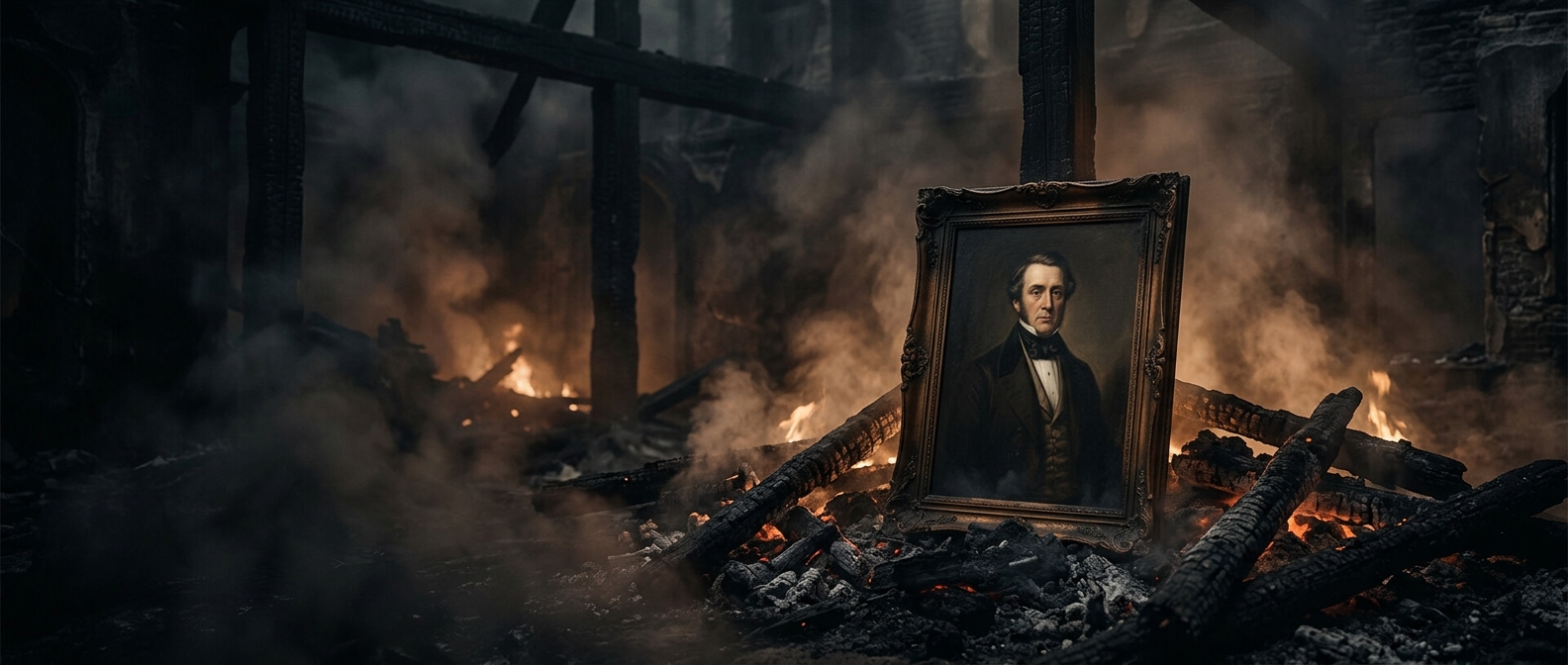
In the story, a gloomy child’s portrait remains recognizable after a house fire has devastated the rooms around it. That contrast gives the painting its uncanny force: the damage is everywhere, yet the child’s face appears untouched. The tale turns an ordinary object into a witness to a disaster—and, in some tellings, a suspected cause of it.
A painting can also look remarkably intact without every part of it having escaped heat. The image sits in layers: paint and varnish cover a support such as canvas or board, which is held in a frame. A surviving, visible image does not by itself establish that the frame, backing, or nearby contents were spared. Fire can damage different materials unevenly, depending on how heat and flames reach them.
The proposed varnish explanation
One less supernatural explanation points to fire-retardant varnish. Varnish is a clear coating over a painted surface; if formulated to resist ignition or slow damage, it could help explain why the image appears to fare better than expected. But that possibility is not proof that a particular portrait was coated—or that its whole structure would withstand a serious fire.
That gap between what a viewer can see and what the fire may have damaged leaves room for the mystery. The portrait’s apparent survival is the striking detail; the story of a curse is the meaning people attach to it. A protective coating might account for part of the contrast, while the painting’s survival as a whole remains a separate question.