From a place to a sound
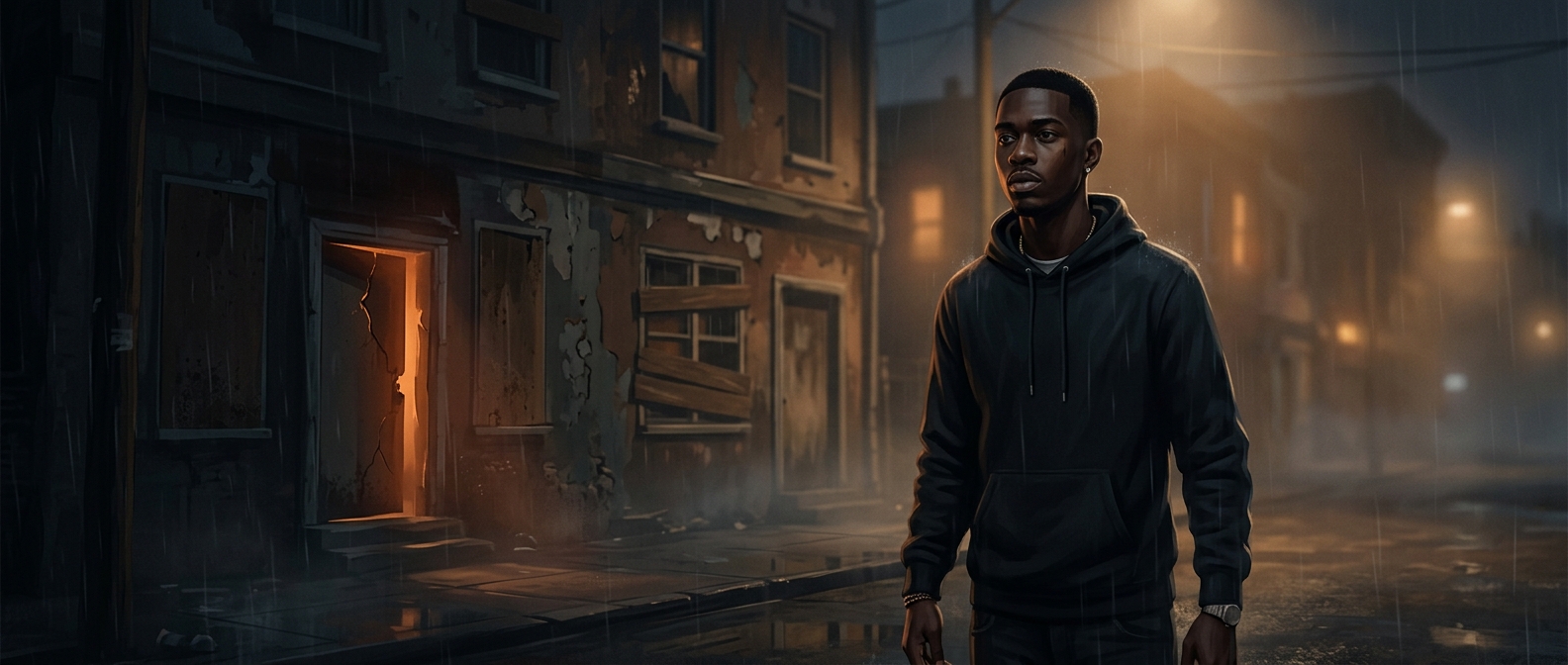
A “trap” was a house or other location where drugs were sold, and the word carried associations of danger, pressure, and being caught in a difficult situation. In hip-hop, “trap music” first linked songs to that world: artists described its routines, risks, and surroundings. The label then became useful for identifying a musical style, even when a particular song was not telling a literal story about a trap house.
How the production builds pressure
Trap beats often make tension audible through contrast. Deep, sustained bass gives the track weight, while quick hi-hat rolls—rapid patterns of the small, sharp cymbal sound—dart across the beat. A forceful kick and snare provide a steady frame beneath those restless details. The result can feel both heavy and jittery, as if the music is planted in place but constantly scanning for what might happen next.
Those sounds are conventions, not a fixed recipe: artists can slow them down, strip them back, or make them more melodic. As the style traveled beyond its original settings, the name increasingly described those production choices rather than a song’s subject. That shift is why a track can sound unmistakably like trap without depicting drug sales at all.