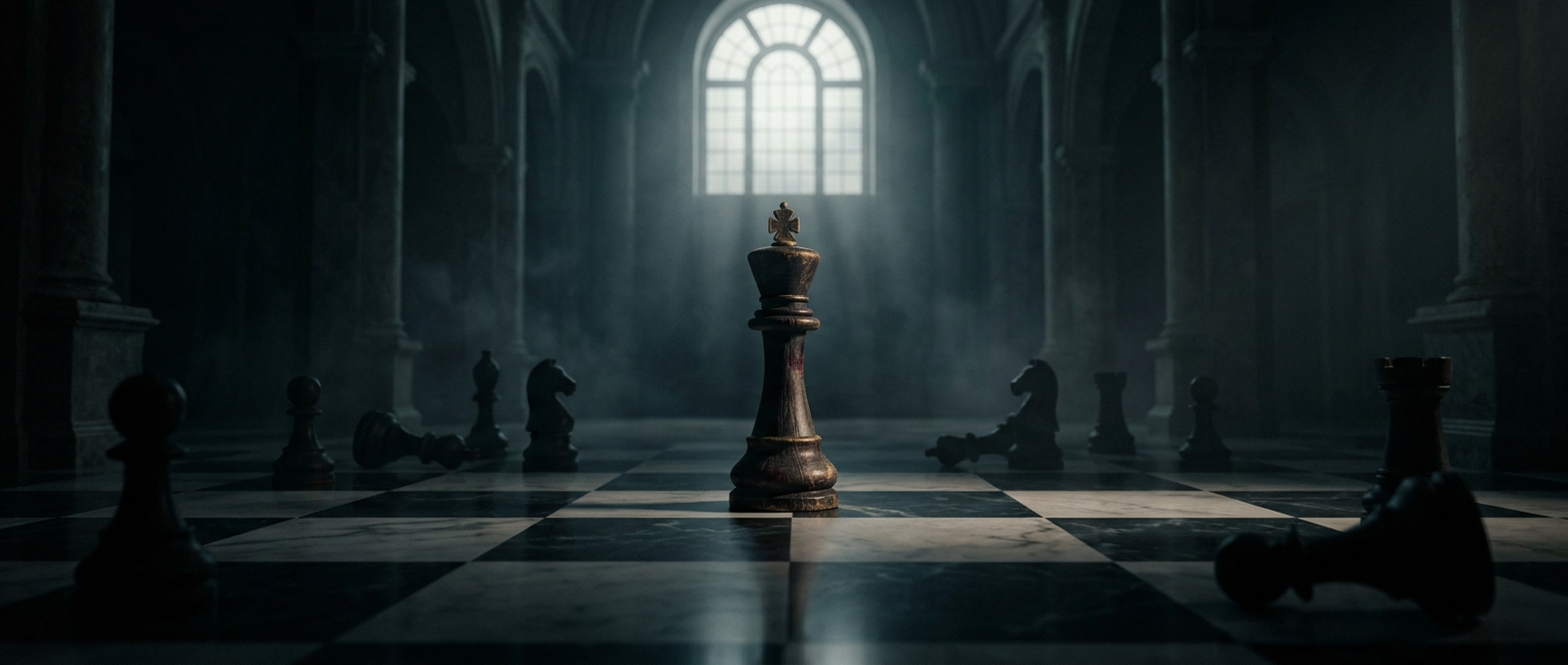
The king is threatened—but not taken
In chess, a king is in check whenever an opposing piece could capture it on the next move. The player must answer that threat: move the king, block the attacking line, or capture the attacker, if any of those choices is legal.
Checkmate is the point at which every escape is gone. The king is still on the board, but it cannot move to a safe square, and no other piece can stop the attack. Unlike in some games, chess does not end by physically capturing the king; the rules end the game as soon as the king is trapped under threat.
Why helplessness fits the ending
That distinction makes the old phrase especially apt: the king’s defeat is a matter of having no possible response, not being removed from play. A player may see the attack coming several moves ahead, but once the final position leaves no legal defense, the result is settled. The king remains visible on the board as the piece that has run out of choices.