How a Made-Up Word Acquired Historical Authority
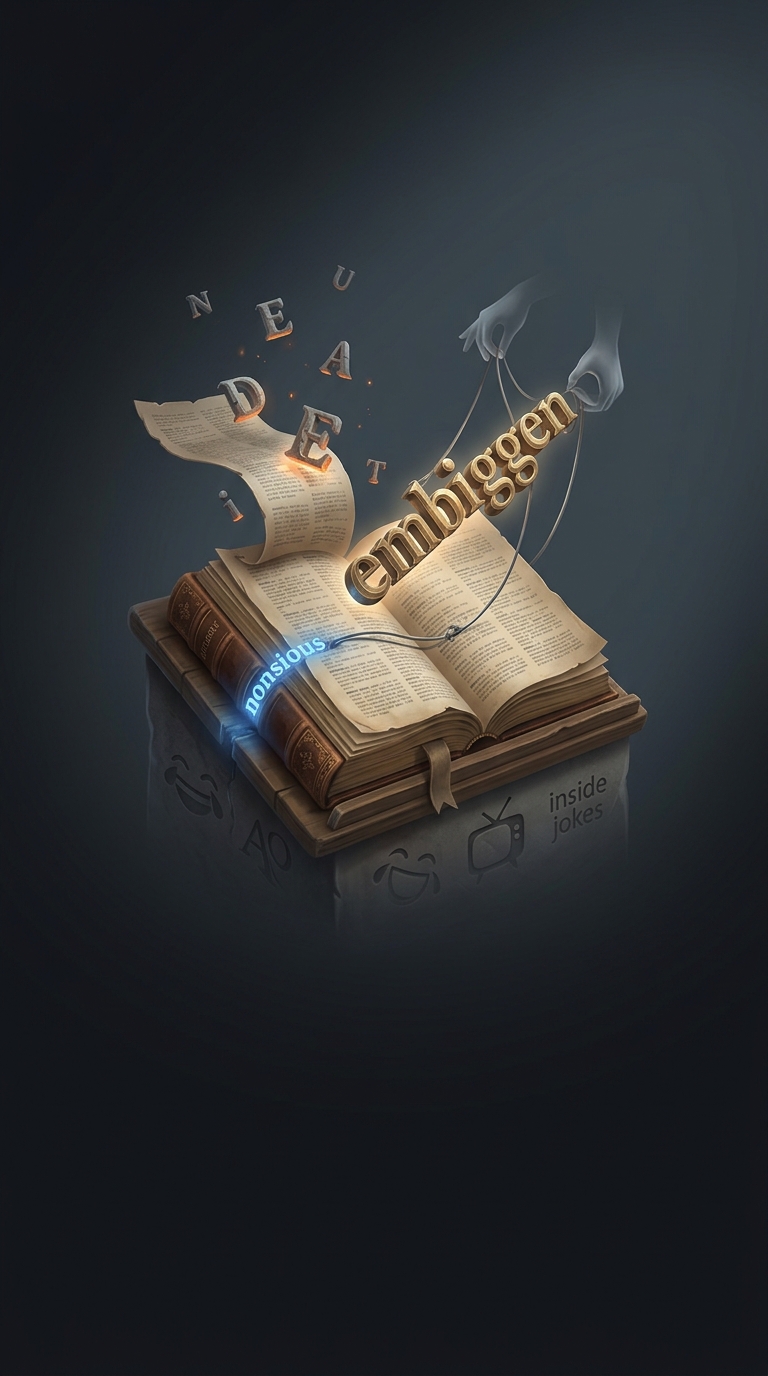
In “Lisa the Iconoclast,” the school motto is attributed to Jebediah Springfield: “A noble spirit embiggens the smallest man.” The joke depends on the sentence sounding like a piece of venerable civic wisdom. Its formal tone and supposed connection to the town’s founder make the unfamiliar verb seem as if it belongs on a plaque—even though the episode treats it as absurdly made-up.
That is the mechanism behind the humor: people often judge a word by how comfortably it fits its surroundings. A word placed in a motto, repeated by teachers, and tied to a revered figure can gain credibility before anyone stops to ask what it means. “Cromulent,” another invented word in the episode, makes the point explicit when a teacher calls “embiggens” perfectly cromulent—that is, acceptable-sounding.
From Joke to Dictionary Entry
The two words have different histories. “Cromulent” was coined for the episode. “Embiggen” was presented as invented in the story, but the word had appeared in print long before the show; the episode gave an obscure formation new life in popular culture. It combines the sense of “big” with the verb-making pattern in words such as “enlarge.”
When Merriam-Webster later included both words, it recorded their place in actual English usage, not a certification that Springfield’s history was real. Dictionaries describe words people use; they do not require a word to have begun as serious scholarship. The joke’s afterlife is fitting: a made-up civic motto helped turn two comic words—one newly coined, one rediscovered—into vocabulary people could recognize outside the episode.