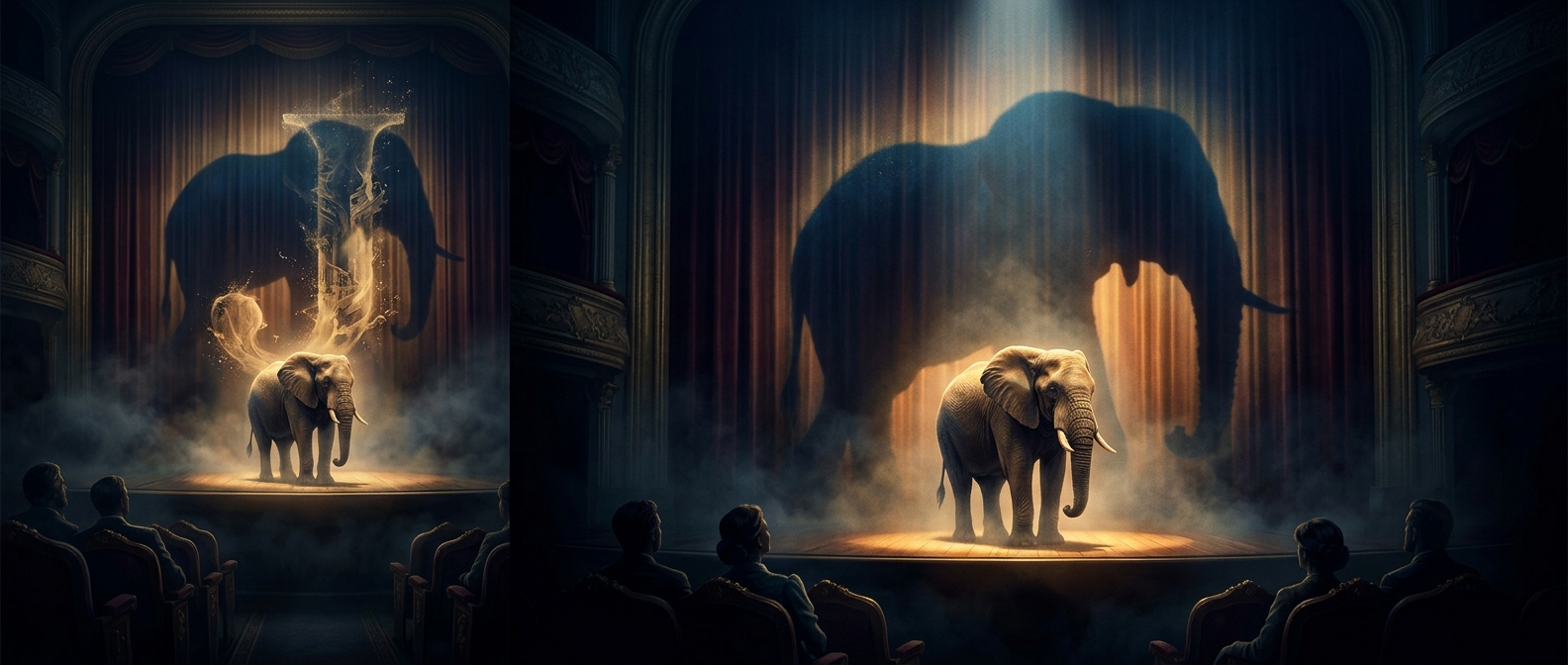
A zoo elephant became a publicity phenomenon
Jumbo was not born famous. He was an African elephant kept at the London Zoo, where his imposing size and popularity with visitors made him a public attraction. In 1882, showman P. T. Barnum arranged to bring him to the United States for his circus. The transfer became a news story in its own right: Londoners protested his departure, and Barnum’s promotion made Jumbo’s name familiar far beyond the people who had seen him.
Repetition turned a name into a measure
Barnum’s circus gave the name an enormous audience, while newspapers and everyday talk carried it further. “Jumbo” became shorthand for something unusually large—not because people needed a new word for size, but because one celebrated elephant had made the name memorable and easy to reuse. The shift is a small example of how a famous person, character, or animal can lend its name to a whole category of things.
The word’s popularity outlasted Jumbo himself. After he died in 1885, the name was already circulating as a common description, detached from the particular elephant that had made it famous. Today, calling something “jumbo” preserves the echo of a 19th-century showman’s publicity campaign—and of an elephant whose fame traveled farther than he did.