Why Animal Performers Have a Watcher on Set
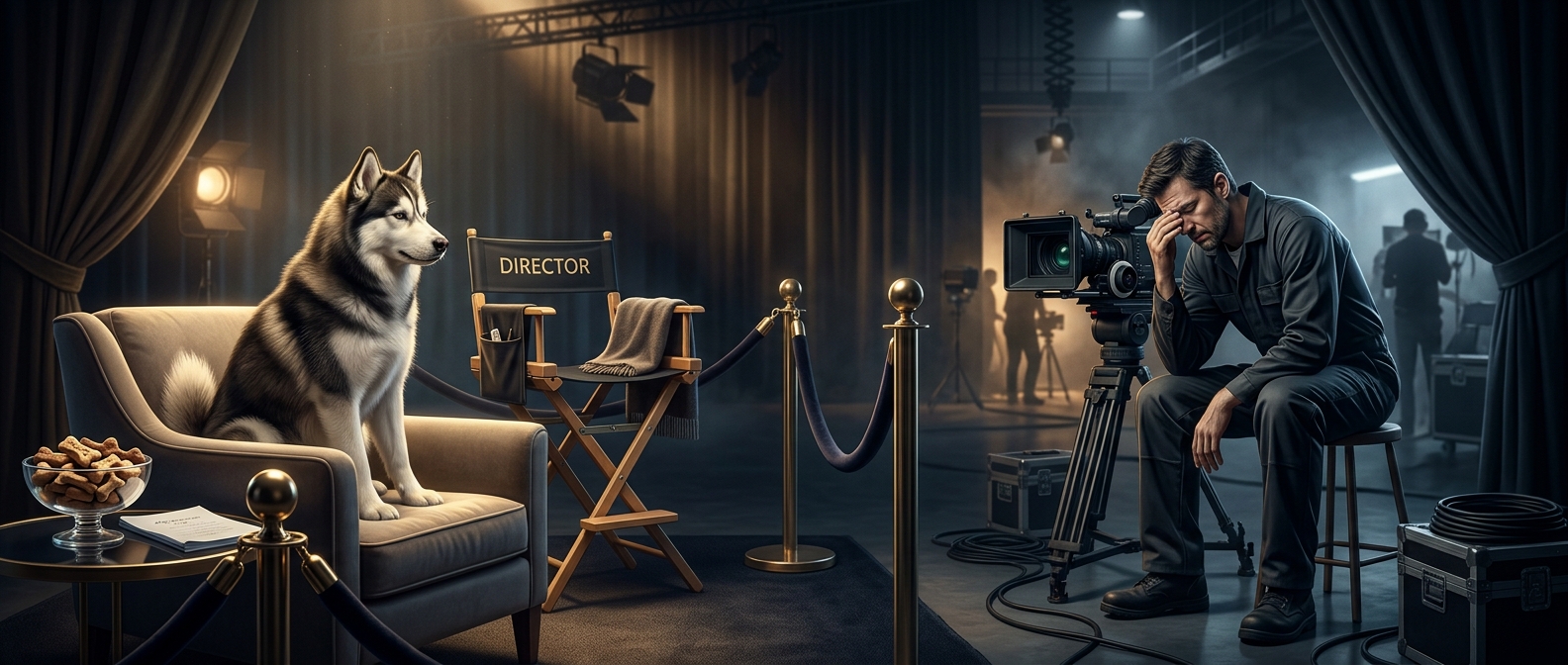
A trained animal can perform only through a human handler, but the handler’s job is not simply to get the shot. The animal’s behavior and condition can change with noise, heat, crowds, unfamiliar equipment, or repeated takes. Because the animal cannot explain that it is distressed or ask to stop, productions use animal-welfare representatives to observe how it is handled and used on camera.
That representative adds a check beyond the production’s own schedule. Work limits and breaks are meant to prevent the animal from being kept on set indefinitely or pushed through repeated action just because a scene is running behind. If a setup is unsuitable, the animal may need to be removed or the scene changed.
The Schedule Still Shapes the Scene
These protections affect filmmaking decisions. A director may need to simplify an action, shoot the animal’s part in a shorter window, or rely on editing and visual effects rather than repeat a difficult take. The constraint is practical as well as ethical: a rested animal is more likely to behave predictably, while a stressed one can become unsafe for itself and the people nearby.
Human crew members work under a different mix of rules. Their hours may be governed by labor law, union agreements, and production contracts, but those protections do not necessarily prevent a long day; a 16-hour shift can happen. The contrast is not that animal work is effortless—it is that animal welfare is treated as a specific on-set condition to monitor, while human fatigue can remain a cost of the production schedule.