The drum break became a bridge between records
In funk songs, a drum break is a brief passage when the other instruments drop back and the drummer’s beat comes forward. Dancers often treated that moment as the peak: the rhythm was exposed, forceful, and easy to move to. But on a record, the break ended after only a few seconds.
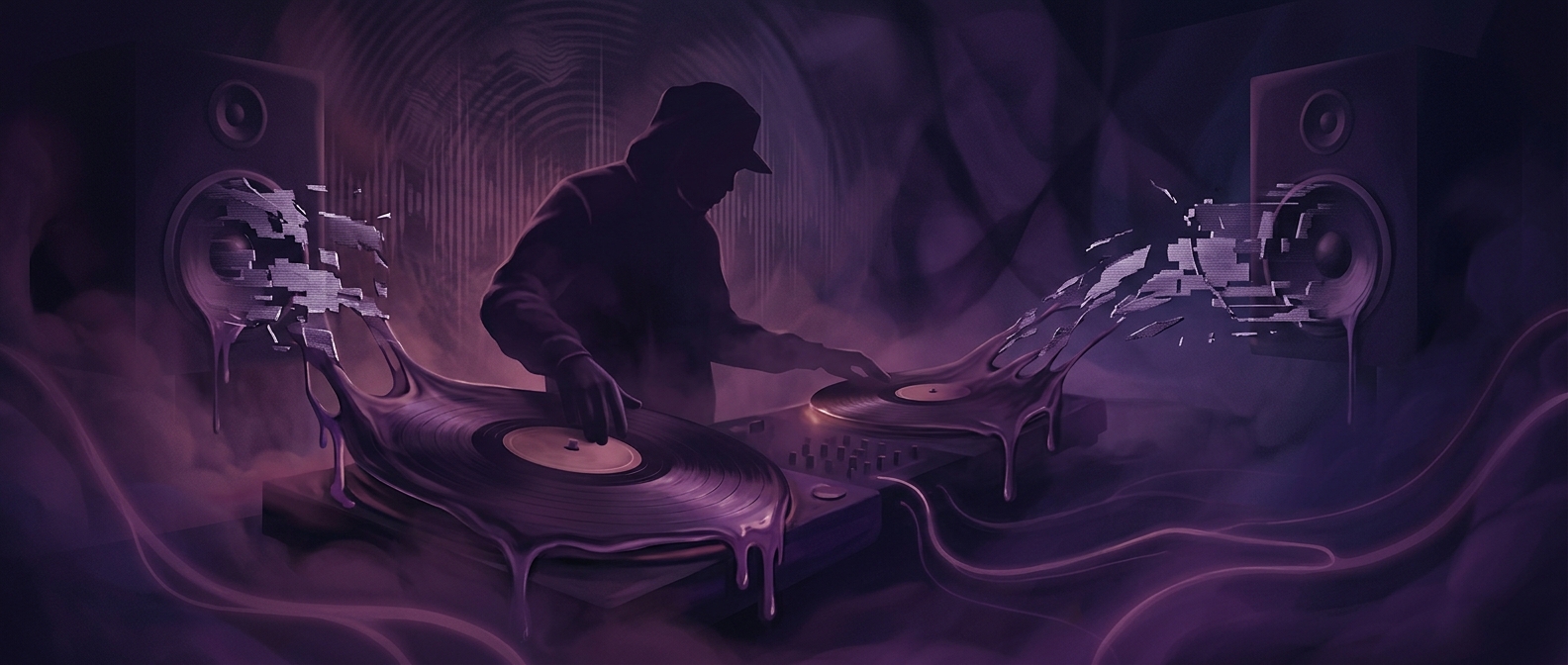
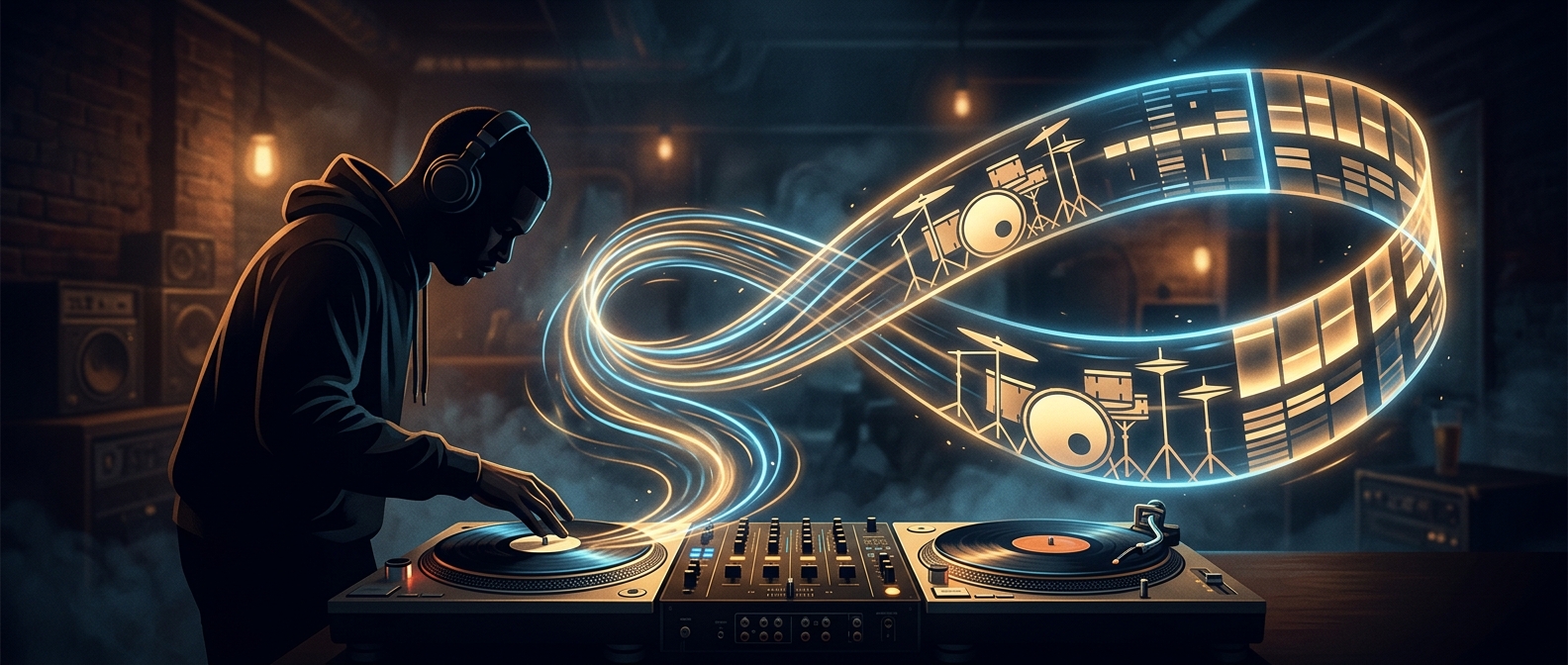
At early hip-hop parties, DJs made that short passage last. With two copies of a record, a DJ could play the break on one turntable, then switch to the matching break cued on the second copy as the first ran out. Repeating the handoff kept the drums going while dancers stayed on the floor. This practice helped turn the DJ’s choice and timing—not just the song itself—into a performance.
A limit became a musical tool
The loop did more than extend a beat. By isolating the break from the rest of a song, a DJ could build a continuous rhythmic bed, layer in another record, or create sharp changes with the mixer. The crowd heard familiar music rearranged around its most danceable seconds.
That approach also shaped the roles that grew around the DJ. Dancers could respond to a sustained rhythm, while MCs could speak and rhyme over it. As the style developed, producers recreated or sampled breaks, but the basic idea remained: take a small, vivid fragment and make it support something longer.
The lasting consequence is audible in hip-hop’s foundations: a few seconds once treated as a pause between verses became the part of the record that could carry an entire party.