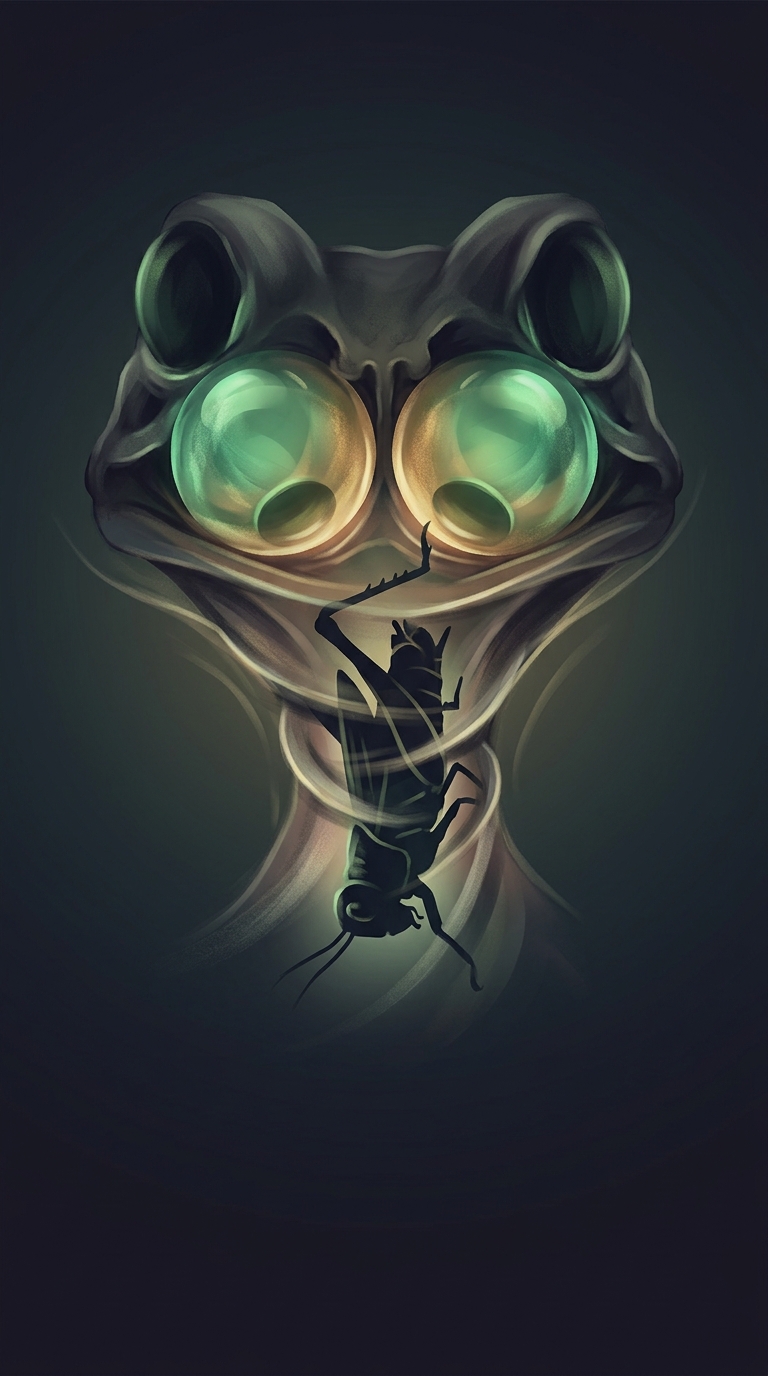
How a frog’s eyes help it swallow
A frog usually catches prey with its tongue, then has to get the meal from the front of its mouth to its throat without chewing. Its eyes can help with that job. Muscles pull the eyeballs downward and inward in their sockets, pressing against the roof of the mouth and the food below. That pressure helps move prey toward the throat.
The movement is possible because a frog’s eye sockets sit close to the mouth, with no rigid bony palate separating them as in many mammals. The eyes remain attached and supported; they are not popping out or traveling loose through the skull.
A brief blind spot
As the eyes press down, they can be partly covered by the frog’s lower eyelids, and the frog’s view may be obstructed. It is a short-lived tradeoff: the same movement that helps guide a large, unchewed insect down also temporarily takes the meal out of sight. Once swallowing is over, the eyes return to their usual position.