Why a Phone Can Expose a Dream
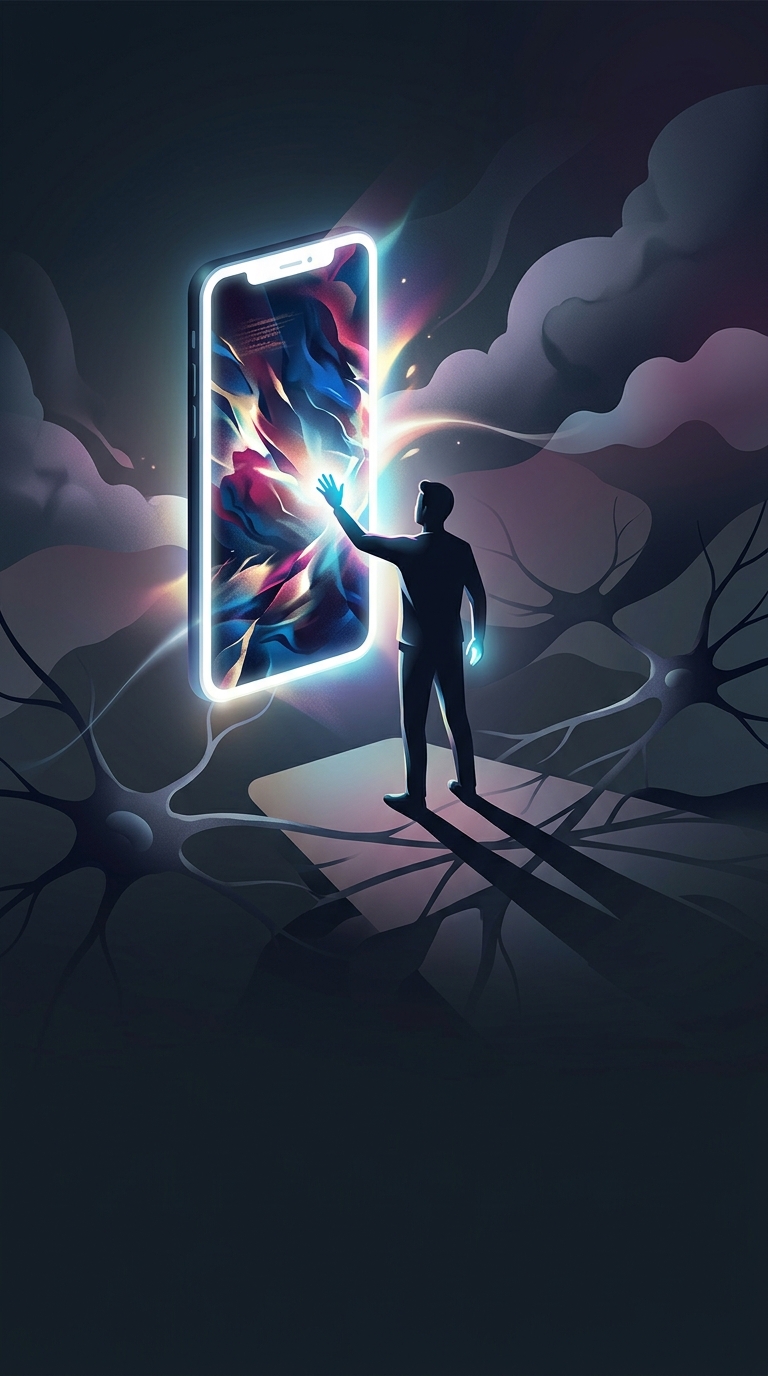
A phone gives you several things to check at once: small text, familiar icons, and a screen that should respond consistently when you tap it. In a dream, your brain is building the scene rather than receiving it from a physical device. That internally generated scene can look convincing at a glance, but details may be unstable. A line of text might change when you look away and back, or an app may behave in a way that makes little sense.
The useful part is the second look. Read a short line, glance away, then read it again. In a waking room, the words are usually still there. In a dream, the effort of holding the screen’s details steady can expose inconsistencies.
Why It Is Not Truly Foolproof
Dreams can also reproduce ordinary-looking text and familiar phone screens. The check depends on what the dream happens to generate, and a person may misread a stable display or overlook a strange one. So a phone is better understood as a clue than as a definitive test.
That matters because dreams often feel real while they are happening. Instead of relying on one screen, some people pair the phone check with another question: whether the events around them make sense, or whether a detail changes when checked twice. The revealing moment is not simply seeing a phone; it is noticing whether the scene can keep its details consistent.