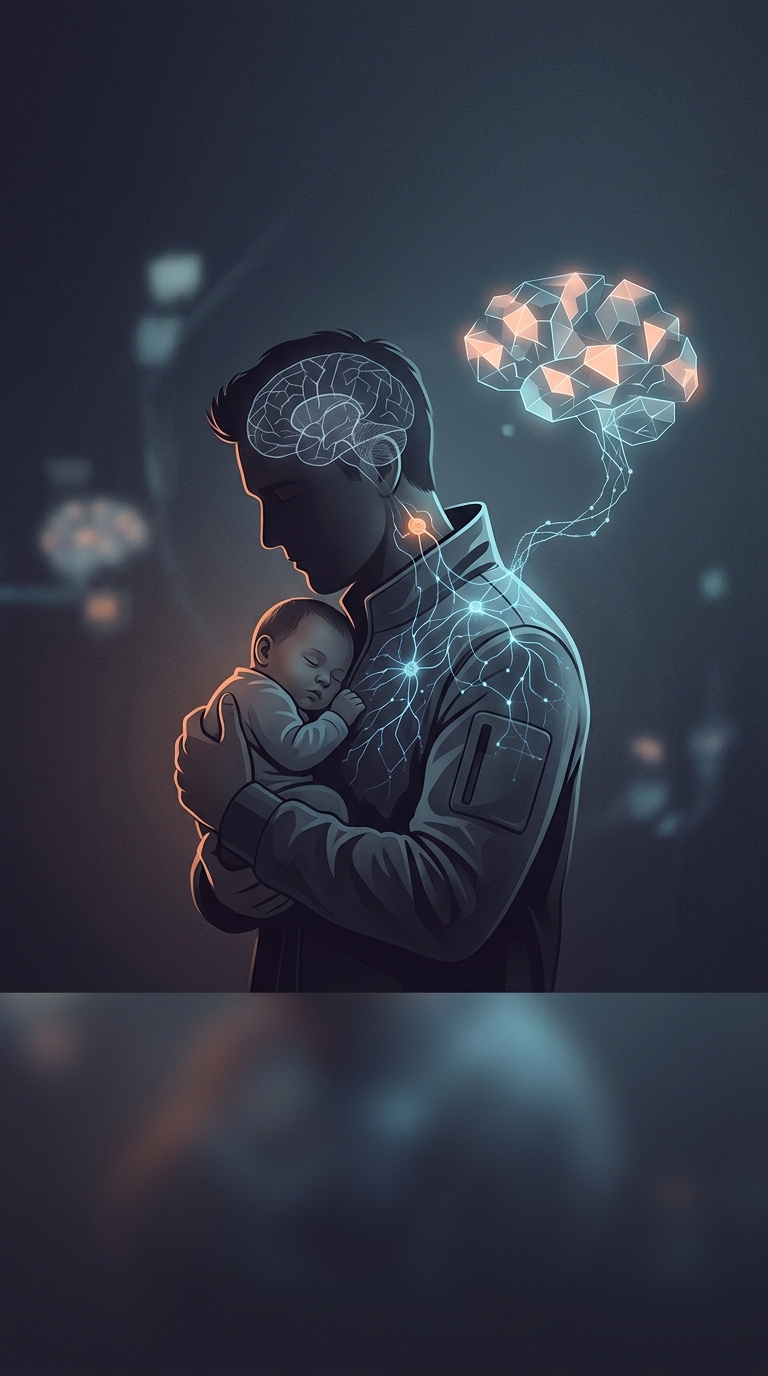
Fatherhood can reshape a man’s brain
The lasting physical change associated with becoming a father is not a new feature of the face or body. It is subtler: the brain can change as a man takes on caregiving. Brain-imaging research has found structural differences in new fathers, including changes in regions involved in attention, emotion, and understanding other people.
That does not mean fatherhood produces one identical brain pattern in every man, or that a scan can reveal whether someone is a parent. Brains vary, and the changes are best understood as plasticity—the brain’s ability to adapt as it learns and responds to new demands.
Caregiving gives the brain new work
A newborn provides an intense stream of signals to learn: cries, facial expressions, feeding cues, and shifts in mood. A father who spends time caring for the baby repeatedly practices noticing those signals, interpreting them, and responding. Circuits involved in attention and social understanding can adapt to that experience, much as the brain adjusts to other sustained forms of learning.
Hormonal changes may also contribute. In men, testosterone levels can fall around the transition to fatherhood, while hormones connected with bonding and caregiving can shift. These changes are not a simple switch that turns someone into a parent; they interact with experience, sleep, stress, and how much hands-on care a father provides.
“Permanent” is stronger than the evidence
Brain changes can persist, but persistence is not the same as an irreversible transformation. Research can identify differences associated with fatherhood; it cannot establish that every change lasts forever or that parenthood alone caused each one. The clearest takeaway is that becoming a father can be a biological as well as a social transition: the work of caring for a baby can help reshape the brain that does it.