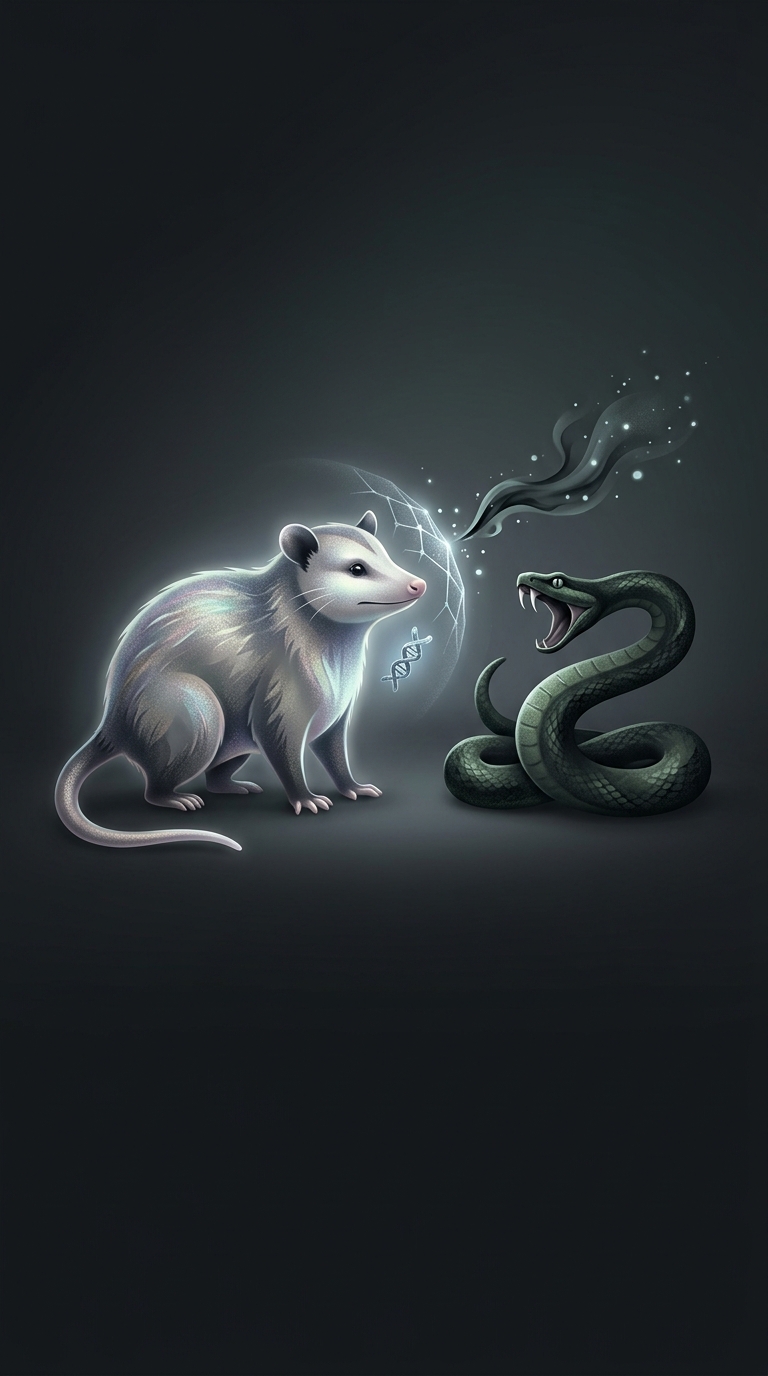
How an Opossum’s Blood Can Blunt Snake Venom
A snakebite is dangerous because venom is a mixture of molecules that disrupt the body in different ways. Some damage tissue; others interfere with blood clotting, nerves, or muscle function. Opossum blood contains a small protein fragment—a peptide—that can interfere with certain venom toxins and reduce their effects.
That is a different kind of defense from simply avoiding a bite. The peptide circulates in the animal’s blood, where it can encounter venom that has entered the body. It does not make the bite harmless on contact, nor does it neutralize every harmful substance in every snake’s venom.
Resistance Is Not the Same as Immunity
Venoms vary among snake species, and even a single venom may contain several toxins. A defense that works against some components may do little against others. The bite’s severity also depends on how much venom enters the body and where the bite occurs. So an opossum may fare better than another animal after some bites without being protected from all venomous snakes or every serious injury.
This distinction matters because “immune” suggests an all-purpose shield. The more accurate picture is a biological countermeasure with limits: a peptide in the blood can blunt certain toxins, but the outcome still depends on the venom and the bite.
Why Such a Defense Matters
For a small mammal that may encounter predators, even partial resistance can improve its chances of surviving an attack. It also gives researchers a biological starting point for studying how venom toxins might be blocked. But an opossum’s defense is not a treatment for people: its effects in one animal do not establish that the peptide is safe or effective as a human medicine.
The striking detail is not that opossums can shrug off any snakebite. It is that a small molecule in their blood can change what certain venoms do—turning a potentially lethal encounter into one the animal may be better equipped to survive.