Why a Candle Flame Seems to Follow Your Gaze
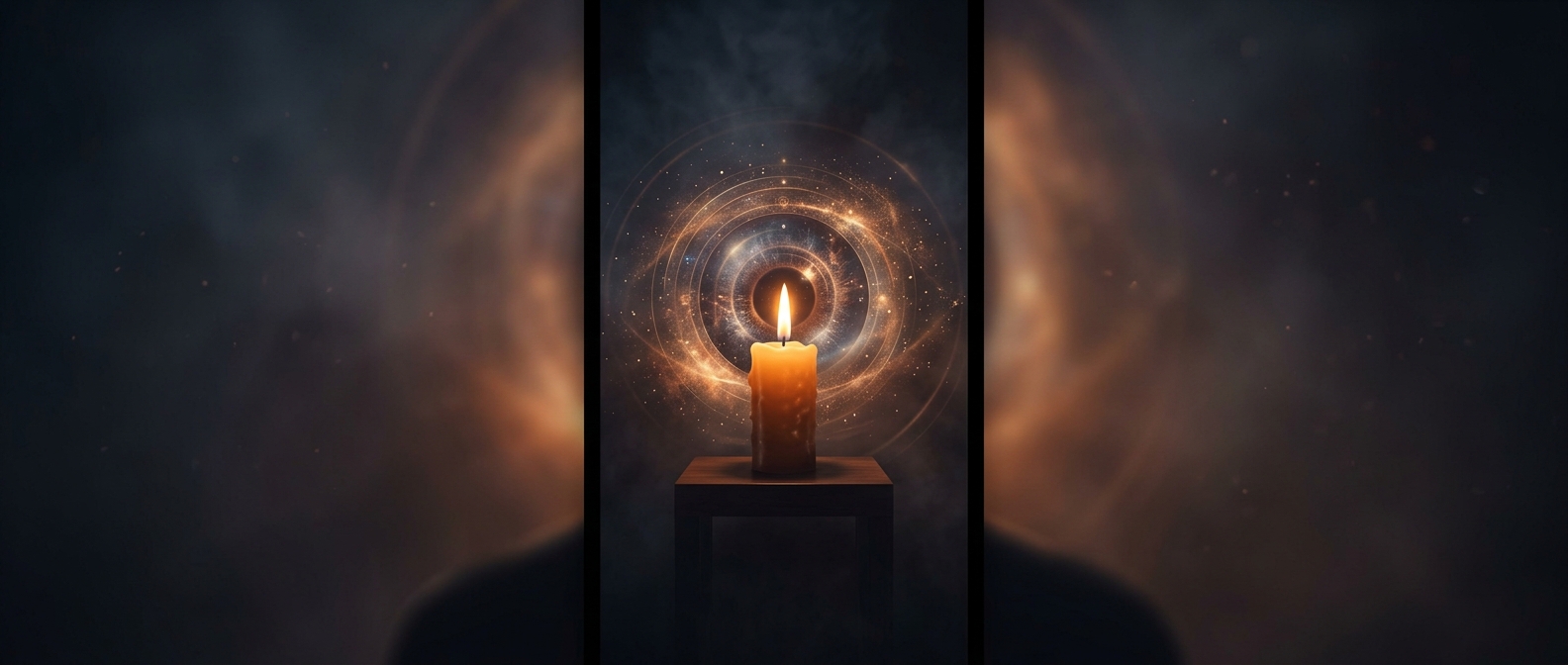
After staring at a flame, you may still see a patch of light when you look away. It can feel like the flame has left a picture behind, but the eye has not stored or burned an image into its surface. The effect comes from how the visual system responds to sustained light.
Light Temporarily Changes the Eye’s Response
Light-sensitive cells in the retina use pigments that react when light reaches them. During a fixed gaze, the cells exposed to the flame’s brightest parts keep responding, and some of their pigment becomes temporarily less responsive—a process called bleaching. Nearby cells, receiving less light, remain more sensitive by comparison.
When you shift your gaze, that uneven sensitivity can make a residual image visible. Depending on the conditions, it may resemble the flame or appear as a dimmer, differently colored shape. The brain also adapts to steady stimulation, helping shape the effect.
A Temporary Trace, Not a Permanent Imprint
As the cells recover and the visual system readjusts, the contrast fades. The afterimage is therefore a brief consequence of adaptation, not a picture trapped in the retina—and it has no connection to a flame’s spirit. What makes candle gazing striking is precisely how little is left behind: a short-lived impression that disappears as the eye’s responses rebalance.