How The Shining Became a Family-Comedy Trailer
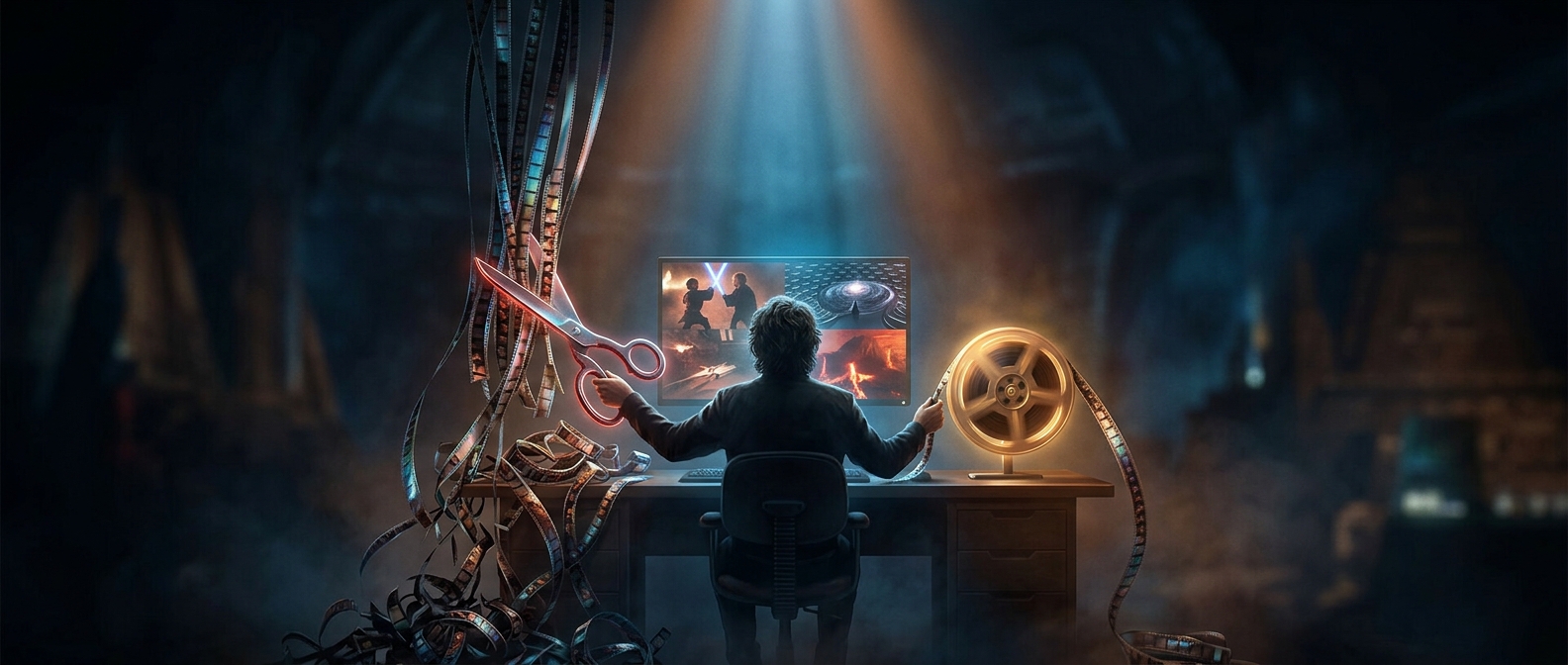
Robert Ryang’s recut trailer for The Shining works by changing the cues that tell viewers how to interpret a scene. Stanley Kubrick’s film supplies the images: Jack Torrance smiling too intensely, moving through a vast hotel, and interacting with his family. Ryang pairs those images with Peter Gabriel’s buoyant pop music and warm narration, making familiar moments seem like pieces of a quirky family story rather than steps toward violence.
The footage itself has not changed. The edit changes the story viewers infer from it. A pause can read as affectionate hesitation or ominous silence; a grin can look charming or alarming. Music and narration steer those judgments before viewers have time to question them.
The Trailer’s Hidden Storytelling Tools
Film trailers routinely compress a larger story into a few minutes, selecting shots and arranging them to promise a particular experience. Ryang turns that convention into the joke. He leaves out the scenes that would plainly reveal the horror plot, while arranging ambiguous images into an upbeat sequence. The effect depends on recognition: viewers know the source is frightening, so the cheerful presentation makes each mismatch funnier.
That mismatch also demonstrates a limit. Editing can redirect the meaning of isolated shots, but it cannot make every film convincingly tell any story. Here, the premise feels plausible for a moment because the original movie contains domestic scenes, recognizable character interactions, and images that can support more than one interpretation when separated from their context.
Why the Mashup Stuck
The video became a memorable example of the trailer mashup: a re-edit that borrows a movie’s footage but changes its genre through selection, pacing, music, and narration. Its appeal is both comic and revealing. Viewers get to watch their expectations being manipulated—and notice how much a soundtrack can shape what a face or gesture appears to mean.
The unsettling grin remains the same; what changes is the music underneath it. That small shift is enough to make audiences briefly imagine a very different movie.