Editing three films into one changes the story’s center
Compressing a trilogy into an 85-minute thriller is not simply a matter of speeding up every scene. An editor has to decide which events still make sense when the connective material is gone: a character’s choices need to lead to consequences, and one action sequence needs to give the next one a reason to matter. Removing political negotiations and other material shifts attention away from how the Republic works and toward the characters and conflicts that remain.
That shift also changes who seems important. Cutting Jake Lloyd’s young Anakin and Jar Jar Binks reduces the space given to two prominent characters in the original films. The result is an alternative emphasis created through omission—not a new installment or an official replacement for the prequels.
The edit is also a lesson in structure
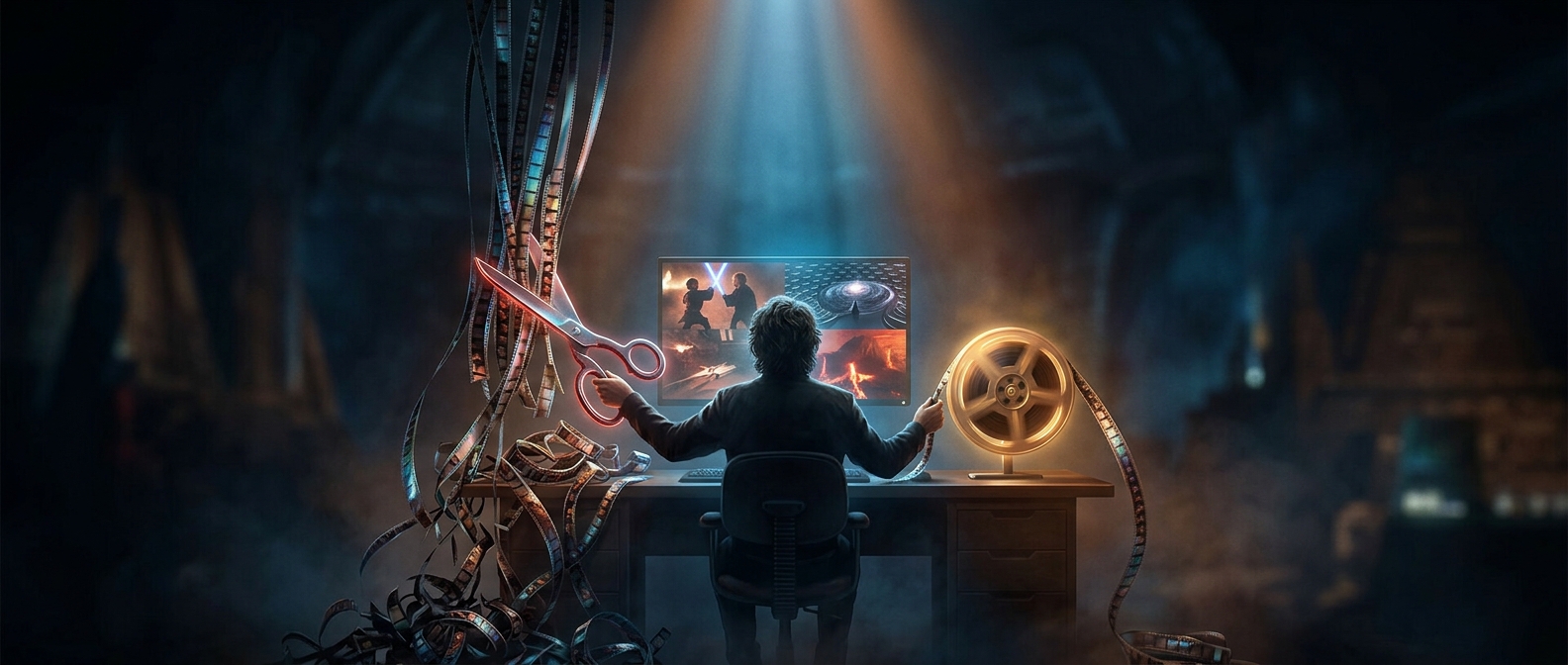
Grace taught himself Adobe Premiere while making the cut. Editing software can join scenes, trim pauses, and rearrange material, but it cannot automatically solve the storytelling problem: each cut changes what the audience knows and how quickly events seem to unfold. A scene that works in a feature may feel like a detour when the surrounding setup has been removed; a shorter version has to preserve enough cause and effect to keep the action intelligible.
The “Topher Cut” remained private and was screened once for industry friends. Its unusual achievement is therefore not a public release or a documented change to the films, but a compact demonstration of how strongly editing can redirect attention: the same source material can be made to play as a different kind of story.