Editing Was a Hands-On Operation
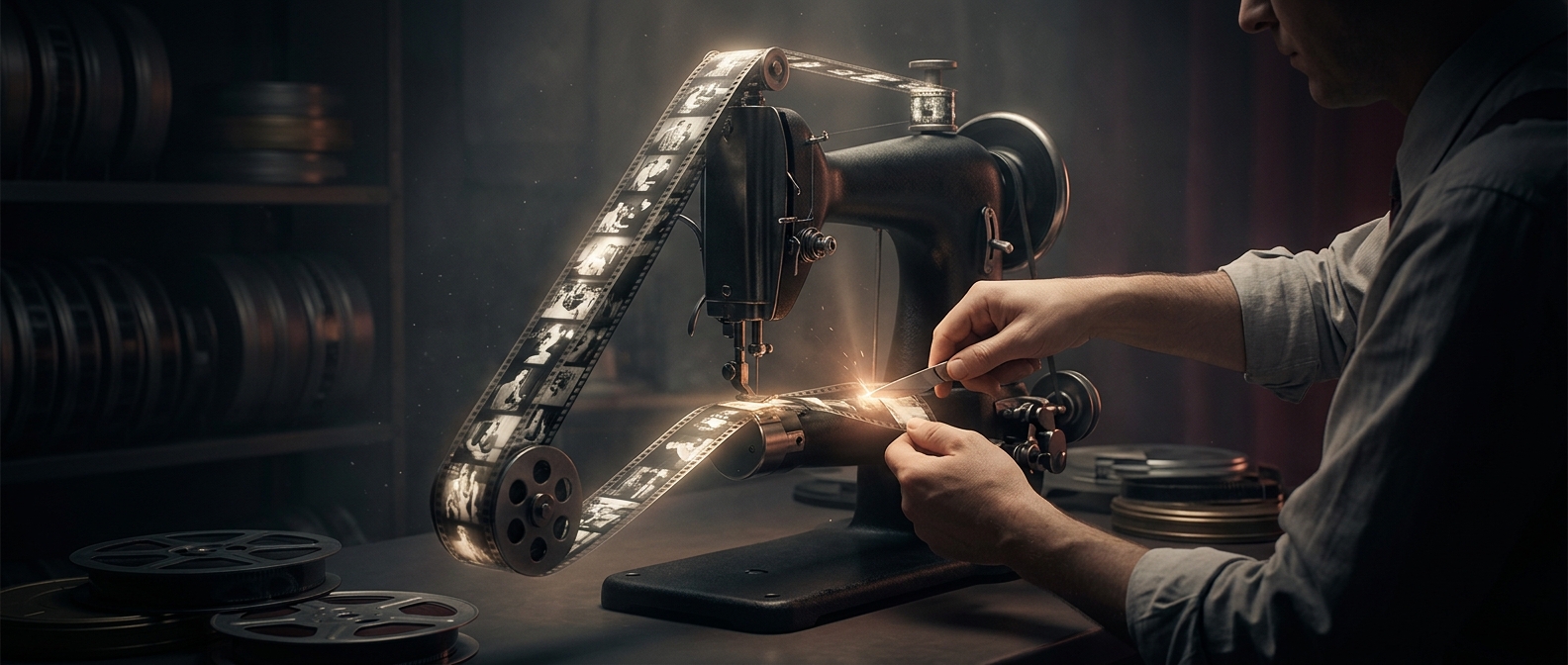
Before editing became a job done on a computer screen, an editor had to handle the picture itself: a long strip of film moving through a machine. The upright Moviola made that work visible. Film ran through a viewing gate, where a small illuminated image let the editor inspect the action frame by frame, rather than guessing from a stack of loose reels.
The editor’s hands could guide, stop, and mark the strip while a foot pedal controlled the motor. Pressing the pedal let the editor start or regulate the film’s movement without reaching away from the work. The machine turned editing into a physical rhythm: watch the image, slow or stop at the right moment, then handle the film.
Why the Cut Took Time
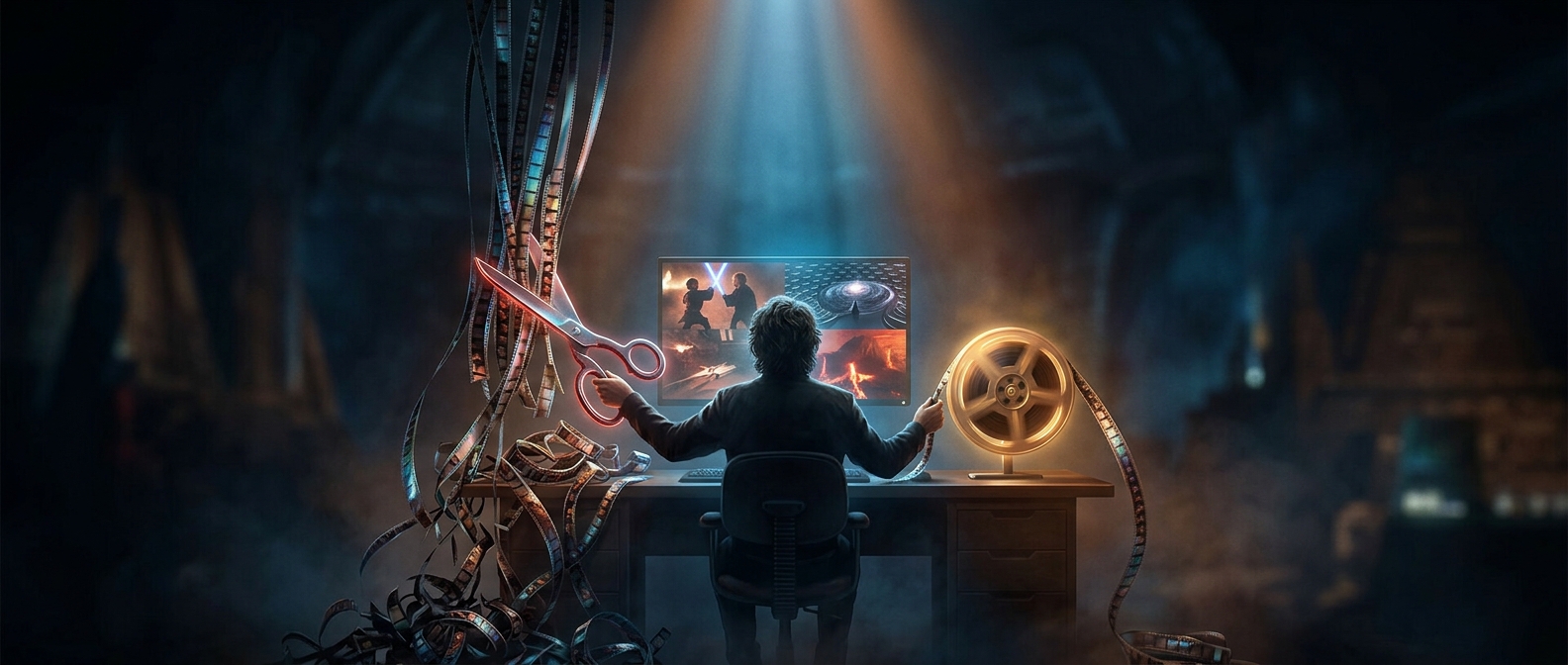
A cut was not a command on a screen. Editors identified the precise frames where a shot should end and the next should begin, then physically joined the selected lengths of film. That meant checking the result by running it through the viewer again. A few frames could change the timing of a gesture, a reaction, or the transition between scenes, so the editor repeatedly moved between watching and manipulating the strip.
The upright design put the viewing and transport mechanism in a compact, accessible arrangement, but it also made editing an active task rather than a seated one. The foot pedal helped keep the film moving while the editor stayed focused on the frame passing through the gate. Every finished sequence was therefore built through a series of small, deliberate decisions made at the machine—and embodied in the film itself.