Building a Horse’s Chew from a Crisp Bite
A horse chewing on screen may be silent on the original recording. Film sets are noisy, and an animal’s natural chewing is difficult to capture cleanly or repeat at the exact moment an editor needs it. Foley artists solve that problem by performing sounds to match the picture, then recording them separately in a quiet studio.
Why an Apple Works
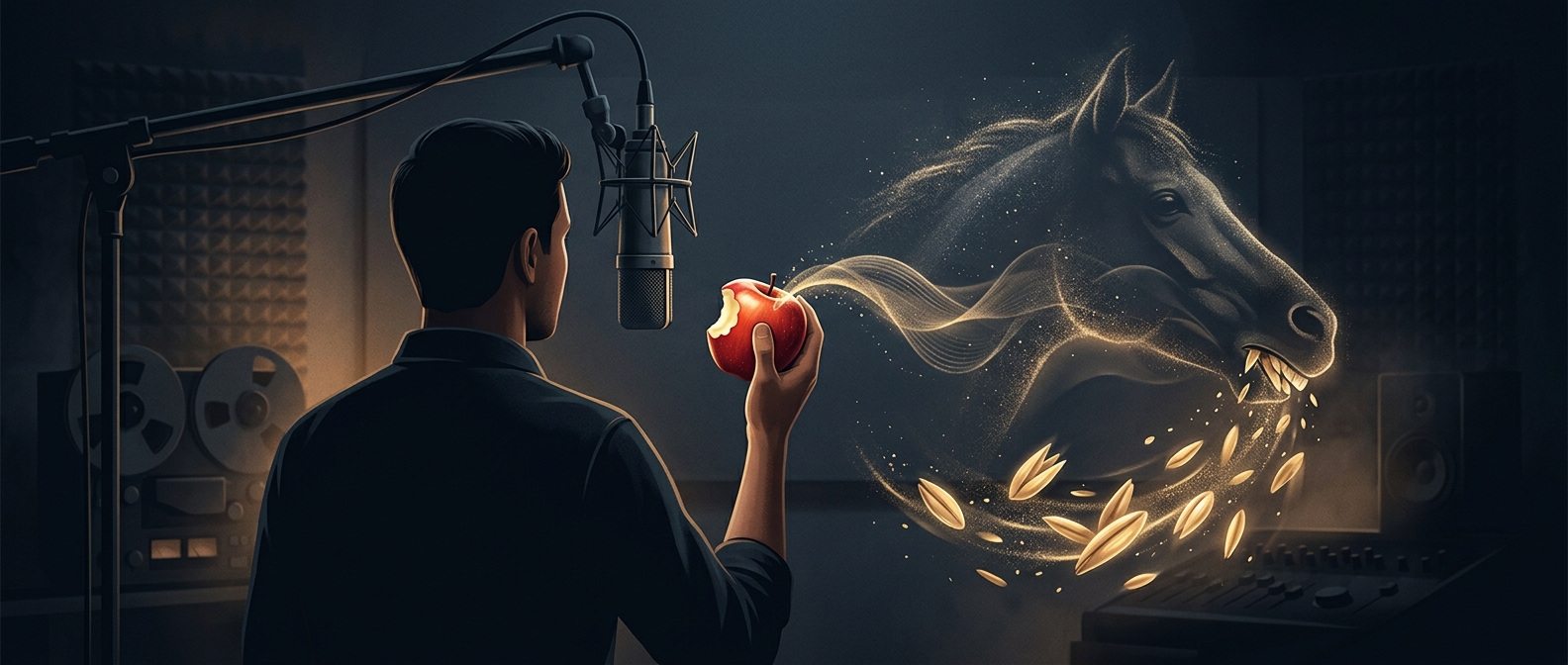
A crisp apple produces a sharp crack followed by softer, wetter crunches—useful ingredients for suggesting a large animal working its jaw. Biting close to a microphone makes those small textures prominent, while the performer can repeat the action until it fits the timing of the shot. The result is not a literal record of a horse eating; it is a deliberately made sound that helps the scene feel convincing.
That control matters in editing. A horse may chew slowly, quickly, or in several separate shots, and the sound can be adjusted to follow those visible movements. The apple supplies a repeatable texture; the performance and recording make it belong to the horse.