Why Pinecones Can Sound Like Cracking Ice
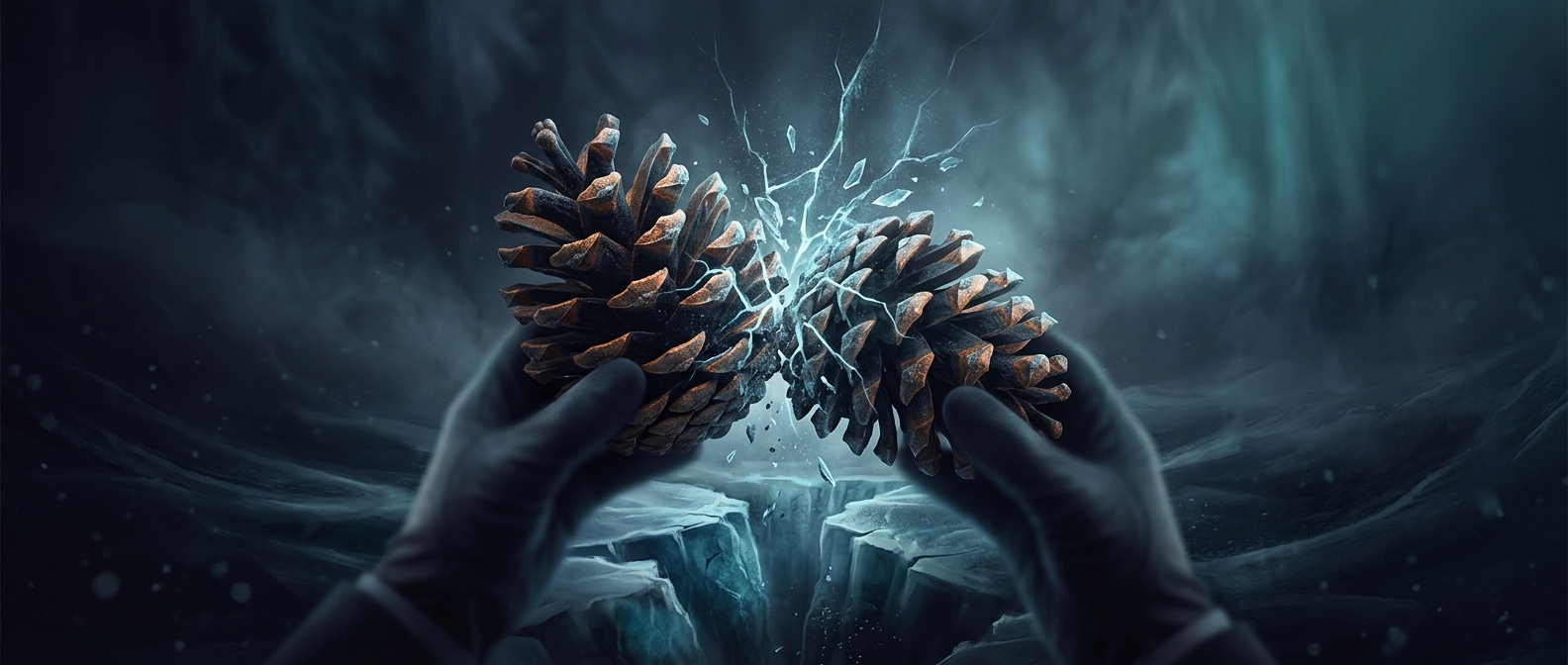
A dry pinecone is not a smooth object: its woody scales overlap, leaving ridges and edges that catch when two cones are rubbed together. As pressure builds, those edges suddenly slip past one another or tap together. The result is a scatter of short, sharp clicks rather than one continuous scrape.
That uneven burst of brittle sounds is what makes the comparison to breaking ice convincing. A crack on a frozen lake is also made of abrupt fractures, often followed by smaller snaps and rattles. The pinecones do not reproduce the scale or deep echo of a lake’s ice sheet; they supply a similar cluster of crisp transients—the quick attacks that give a sound its initial impression.
A Small, Controllable Sound Effect
For someone making sound effects, the useful part is the control. Rubbing cones gently can create a light crackle; pressing and twisting them more firmly produces louder, rougher snaps. Changing the speed and pressure changes the pattern, so the sound can suggest anything from brittle shifting to a sudden break.
The trick works because listeners often identify a sound from its texture and rhythm before they know its source. A few dry, irregular clicks can evoke a much larger fracture. In a quiet recording, two small cones can therefore stand in for a frozen surface giving way—without needing ice, cold weather, or a lake.