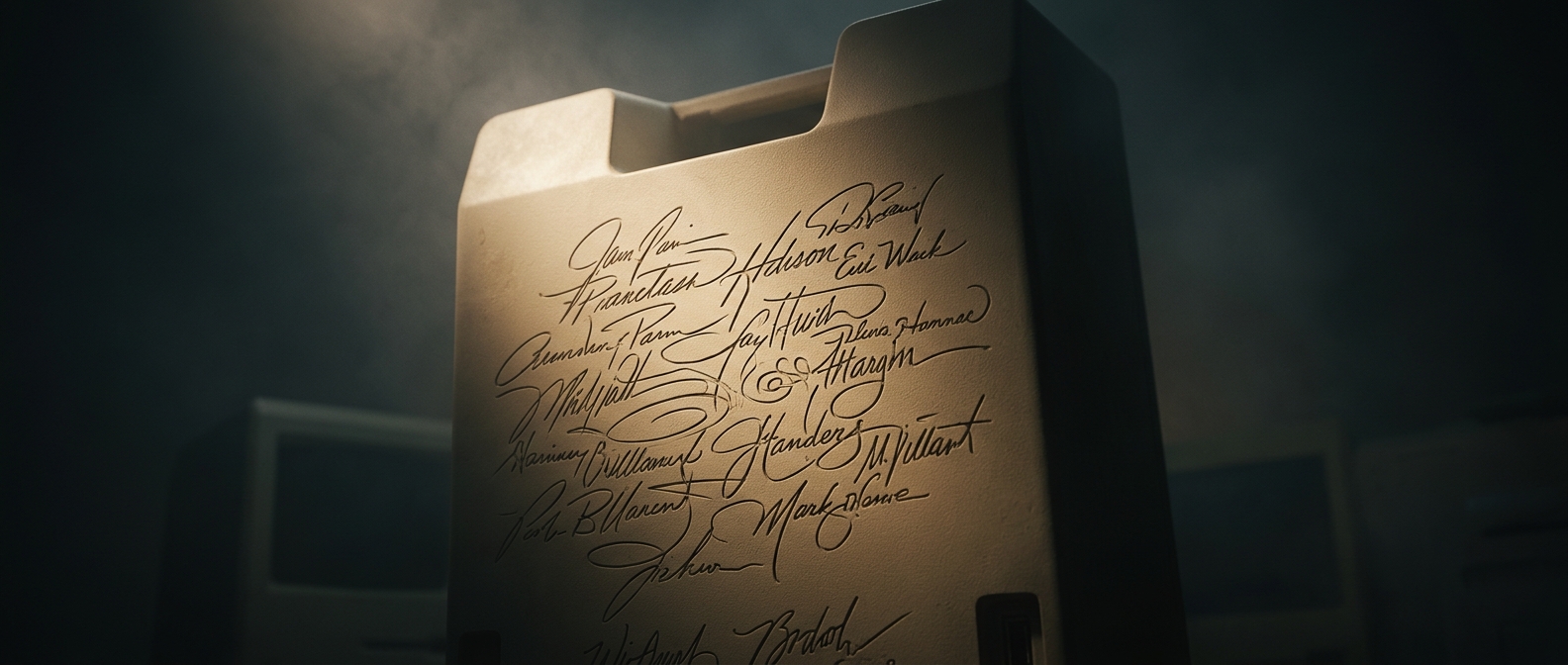
How the signatures became part of the Macintosh
The original Macintosh’s plastic back cover was made in a mold: molten plastic was pressed into a shaped metal tool and cooled into the finished part. The development team’s signatures were engraved into that tool, so the mold transferred their marks onto the inside of each cover. They were not signed onto individual computers after assembly; the manufacturing process reproduced them automatically.
A maker’s mark, out of sight
Steve Jobs’s belief that “real artists sign their work” turned a manufacturing step into a lasting acknowledgment of the people who built the machine. The signatures were placed where owners would not normally see them, rather than on the Macintosh’s public-facing surface. Yet they were physically part of every original Mac’s case: a hidden maker’s mark repeated by the same production tool that shaped the computer’s shell.