Why the Spacebar Takes So Much of a Typist’s Work
In ordinary prose, spaces are not occasional punctuation; they are the boundaries that make a stream of letters readable as separate words. A sentence with many short words creates a space after just a few letter presses, so the spacebar accumulates taps quickly. That is why it can account for roughly 18 percent of an average user’s keystrokes.
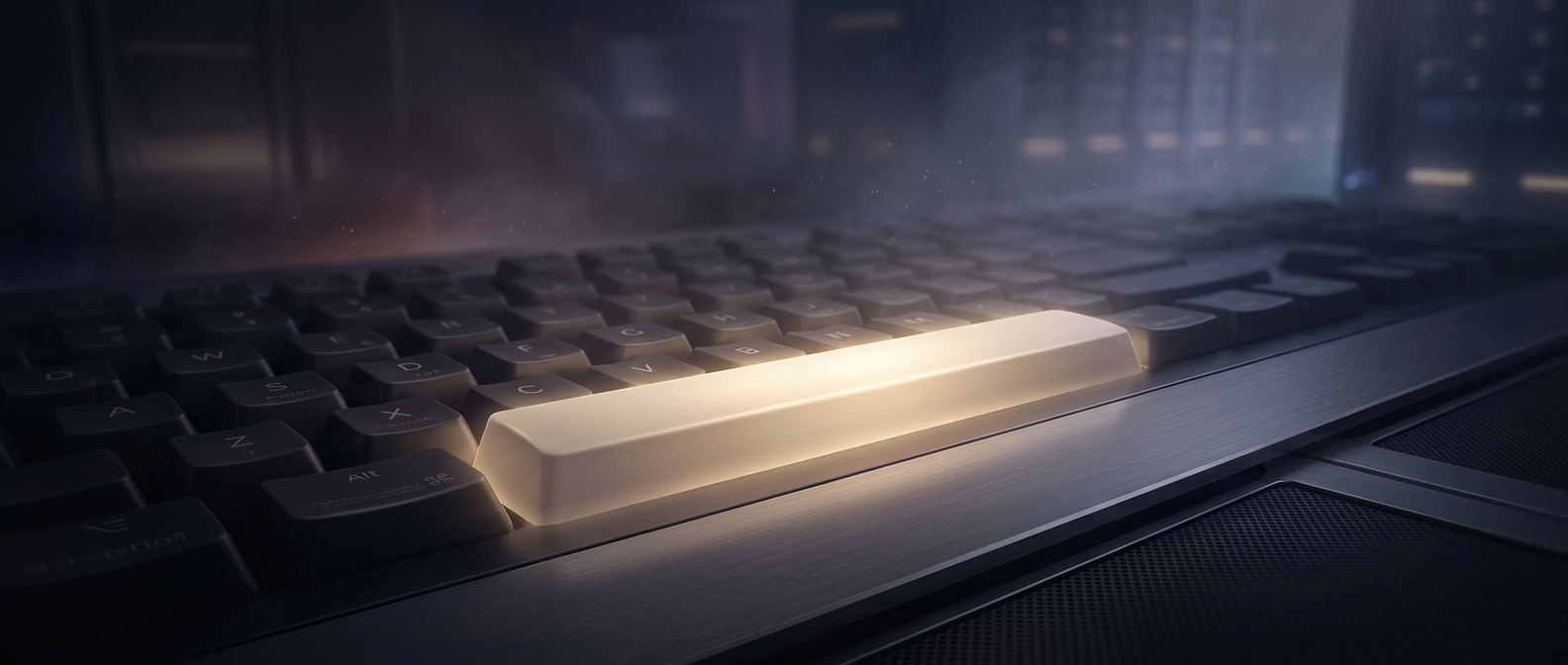
The share comes from the structure of language, not from the spacebar doing a complicated job. Each press inserts a blank character between words. The keyboard gives that frequent action a long bar at the bottom, easy to reach with either thumb while the fingers stay near the letter keys. The result is a small movement repeated throughout nearly every sentence.
The Workload Changes With What You Type
That proportion is most meaningful for text-heavy typing. A person entering code, numbers, or search queries may use spaces differently; someone typing long prose uses them constantly. Languages and writing styles also vary in how often words are separated, so 18 percent is a rough average rather than a fixed share for every typist or every task.
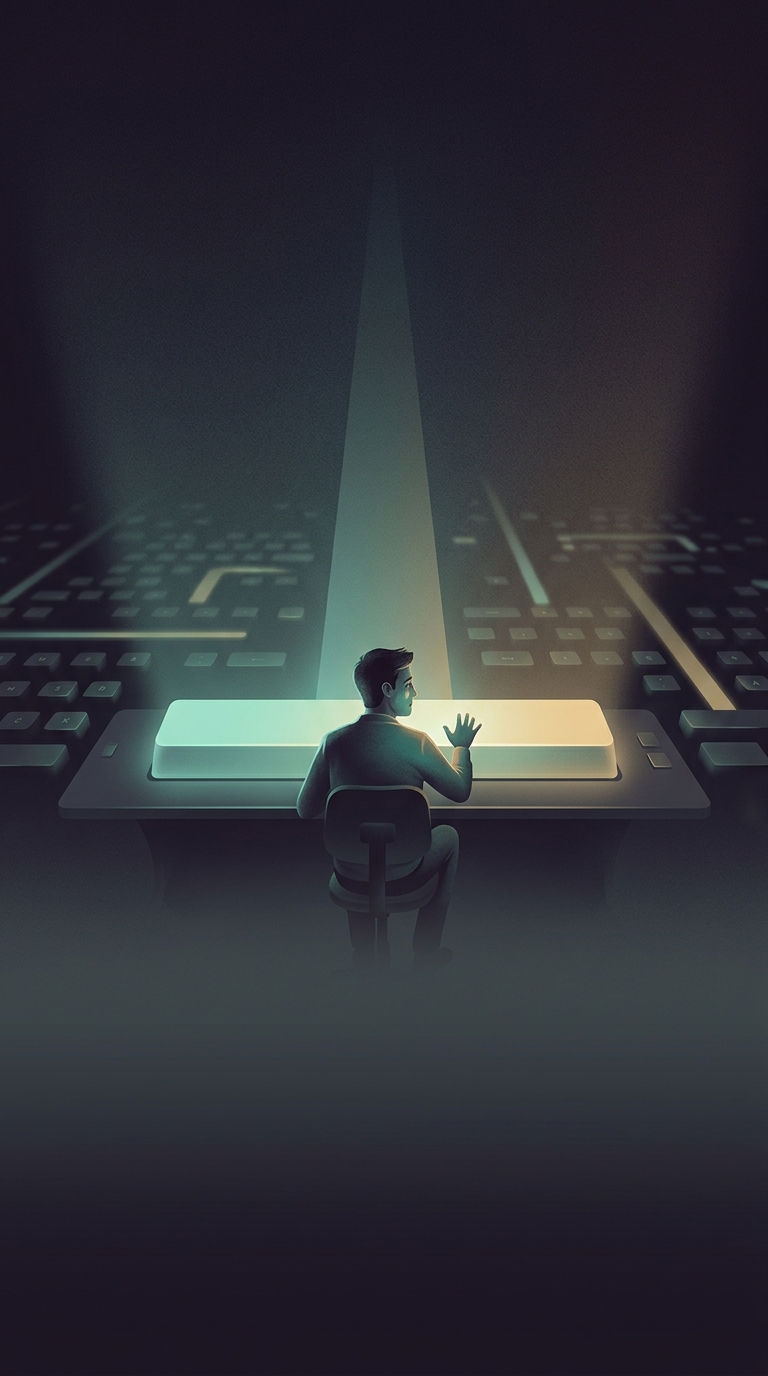
Still, the spacebar reveals a quiet design principle of the keyboard: the most common actions deserve the easiest reach. Its prominence is not a sign that blank space is an afterthought. In written language, the gaps help turn individual letters into words—and the keyboard’s largest key is devoted to making them.