A key built for the gap between words
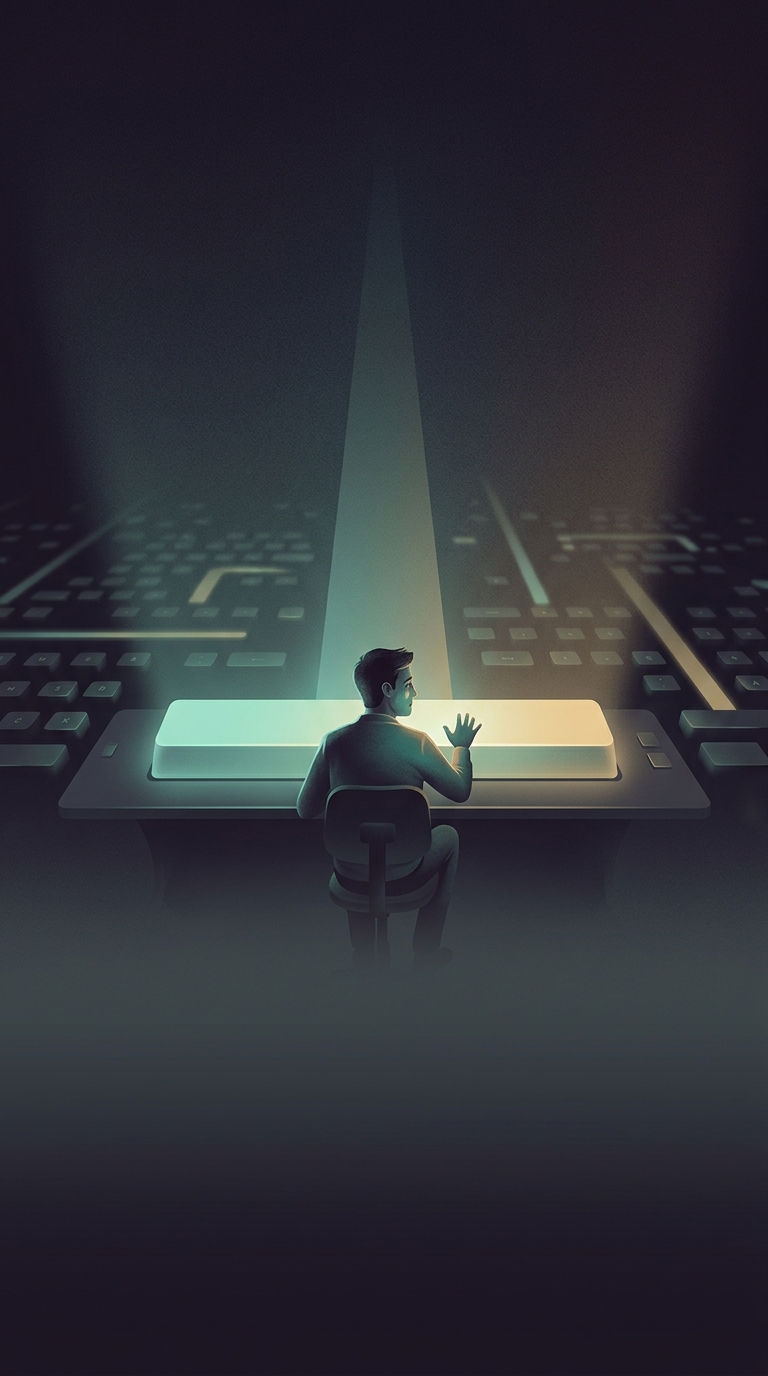
The spacebar is usually the keyboard’s largest key because it performs one simple job over and over: inserting a blank between words. In ordinary typing, spaces are so frequent that making the key easy to find and press matters more than giving most letters extra room.
Its long shape also makes it reachable by either thumb. A typist can keep both hands near their usual positions and tap the bar without shifting a hand to hunt for a small key. That is especially useful when typing quickly, when a misplaced press can interrupt a rhythm or join two words together.
A holdover from typewriters, refined for computers
Computer keyboards inherited the spacebar’s basic role and placement from typewriters. On a typewriter, a space did not print a character; it moved the paper carriage forward by one character-width. The bar gave typists a broad target for that frequent, nonprinting action while their fingers stayed on the letter keys.
Keyboards changed as machines and layouts evolved, but the spacebar’s job did not. Its size is therefore less a technical requirement than a durable design choice: the key needs to be easy to hit, and a long bar works for people with different hand positions and typing habits.
Large, but not universal
“Every single keyboard” goes too far. Compact keyboards, specialized devices, and alternative layouts can use different arrangements or proportions. Still, on a conventional computer keyboard, the spacebar remains conspicuous because it serves the most routine interruption in writing: the small gap that keeps one word from running into the next.