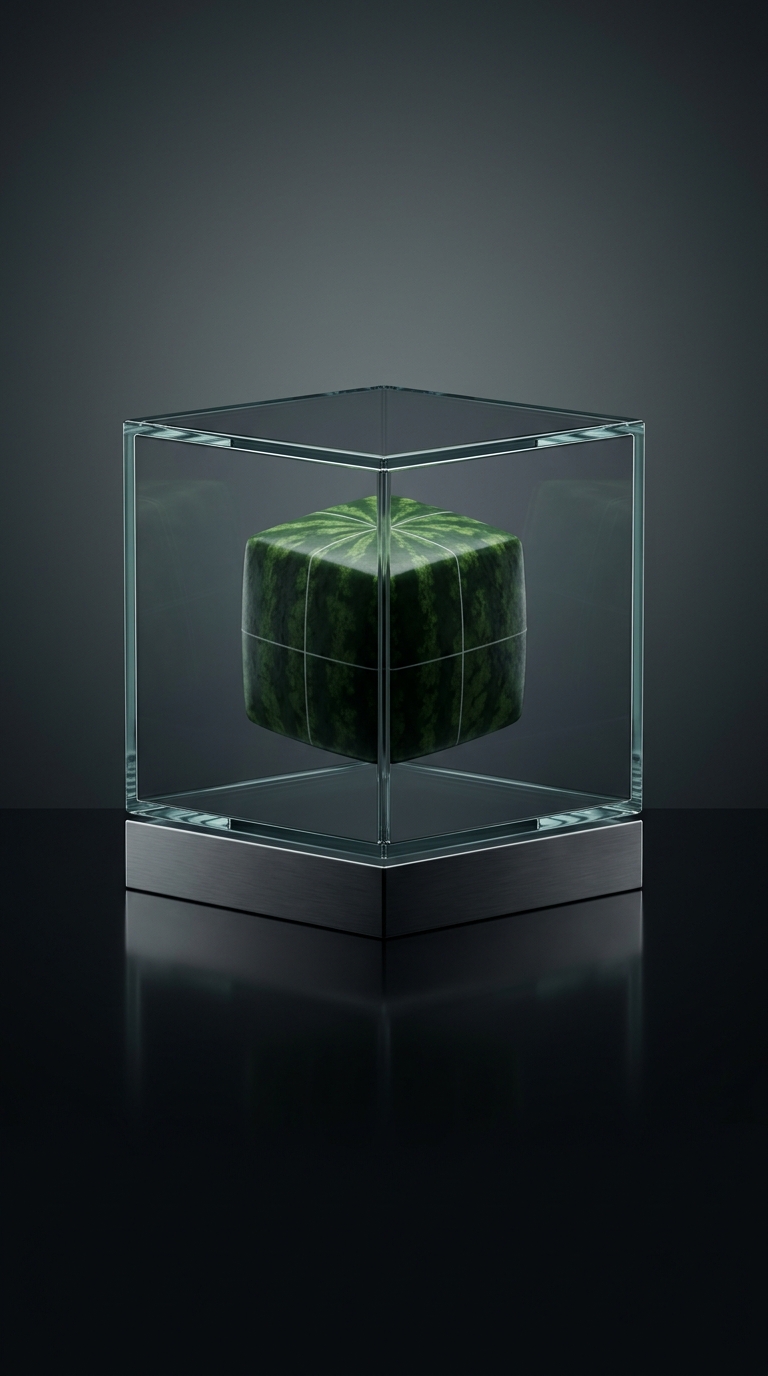
A watermelon shaped by its container
A square watermelon is not a special variety bred to grow with corners. It begins as an ordinary young melon. As it expands, a rigid, transparent box limits where the rind can move, turning the fruit into the shape of the container. The box does the shaping; the plant still supplies the water and sugars that make the melon grow.
That constraint creates a timing problem. The fruit has to be removed while it is still small enough to fit inside the mold. In the version described here, farmers harvest it before it ripens, so its tidy geometry comes at the cost of being unsuitable to eat.
A display object, not a better melon
The practical appeal was the space a square shape could save: unlike round melons, flat-sided ones can sit close together in a refrigerator or during transport. In Japan, where kitchen storage can be limited, that made the form an easy-to-grasp selling point. But the same process that produced a neat, stackable shape also prevented the fruit from reaching the table as ripe food.
That tradeoff shifted the product’s value. Buyers were paying for an unusual object to display or give as a gift, rather than for improved flavor or convenience in preparing a meal. The clear box also let shoppers see the shape that justified the novelty.
The striking part is that the “square watermelon” was engineered less for the plate than for the spaces around it: the refrigerator shelf, the shipping load, and the store display. Its corners solved a storage problem, but only by making ripeness—and eating it—the thing sacrificed.