A sound-based name met a practical problem
In Japanese, “paku-paku” imitates the repeated motion of opening and closing one’s mouth while eating. “Puck-Man” drew on that sound, making the name fit a game built around a character gobbling up objects as it moves through a maze.
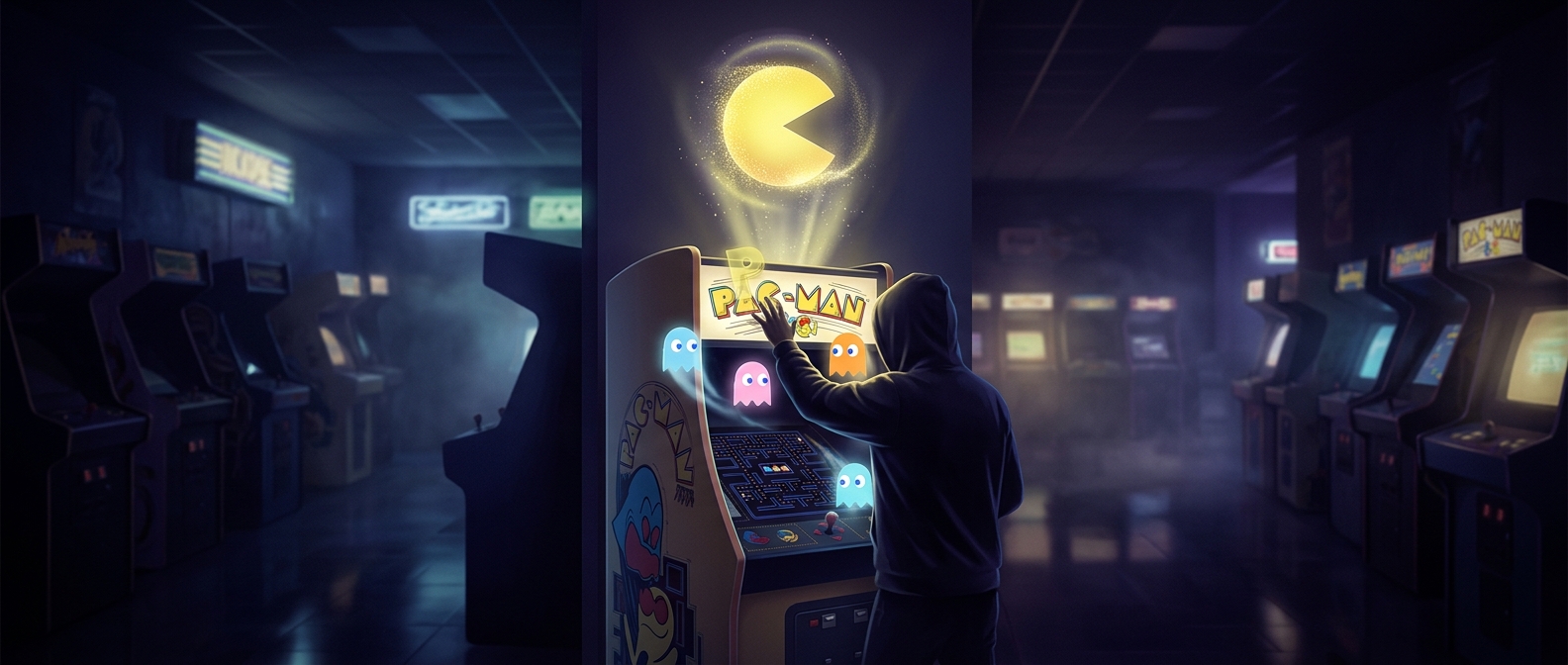
The name also had to work in a very different setting: American arcades, where the title appeared on machines and promotional materials. U.S. executives worried that a player could alter the initial P on the cabinet’s lettering to make an obscenity. Changing the name before release removed that easy target.
“Pac-Man” kept the rhythm, changed the risk
“Pac-Man” was a localization choice—a change made for a new market, not a new game concept. The replacement preserved much of the original name’s punchy sound while making the first letter harder to turn into an unwanted word with a quick scratch.
That small adjustment shows how arcade games depended on more than what happened on screen. A name had to survive contact with the physical machine, its public setting, and the people who might mark it. The character’s identity traveled overseas; the lettering on the cabinet got a safer starting letter.