Fermentation prepares cocoa beans for chocolate flavor
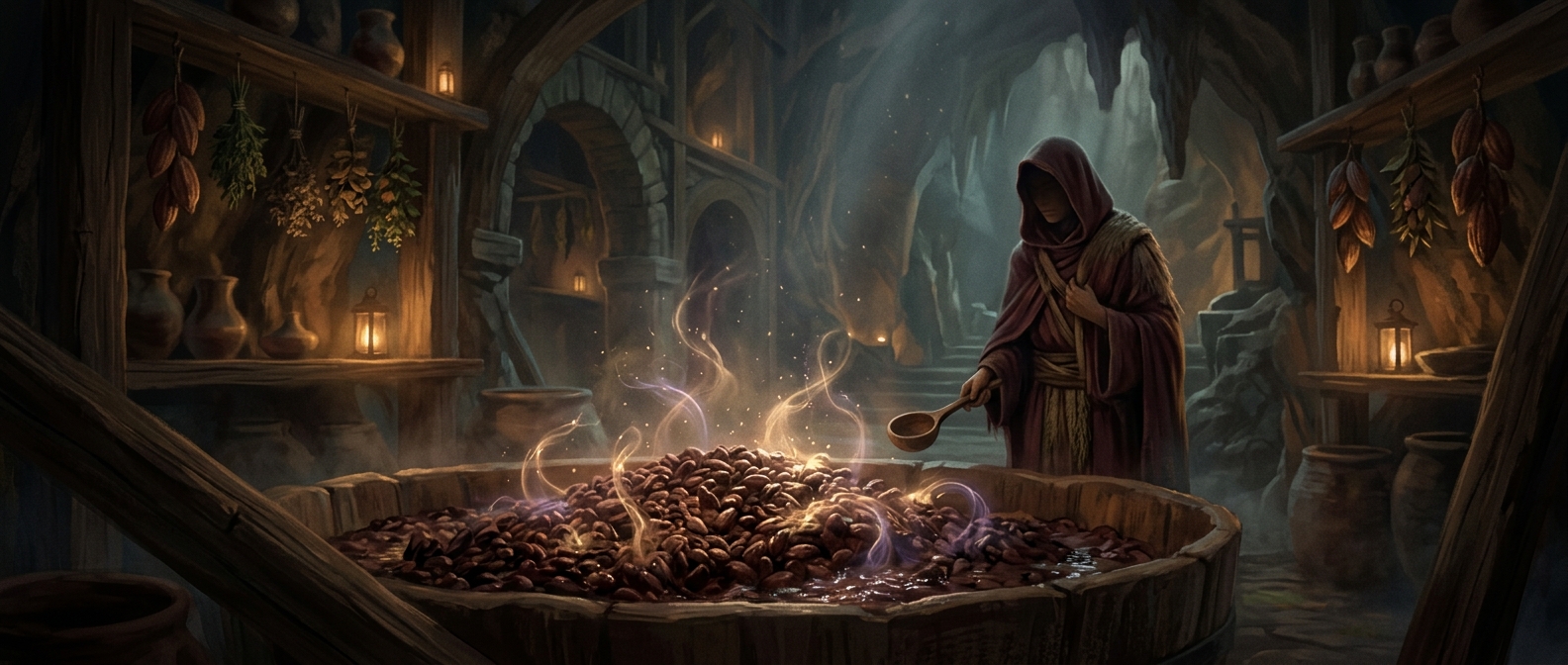
Freshly removed cocoa beans are coated in a sweet, sticky pulp. Farmers heap them together—often in boxes or under leaves—so naturally occurring yeasts and bacteria can break down the pulp’s sugars. The microbes do not make chocolate directly; they create the conditions that start changing the beans inside.
Heat and acids move from pulp to bean
As the microbes consume sugars, fermentation generates heat and produces alcohol and acids. The warm, acidic environment penetrates the beans and helps kill the living seed. It also sets off chemical changes in the bean’s proteins and other compounds, creating precursors: ingredients that can later react into recognizable chocolate aromas and flavors.
Turning or shifting the heap lets air reach the fermenting pulp, changing which microbes thrive as the process progresses. If fermentation is too short or uneven, the beans may not develop the same flavor potential. Fermentation is therefore a managed transformation, not simply a waiting period.
Roasting finishes work fermentation began
After fermentation, the beans are dried, which reduces moisture and makes them suitable for storage and transport. Roasting then supplies more heat, driving reactions among the compounds formed or altered earlier. Those reactions produce much of the familiar roasted, nutty, and chocolate-like aroma.
The key sequence is fermentation creates flavor precursors; roasting turns many of them into finished aromas. A roaster can shape the result, but cannot fully replace the chemical groundwork laid while the beans ferment in their pulp.