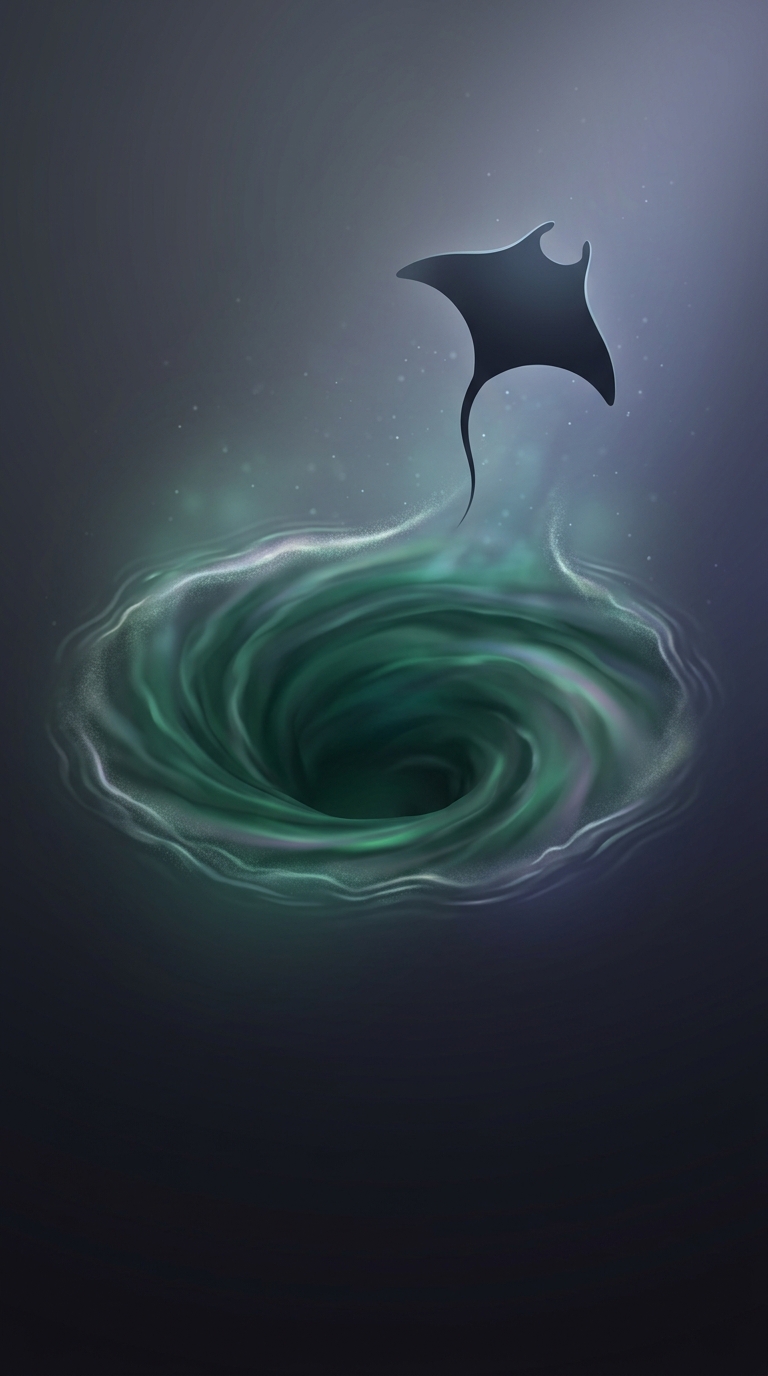
How an underwater lake can form
Some seafloors contain buried layers of salt. When seawater reaches these deposits, it dissolves the salt and becomes an extremely concentrated brine. The dense liquid collects in depressions on the ocean floor instead of mixing readily with the seawater above it—much as oil and water resist blending, though here the difference is density and dissolved salt.
The result can have a sharply defined surface and a shoreline-like edge. Waves or ripples at that boundary can form as currents disturb the two fluids, which differ in density and composition. It is not a separate body of water with a solid bottom: it is a pool of brine resting in a seafloor hollow.
Why animals struggle in the pool
The brine is so salty that it creates a harsh chemical environment, and these pools are often depleted of oxygen. A fish or other animal that enters may be unable to breathe and maintain its normal balance of water and salts. The visible boundary can therefore mark a real biological divide, not merely a change in color.
But the pool’s edge is not necessarily lifeless. Organisms can occupy nearby zones where brine and seawater meet, including microbes that use chemical energy rather than relying on sunlight. In some settings, chemical compounds rising from the seafloor help support food webs around the boundary.
That contrast is the striking part: conditions inside the pool can exclude many familiar sea animals, while a narrow band beside it supports specialized life. A lethal-looking underwater lake can therefore have a living neighborhood concentrated along its shore.