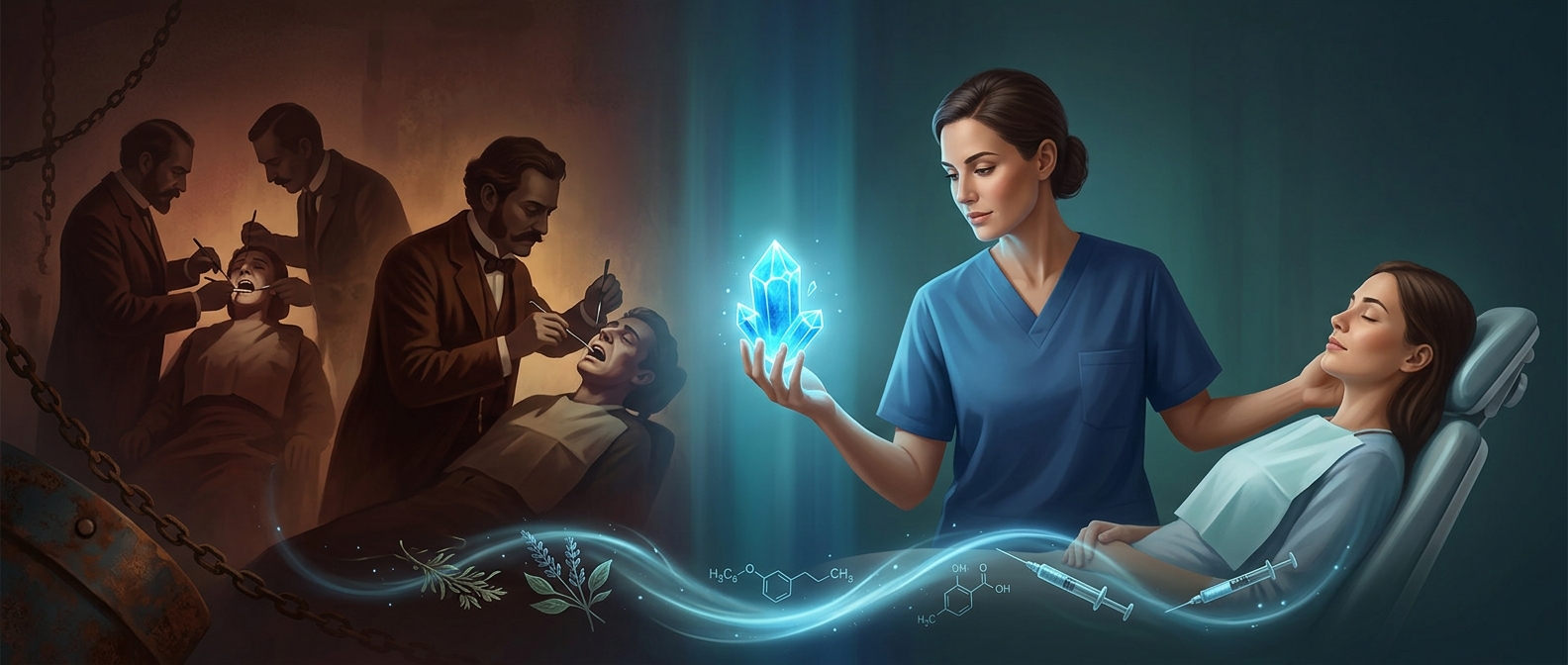
How a small injection changed dental treatment
Before reliable local anesthetics, dentists had few ways to control pain during procedures. Cocaine could numb tissue, but its risks made it an imperfect tool; alcohol might dull distress without reliably blocking pain. Procaine, marketed as Novocain after its introduction in 1905, offered a more practical way to numb a specific part of the mouth.
Stopping the signal at its source
A dentist injects the anesthetic near the nerves serving the tooth or surrounding tissue. Procaine temporarily blocks tiny channels that nerves use to carry electrical signals. When those signals cannot travel toward the brain, the treated area does not register pain in the usual way. The patient generally remains awake and can still feel pressure or movement—sensations that are not the same as sharp pain.
Because the effect is local, the dentist can work on one region without making the whole body unconscious. That made procedures such as fillings and extractions more manageable while avoiding the risks and logistics of putting a patient to sleep.
A new kind of control
The important change was not simply that dentistry became less uncomfortable. Anesthetic injections gave dentists a way to control where pain was blocked, allowing them to carry out treatment with greater precision and making care more tolerable for patients. Novocain became a familiar name for that shift: pain relief could be targeted to the tooth being treated, while the patient stayed present and responsive.