How a liquid bandage seals a cut
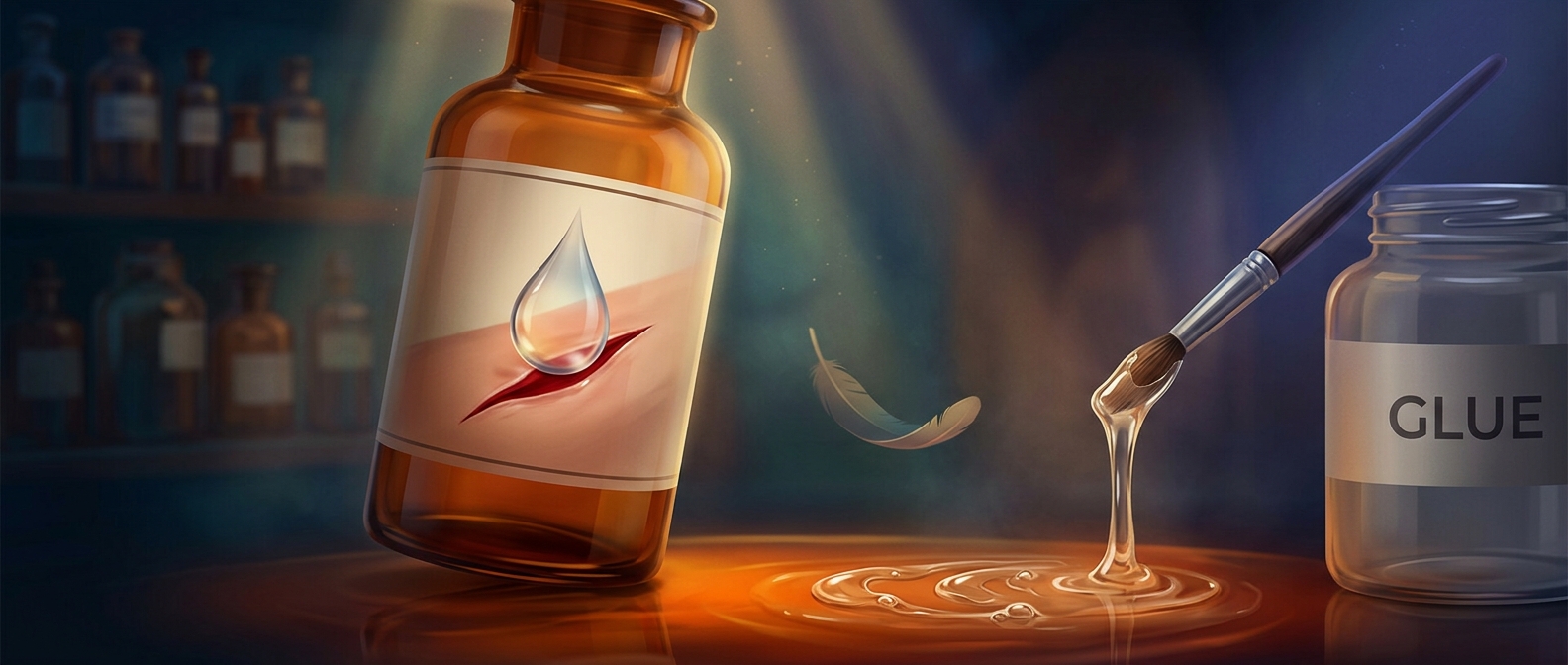
A liquid bandage starts out as a fluid polymer—a material made of long molecules that can link into a flexible coating. Brushed onto a small, clean cut, it spreads across the skin and into the narrow gap between the edges. As its solvent evaporates, the polymer remains as a thin film that sticks to the outer skin and helps hold the edges in place.
That film is not a deep closure. It bridges the surface, much like a tiny patch over a crack, while the body repairs the tissue underneath. Because the coating bends with the skin, it can protect a small wound without the punctures and thread of stitches.
Why the seal matters
A covered cut is less exposed to rubbing and everyday contact, and the film can help keep dirt and moisture from reaching the surface. It also reduces the need for a dressing that might shift or snag. The coating gradually wears away as the skin renews and the wound heals; picking or peeling it off can disturb the repair.
Liquid bandages are meant for minor, shallow cuts—not wounds that gape widely, keep bleeding, or need deeper closure. Their practical advantage is simple: a small break in the skin can be covered with a thin layer that moves with it, rather than a rigid patch that has to be held in place.