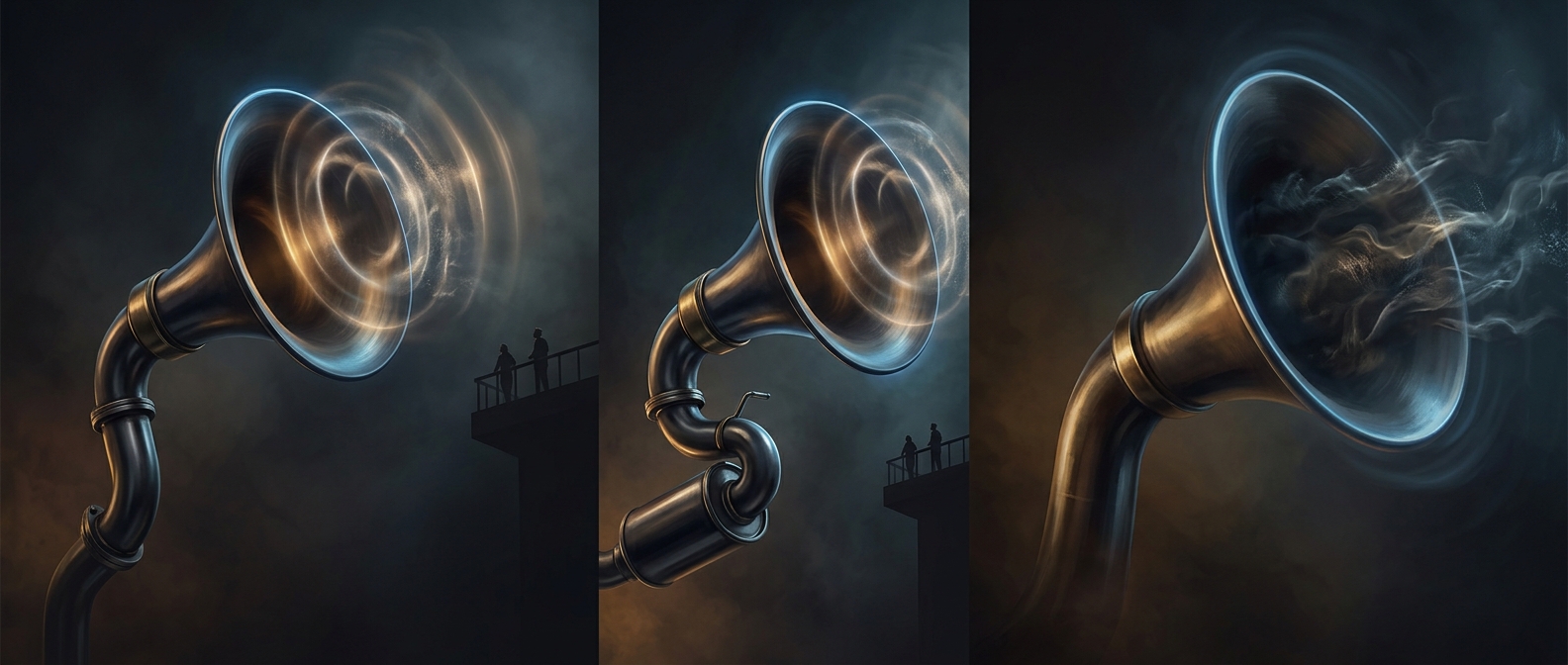
The muffler manages pressure waves, not just exhaust flow
An engine sends hot exhaust out in pulses, and each pulse carries a pressure wave that we hear as sound. A conventional baffled muffler makes those waves bounce through chambers and narrow passages. As they reflect and interfere with one another, some of their energy is reduced before the sound reaches the tailpipe. The same turns and restrictions can make it harder for exhaust to pass through.
A straight-through performance muffler takes a different approach: exhaust travels along a central tube, while openings in the tube let sound waves reach the surrounding muffler material. That material absorbs some of their energy, so the device can soften the exhaust without forcing the gas through a long, winding route. It does not make the system silent; its design favors flow and a more audible exhaust note over maximum quiet.
The tradeoff is heard in real driving
Less restriction can matter to an engine, but a muffler alone does not guarantee more power. The result depends on the engine and the rest of the exhaust system. Meanwhile, sound changes with engine speed and load: a tone that seems restrained at idle may become much more prominent under acceleration. Some systems can also produce a steady low-frequency hum inside the cabin, known as drone.
That is why “performance” is not a synonym for “better” in every setting. The same design choice that gives exhaust pulses a freer route can make a car more noticeable to passengers—and to everyone nearby.