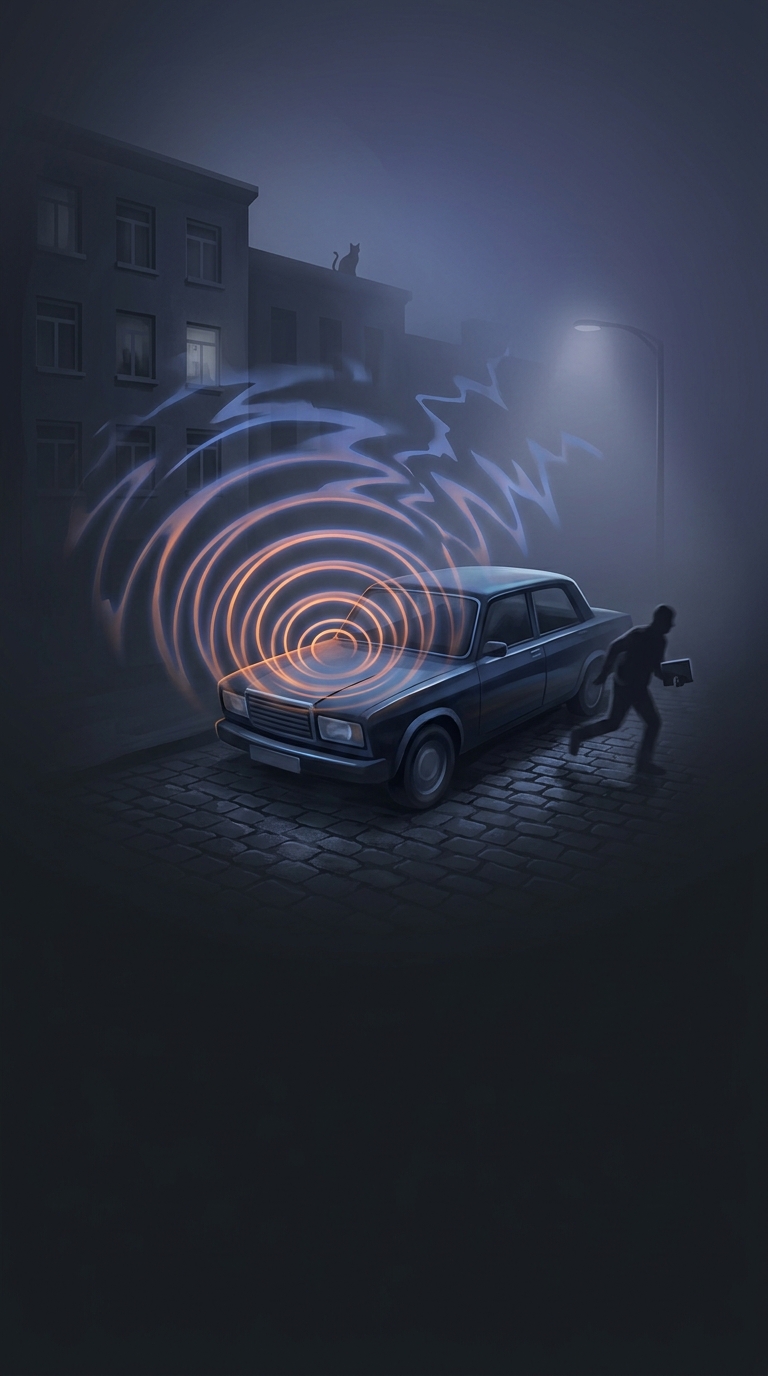
A siren is only useful if it means something
A car alarm is a signal sent to people nearby: something may be wrong, so look or act. But the siren cannot explain why it started. A thief forcing a door and a bump against a sensitive sensor can produce much the same noise. So can a fault in the alarm system. To a passerby, the cause is hidden; the sound alone is the evidence.
That makes reliability crucial. If alarms repeatedly sound when no theft is happening, listeners learn that the siren often predicts nothing they need to do. They may glance toward the car, wait for the noise to stop, and carry on. This is habituation: repeated exposure makes a familiar stimulus less likely to command attention.
The cost of a warning that cries wolf
The alarm’s owner gets an audible warning, but everyone within earshot bears some of the cost. Neighbors cannot easily tell which car is in danger, and checking every disturbance is inconvenient and sometimes unsafe. Ignoring the noise becomes a practical response—not necessarily indifference to theft, but a judgment that the sound is too unreliable to justify intervening.
This creates a problem for the alarm itself. Its purpose depends not just on making noise, but on making noise that people trust. A siren that draws attention when a car is actually being tampered with can deter a thief or prompt someone to call for help. One that repeatedly sounds for minor disturbances spends that attention in advance.
The result is a warning system whose effectiveness depends on restraint: the more selectively an alarm sounds, the more likely a real outburst is to make people stop and look.