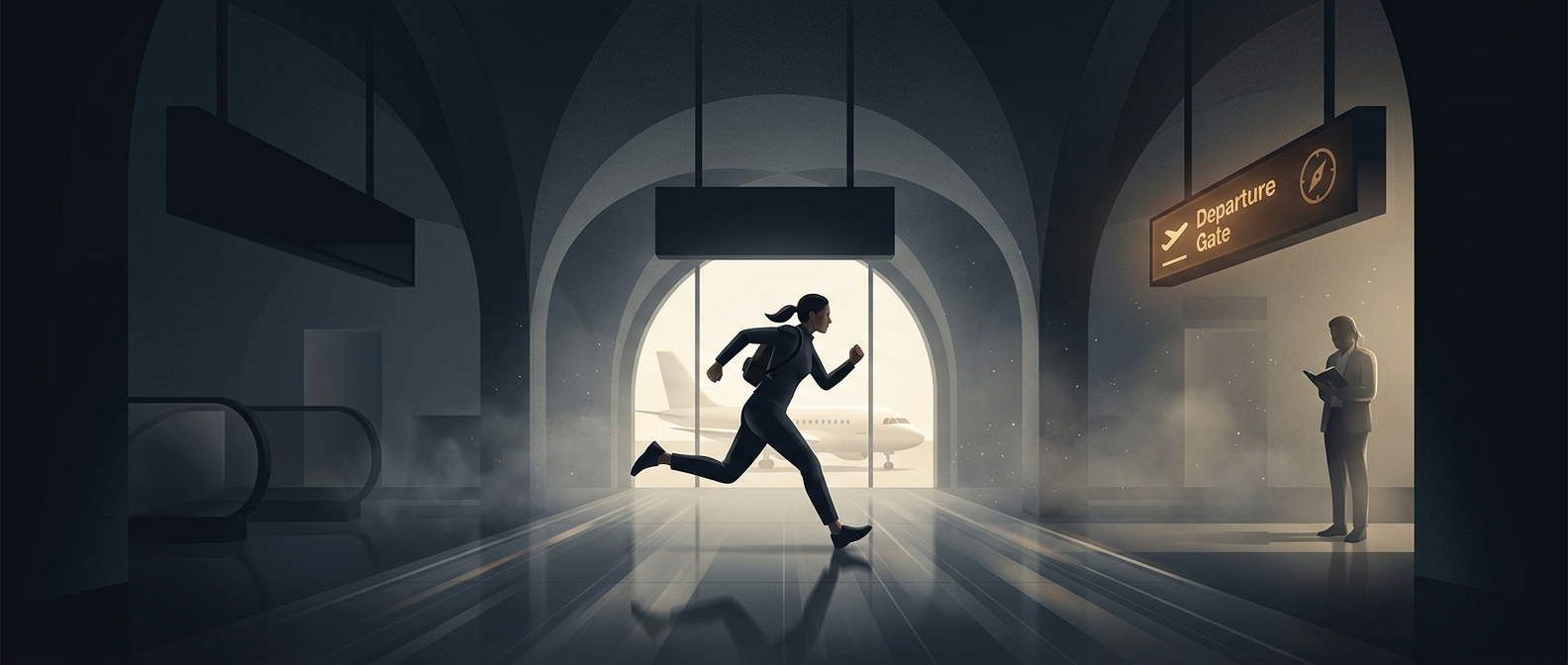
Why the old gate sticks
A gate number is easy to remember because it is a compact, concrete instruction: walk to 24. Once you have started toward it, your brain tends to treat that plan as the default. A new announcement has to dislodge it, especially in a noisy terminal where announcements compete with conversations and display screens are easy to miss.
That mismatch can turn a routine change into a rush. The traveler is moving according to an earlier instruction while the airport’s current information points somewhere else. The longer the walk, the more costly it feels to stop, check, and reconsider—so people may keep going even after hearing an announcement they have not fully processed.
A gate is a temporary assignment
Airlines and airports assign gates to flights as part of coordinating aircraft, passengers, and ground operations. If the plan changes, a flight can be moved to another gate. The gate number is therefore not a permanent identifier for the flight; it is a location attached to the flight’s current plan. Numbers can also recur in different terminals or areas, making a gate number alone an unreliable way to identify where a particular flight is boarding.
The flight number is the more stable reference. It identifies the flight, while the gate tells you where to go at that moment. Checking both together connects the changing instruction to the trip you actually intend to take.
Pause before you follow the crowd
When a gate changes, the useful action is not simply to move faster. Stop long enough to match the flight number on your boarding pass to the current departure information, then follow the updated gate and any terminal or concourse details. That brief check can prevent a longer detour—and the unnerving discovery that you have arrived promptly at the wrong flight’s gate.